Do Water Flossers Really Work? Pros, Cons & Myths
Medically reviewed by Dr Zaeem Jafri BDS on 20th March 2025
Water flossers are growing in popularity thanks to their no-nonsense approach to blasting away plaque, prompting many to ask their dentist whether they are actually worth buying. For some, they look like scary gadgets that over-complicate the morning routine, while others remain perfectly happy with their traditional string floss, and see no reason to invest in yet another bulky item to store in the bathroom cabinet. But the truth is that water flossers are an incredibly useful tool in anyone’s arsenal for achieving a healthier, happier mouth, if used correctly, and with long-term commitment.
If you’ve ever wondered whether a water flosser is the right upgrade for your routine to improve gum health or simply make your dental routine easier, you are not alone. We spoke to dental professionals, looked at the science and sifted through the myths to give you a clear answer.
What is a water flosser, exactly?
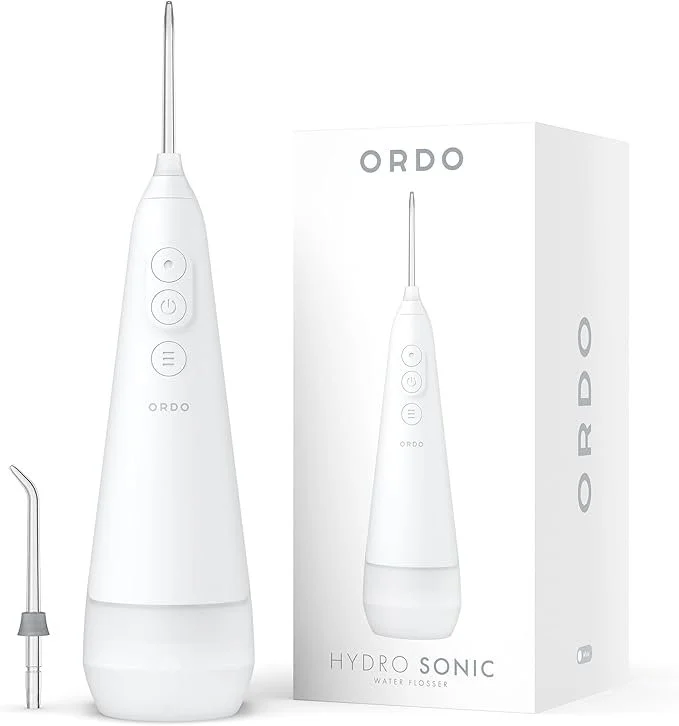
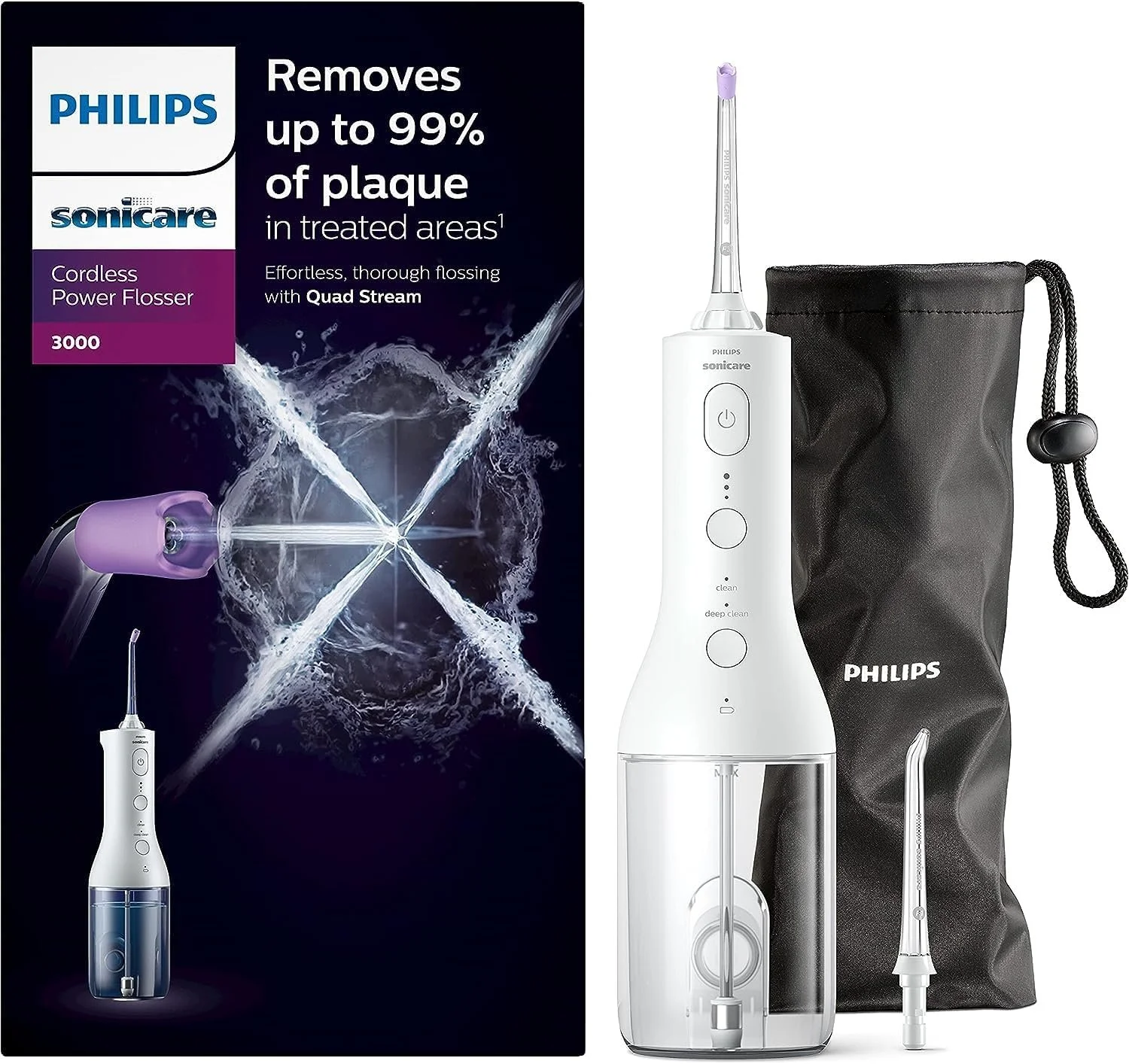
A water flosser, sometimes called an oral irrigator, uses a pressurised stream of water to clean between your teeth and along the gumline. Instead of physically scraping plaque away like string floss, it uses pulsating water to dislodge debris and bacteria.
It uses a large water reservoir that is then sprayed in a highly-focused stream through a long nozzle that you can direct around your mouth to tackle problem areas or clear debris from behind braces or around tricky wisdom teeth, clearing out anything you may have missed with your regular brushing.
They are particularly popular with people who have braces, implants or crowns, or anyone who finds traditional floss fiddly.
The battery is often enough to keep you cleaning for several weeks on a single charge, and you can simply add it to your rotation once a day to see the benefits.
Do water flossers actually work?
Short answer: yes, they do work. But like most things in dentistry, the full answer is a bit more nuanced.
Clinical research shows that water flossers can significantly improve gum health and reduce plaque when used correctly. One study published in the British Dental Journal found that a leading water flosser removed up to 99.9 percent of plaque from treated areas and was twice as effective as string floss for reducing gum bleeding.
There is also a strong body of evidence behind the technology. More than 70 clinical trials have demonstrated improvements in plaque removal, gingival bleeding and gingivitis when water flossers are used alongside brushing.
Even earlier studies have suggested improvements of up to 52 percent in gum health compared with string floss.
So yes, the science is pretty convincing. But that doesn’t mean they are automatically better for everyone.
What dentists say
Most UK dentists agree that interdental cleaning is essential, but the method matters less than consistency. Many now recommend water flossers as a practical alternative, especially for patients who struggle with traditional floss.
As one commonly cited principle in dentistry goes: the best cleaning method is the one you will actually use.
A survey of dental professionals found that nearly 80 percent recommend water flossing as part of a daily routine.
Hygienists often highlight compliance as the biggest benefit. String floss can be fiddly and time consuming, and many patients simply skip it, because the barrier to entry is so difficult to get around. A water flosser, on the other hand, is quick and easier to use.
The pros of water flossers
So where will you see the benefits?
1. Better gum health
One of the biggest benefits is improved gum health. Water flossers are particularly effective at reducing gingival bleeding, which is often an early sign of gum disease.
Some studies show they are up to 50 percent more effective than string floss for improving gum health.
For readers of Nova Smiles, this ties directly into our guides on preventing gingivitis and maintaining healthy gums long term.
2. Easier to use
Let’s be honest, flossing is not exactly enjoyable. Many people either rush it or skip it altogether, or even don’t fully understand how to floss properly in the first place.
Water flossers are much easier to handle, especially if you have:
Braces
Bridges or implants
Limited dexterity
Tight or crowded teeth
Because of this, people tend to use them more consistently, which leads to better results over time. Even if you’re not particularly techy, using a jet wash of water on your teeth is more engaging as a user, and you’re more likely to keep using something if it’s fun to use and actually feels effective.
3. Great for braces and dental work
If you have ever tried threading floss around braces, you will know how frustrating it can be.
Water flossers shine here. Research shows they can be up to three times more effective at cleaning around braces compared to string floss.
They are also ideal for implants and crowns, where traditional floss can struggle to reach.
4. Gentle but effective
Despite the pressure, water flossers are generally safe for gums and enamel. Dentists often describe them as a gentler option, particularly for people with sensitive gums.
Some users may notice mild bleeding at first, but this usually improves as gum health gets better.
The cons of water flossers
Of course, they are not perfect.
1. They can be messy
There is no getting around it. Using a water flosser can feel like a mini splash zone, especially when you are just starting out.
You will get the hang of it, but expect a bit of trial and error. It’s always worth leaning over the sink to allow the water to drain out without splashing around the bathroom, and just take it slowly, though things may inevitably get messy.
2. They do not always replace string floss
This is where things get interesting.
While water flossers are excellent at flushing out debris and reducing bacteria, they do not physically scrape plaque off the tooth surface in the same way string floss does.
Some dentists still recommend using both, especially if you are prone to plaque build up. Getting into a routine of using a water flosser in the evening and a string flosser in the morning, or doubling up can give huge benefits to your dental health.
3. Cost and space
Water flossers are more expensive than a pack of floss and take up more room in your bathroom. That said, there are now plenty of compact and cordless options available in the UK market that are even travel-friendly.
4. Technique still matters
Just like brushing, using a water flosser incorrectly will limit its effectiveness.
You need to angle it properly along the gumline and move methodically between teeth. Simply blasting water around your mouth will not do much. Take your time, learn the correct technique and stick to a solid routine.
Common myths about water flossers
Myth 1: “They are just a gimmick”
This is probably the biggest misconception.

Flossing regularly can have a huge impact on your dental health
While some online opinions are sceptical, the clinical evidence strongly supports their effectiveness. They are not a gimmick, but they are also not a miracle fix.
From Reddit discussions, opinions are mixed:
This reflects the reality. Results depend on the individual and how the device is used.
Myth 2: “They can replace brushing”
Absolutely not.
A water flosser is an addition to your routine, not a replacement for brushing. You still need to brush twice a day with fluoride toothpaste.
Myth 3: “They damage your gums”
When used correctly, water flossers are safe. In fact, they are often recommended for people with gum disease because they are less abrasive than traditional floss.
Myth 4: “You can fill them with anything”
There has been a trend of adding mouthwash or other liquids to water flossers. Dentists say this is generally unnecessary. Water alone is effective, and some substances may even damage the device or irritate your gums. There are a few high-end devices that can take fluoride-infused water in its tank, but the water jet is more than enough to get the job done.
Water flosser vs string floss: which is better?
This is the question everyone wants answered. The truth is, it’s not a simple “either, or”.
Research suggests that water flossers are at least as effective as string floss, and sometimes better for gum health and bleeding. However, traditional floss may still be better at physically removing plaque stuck tightly between teeth.
Many dentists now recommend a hybrid approach:
Use string floss for thorough plaque removal
Use a water flosser for flushing out bacteria and improving gum health
Or, if you hate flossing and never do it, switching to a water flosser is definitely better than doing nothing.
Who should use a water flosser?
Water flossers are especially useful if you:
Have braces or orthodontic appliances
Have implants, crowns or bridges
Struggle with manual flossing
Experience bleeding gums
Want a quicker, easier routine
They are also a great addition if you are following a more advanced oral care routine.
How to use a water flosser properly
To get the best results:
Fill the reservoir with lukewarm water
Start on a low pressure setting
Lean over the sink to avoid splashing
Aim the nozzle at the gumline
Pause briefly between each tooth
Use it once a day, ideally after brushing
Consistency matters more than perfection.
The verdict: are they worth it?
Water flossers are not a magic solution, but they’re far from a gimmick.
The science shows clear benefits for gum health, plaque reduction and overall oral hygiene. They are especially valuable for people who struggle with traditional flossing or have more complex dental needs.
If you already floss daily and do it well, you may not need one. But if flossing is something you skip or dread, a water flosser could genuinely improve your routine.
In other words, the best tool is the one you will actually use. And when it comes to your teeth and gums, consistency always wins.