You might have noticed a small, dark space appearing between two teeth, just above the gumline. Your teeth still touch near their edges, but there's now a triangular gap where the gum used to fill the space.
These gaps are commonly called black triangles between teeth, although the dental term is open gingival embrasures. They're particularly noticeable between the front teeth, where even a small change can affect the appearance of your smile.
The good news is that there are ways to make black triangles less noticeable, including composite bonding and orthodontic treatment. But before deciding how to close the space, it's important to understand why it's appeared.
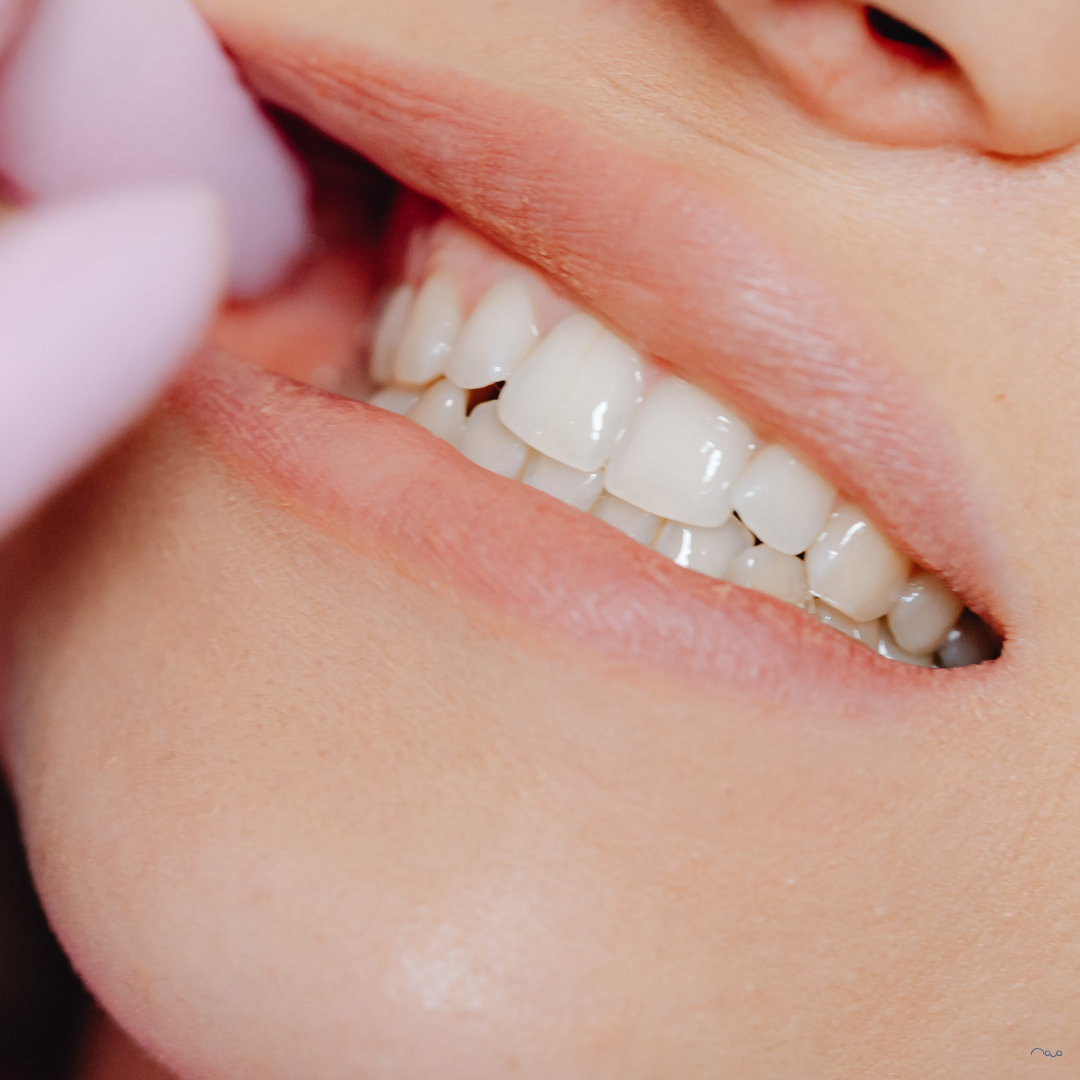
What are black triangles between teeth?
Healthy gums usually fill the space between neighbouring teeth, creating a small, triangular section of tissue known as the interdental papilla.
When this tissue no longer fills the space completely, a dark triangle becomes visible between the teeth. The darkness is simply the inside of your mouth showing through the gap, rather than a stain or discolouration on the teeth themselves.
Black triangles can vary considerably in size. Some are barely noticeable, while others create a visible space between the front teeth or make it easier for food to become trapped.
Although they can be a cosmetic concern, they may also indicate changes in the gums or bone supporting your teeth.
What causes black triangles to appear?
There isn't one single explanation. The shape and position of your teeth, the condition of your gums and previous dental treatment can all influence whether these spaces develop.
Gum recession and gum disease
One of the more important causes to investigate is gum disease.
When periodontal disease damages the tissues and bone supporting your teeth, the gum between them can lose some of its support. As the interdental papilla reduces in height, a triangular space may become visible.
This can happen gradually, and because gum disease isn't necessarily painful, the change in appearance might be the first thing you notice.
If a new black triangle appears alongside bleeding gums, persistent bad breath or teeth that feel loose, it's particularly important to have your gum health assessed.
The natural shape of your teeth
Not everyone has teeth that are perfectly rectangular. Some front teeth are wider towards their biting edges and become narrower near the gums, giving them a more triangular appearance.
These teeth tend to touch closer to their upper edges, leaving a larger space underneath for the gum to fill. If the gum tissue doesn't extend far enough into that space, a black triangle can become visible even when the teeth themselves are healthy.
This is one reason why two people with equally healthy gums can have quite different-looking spaces between their teeth.
Changes after braces or aligners
You might expect straightening your teeth to eliminate gaps, so discovering black triangles after orthodontic treatment can be disappointing.
However, crowded or overlapping teeth can conceal the shape of the underlying gum tissue. Once the teeth are aligned, spaces that were previously hidden may become visible.
The position of the tooth roots and the shape of the teeth also influence the result. This doesn't necessarily mean the orthodontic treatment has damaged your gums.
In suitable cases, further orthodontic adjustments or small changes to tooth shape may help reduce the spaces.
Changes in gum tissue over time
Black triangles become more common with age, but that doesn't mean they're an inevitable part of getting older.
Changes in gum thickness, tooth position and the supporting bone can all influence how well the gum fills the spaces between teeth. Previous gum disease may also become more apparent over time.
A new or enlarging gap shouldn't automatically be dismissed as an age-related change, particularly if you've noticed other differences in your gum health.
Can black triangles between teeth close naturally?
It depends on why the space has appeared.
If inflammation has altered the appearance of the gums, treating the underlying problem may improve the tissues. However, where gum tissue and supporting bone have been permanently lost, the missing papilla generally won't grow back to its original shape on its own.
Toothpaste, mouthwash and vigorous flossing won't rebuild lost gum tissue. In fact, being too aggressive with interdental cleaning can irritate the delicate gums between your teeth.
The aim is to keep the area clean without causing further trauma, while a dentist establishes whether treatment is needed.
Can composite bonding fix black triangles?
Composite bonding can be an effective way to reduce the appearance of black triangles, particularly when the spaces are relatively small and the surrounding teeth and gums are healthy.
The treatment involves applying tooth-coloured composite resin to the sides of the teeth, carefully reshaping them so that the contact area extends closer towards the gum.
By changing the contours of the teeth, a dentist may be able to reduce or close the visible space without needing to replace the missing gum tissue.
Composite bonding is generally less invasive than treatments involving extensive removal of tooth structure. It can also produce an immediate cosmetic improvement in suitable cases.
However, the result needs careful planning. Adding too much material can make teeth look unnaturally wide or create contours that are difficult to clean. Bonding also requires maintenance and may eventually need repairing or replacing.
For larger spaces, or where the teeth are poorly positioned, another treatment may be more appropriate.
What other treatments can close black triangles?
Composite bonding isn't the only option, and the most suitable approach depends on the cause and size of the space.
Orthodontic treatment
Braces or clear aligners can help in cases where the position or angle of the teeth is contributing to the gap.
Moving the teeth closer together or adjusting their alignment may change where they make contact, reducing the visible space beneath.
For triangular-shaped teeth, a dentist may also consider carefully reshaping the contact surfaces as part of orthodontic treatment. This isn't appropriate for every patient and requires careful assessment.
Gum treatments
Where gum disease is responsible, treating it is the priority. Periodontal treatment can help control inflammation and reduce the risk of further damage, although it won't necessarily restore the lost tissue between the teeth.
Specialist procedures to improve the shape or volume of the interdental papilla are available in selected cases, but rebuilding this delicate tissue is technically challenging and results can be unpredictable.
Veneers or other restorations
For people who also want to change the shape or appearance of their teeth, veneers or other restorations may be considered.
These can alter the contours of the teeth to reduce visible spaces, but they may involve more extensive treatment than composite bonding.
The aim should be to achieve a natural result while preserving as much healthy tooth structure as possible.
Are black triangles between teeth bad for your oral health?
Not necessarily. A small black triangle between otherwise healthy teeth may be primarily a cosmetic concern.
However, larger spaces can allow food to become trapped, making cleaning more awkward. And if the triangle has developed because of gum disease, the underlying condition needs attention regardless of whether the appearance bothers you.
The important distinction is between a space caused mainly by tooth shape and one associated with changes in the supporting tissues.
A dentist can assess your gum health, examine the shape and position of your teeth and determine whether further investigation is needed.
Should you try to close black triangles at home?
There are plenty of products marketed as ways to improve gum health, but none can reliably recreate gum tissue that's already been lost.
Avoid attempting to close spaces with DIY dental materials or using excessive brushing and flossing pressure in the hope of stimulating gum growth.
Instead, maintain good oral hygiene with fluoride toothpaste and appropriate interdental cleaning. If you're unsure which size interdental brush to use, your dentist or hygienist can advise you.
If a black triangle is new, getting larger or accompanied by bleeding gums, it's worth arranging an examination before pursuing cosmetic treatment.
Finding the right treatment for black triangles
Black triangles can be frustrating, particularly when they appear between teeth that were previously close together. But the visible gap doesn't always tell you what's happening beneath the gumline.
For some people, the answer may be a small amount of composite bonding. Others may benefit from orthodontic treatment, while changes associated with gum disease need a different approach altogether.
If you've noticed dark spaces appearing between your teeth, you can send Dr Zaeem Jafri a photograph through Nova Smiles' free online dental assessment.
He can offer an initial opinion on the options worth exploring, although assessing gum health and the underlying cause properly may require an in-person examination and X-rays. There's no obligation to proceed with treatment.