Floss or interdental brushes: which should you actually be using?
Medically reviewed by Dr Zaeem Jafri
If you’ve ever stood in the dental aisle wondering whether to pick floss or interdental brushes, you’re not alone.
Most people know they should be cleaning between their teeth. What’s less clear is how, and whether one option is better than the other.
The short answer is that floss and interdental brushes aren’t interchangeable. They do different jobs, and in an ideal world, you’d be using both.
We recently came across an clip featuring National Treasure Louis Theroux speaking about how much of a lifeline dental floss has been in a clip with British Vogue and how he won’t go anywhere without it after learning the hard way (more on that later in the piece…).
Why brushing alone isn’t enough
A toothbrush does a good job of cleaning the outer surfaces of your teeth. But it can’t reach the tight spaces between them.
Those areas are where food debris and plaque tend to sit. Left undisturbed, bacteria feed on this material and produce acids and toxins that can lead to decay and gum inflammation.
That process doesn’t take long to start. If food is left between the teeth overnight, it gives bacteria hours to multiply in a relatively undisturbed environment.
That’s why cleaning between your teeth isn’t something to be considered supplementary to your oral hygiene routine, but a core part of looking after them.
What dental floss actually does
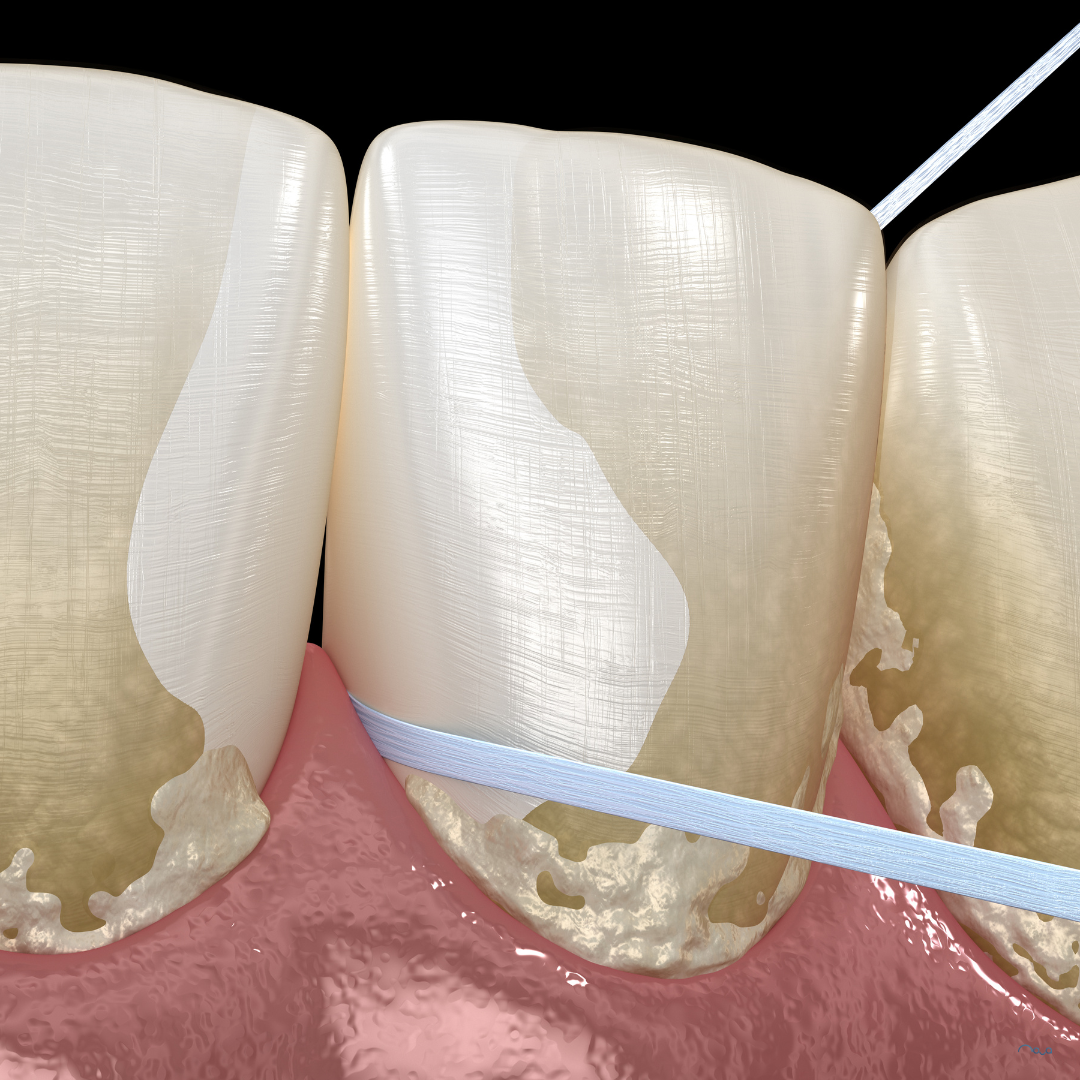
Floss is designed to clean the contact point between teeth, the tight area where two teeth touch.
This is a space that even the smallest interdental brush often can’t access.
When used properly, floss slides between the teeth and wraps slightly around each surface, helping to remove plaque from areas that are otherwise unreachable.
Tape floss, which is slightly wider and flatter than traditional floss, can be easier to use for many people and tends to be more comfortable.
Floss is particularly important for preventing decay between teeth, which is one of the most common places cavities develop.
What interdental brushes do differently
Interdental brushes work in a different way.
They are designed to clean just below the contact point, along the gumline and slightly underneath it. This is where plaque tends to accumulate and where gum inflammation often begins.
Because they physically fill the space between teeth, they can be very effective at disrupting plaque in a way that floss sometimes can’t, particularly in slightly larger gaps.
They are often the better tool for supporting gum health.
Why they’re not interchangeable
It’s tempting to think you can pick one or the other and be covered.
But floss and interdental brushes target different parts of the same space.
Floss reaches the tight contact area.
Interdental brushes clean the wider space below it, closer to the gums.
That’s why, ideally, they work best together.
What to do in real life
In an ideal world you routine would look like this:
use floss (or tape floss) to clean the contact points
use interdental brushes to clean along the gumline
do this once a day, ideally in the evening
But real life doesn’t always work like that. If you’re currently doing neither, adding one of these habits consistently is already a big step forward; you don’t need to go from zero to perfect overnight.
If you’re choosing just one to start with:
floss is better for very tight contacts
interdental brushes are often easier to use and better for gum health
The most important thing is consistency.
Why timing matters more than you think
Cleaning between your teeth before bed is particularly valuable. During the day, saliva helps to wash away food debris and neutralise acids. At night, saliva flow drops. The mouth becomes a much more stable environment for bacteria.
If food is left sitting between your teeth overnight, bacteria have hours to feed and multiply without interruption. Removing that debris before sleep reduces the opportunity for damage to develop.
Don’t forget the back teeth
The teeth at the back of your mouth are often the most neglected.
They’re harder to see, harder to reach, and easier to skip when you’re tired. But they also do the majority of the work when it comes to chewing.
When decay or gum problems affect these teeth, the impact is often more noticeable. Chewing becomes uncomfortable. Sensitivity can develop. In more advanced cases, teeth may need root canal treatment or even removal.
Making the effort to clean these areas properly is one of the simplest ways to avoid more complex (and frankly, pretty unpleasant and confidence-draning problems) later on in life.
Going back to Louis Theroux - in this What’s in my bag interview that admitted that he now carries floss around as an essential, after realising the red wine and chocolate had finally caught up with him — and it’s often those back teeth, the ones we rely on most for chewing, that take the hit first.
What matters most
There isn’t a single “perfect” tool that works for everyone. What matters is understanding what each tool does, and building a routine that you can actually stick to.
If you’re using both floss and interdental brushes, you’re covering your bases well. If you’re using one consistently, you’re already doing more than most.
Unsure which sizes or techniques are right for you? It’s always worth asking.
With Nova, you can get FREE guidance on how to clean between your teeth properly, based on your specific situation.
We also offer a free toothbrushing coach tool on our website, to help you get the best out of your brushing. You’ll get customised feedback on your brushing, and how you can improve it. Start here.