A Tooth Is More Than a Tooth: What Really Happens After an Extraction
Medically reviewed by Dr Zaeem Jafri BDS on 28th January 2026
Most people think of tooth loss as a cosmetic issue. A gap in a smile. Something you notice in photos and quietly tell yourself you’ll “sort out later.”
What’s rarely explained is that when a tooth is removed, far more than the visible crown disappears. Your body responds almost immediately. The bone that once held that tooth in place begins to change. And unless something is done to protect the area, those changes slowly reshape your mouth over time.
Removing a tooth is sometimes the right decision. Deep decay, fractures and infections can reach a point where a root canal is no longer possible. In those cases, extraction can bring real relief. Pain settles. Infection clears. The immediate problem is solved.
But that moment is also the start of a biological process that deserves to be part of the conversation.
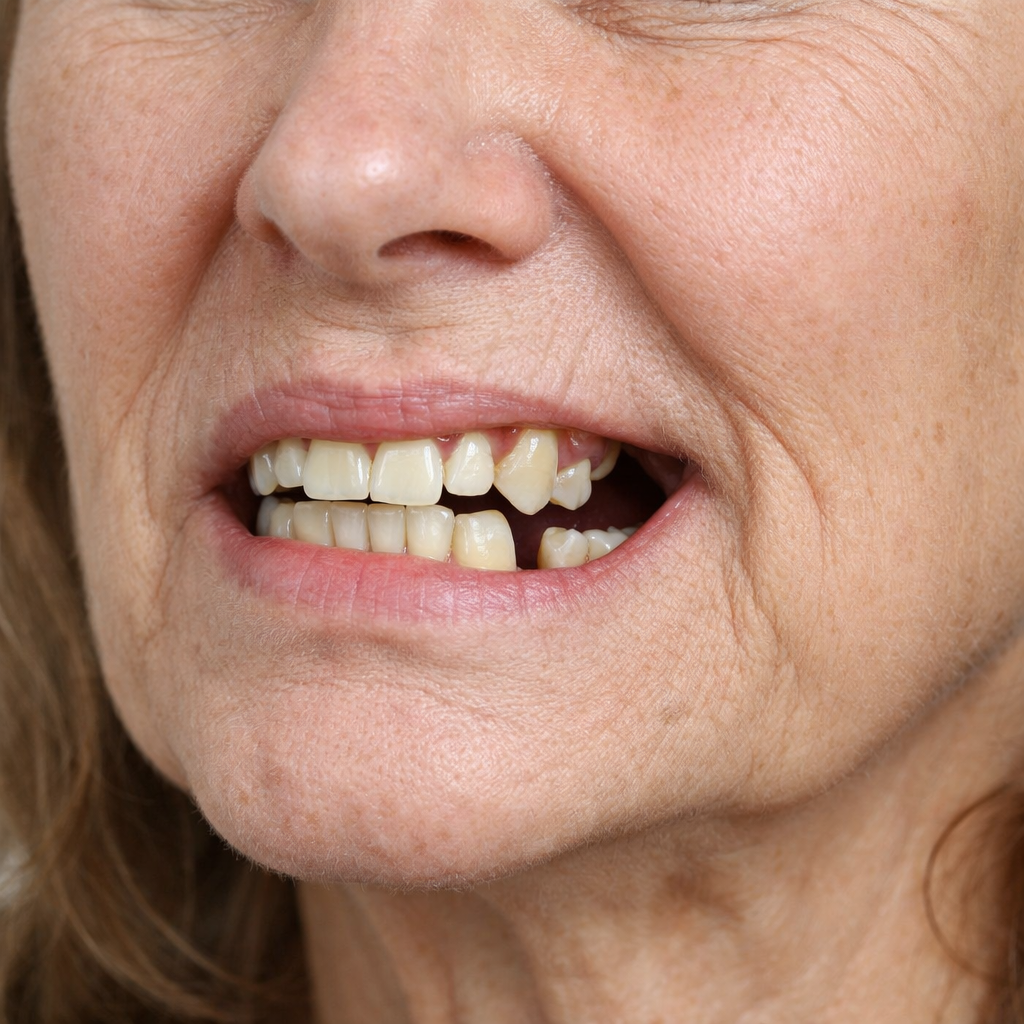
Loss of teeth allows the jawbone to shrink over time. As the bone recedes, neighbouring teeth drift, the bite collapses, and the face can begin to look hollowed or unsupported — changes that start quietly after an extraction and become visible years later.
Bone Resorption: The Quiet Change No One Talks About
Teeth don’t exist in isolation. Each one sits in living bone, supported by ligaments and balanced by the teeth around it. Bone is dynamic tissue. It responds to pressure and function.
When a tooth is present, chewing stimulates the bone and keeps it healthy. When a tooth is removed, that stimulation disappears. The body interprets this as redundancy. The structure is no longer needed.
So the bone begins to resorb, and this is a process that starts almost straight away.
In the weeks and months after an extraction, the ridge where the tooth once sat becomes narrower and flatter. In the upper jaw, where bone is softer, this can happen surprisingly quickly. At the same time, the neighbouring teeth begin to drift. They tip into the space. The tooth above, which once bit against the missing one, starts to drop down.
None of this feels dramatic. It doesn’t happen overnight.
It unfolds quietly.
The Long-Term Effects You Don’t See Right Away
Years later, people return saying their bite feels “off.” Food traps where it never used to. Cleaning becomes harder. A replacement that once seemed straightforward is now complicated. There’s less bone available for a dental implant.
Sometimes the face itself looks subtly collapsed in that area.
All of this stems from one simple change: the body adapting to the absence of a tooth.
This doesn’t mean teeth should never be removed. Sometimes they have to be. But the decision shouldn’t stop at “take it out.”
Before an extraction, there should be a conversation about what happens next.
Why Planning Matters Even If You’re Not Ready for an Implant
Not everyone is ready for an implant straight away. Implants are excellent, but they’re expensive and not always immediately possible.
What matters is having a plan.
Two questions need answering:
How will the bone be preserved?
How will the neighbouring teeth be kept in position?
If those questions aren’t asked, future treatment becomes more complex by default.
Dental implants work so well because they replace both the root and the crown. The implant sits in the bone and restores function. That stimulation tells the body the structure is still needed. Bone is preserved. Teeth remain stable. The bite stays balanced.
In many ways, an implant behaves like a natural tooth.
That’s why implants are considered the gold standard.
But when implants aren’t possible immediately, bone preservation becomes essential.
Bone Grafting: Keeping Your Options Open
Bone grafting is often misunderstood. It doesn’t mean rebuilding an entire jaw.
It involves placing a small amount of artificial bone into the socket after a tooth is removed. This acts as a scaffold. It slows the natural collapse of the ridge and preserves the shape of the area.
It doesn’t replace the tooth.
It doesn’t restore function.
What it does is keep your options open.
When combined with a temporary solution (such as a small denture or a clear retainer with a false tooth) it prevents neighbouring teeth from drifting while you decide what to do next.
This approach is particularly valuable for people who:
aren’t ready for an implant financially
need time to consider their options
are too young for immediate implant placement
need a period of healing before further treatment
It is almost always simpler and cheaper to graft at the time of extraction than to rebuild lost bone years later.
A Different Way to Think About Tooth Removal
The key point is this: removing a tooth doesn’t just solve today’s problem. It shapes tomorrow’s anatomy.
You don’t need to rush into complex treatment. You don’t need to commit to an implant straight away. But you do deserve to understand what your body will do in the absence of a tooth.
A short conversation before an extraction can change the trajectory entirely.
How will the bone be preserved?
How will the teeth be kept in position?
What will your options look like in a year, or five years?
Dentistry isn’t only about fixing what hurts now. It’s about protecting the structure you’ll need in the future.
When that conversation happens early, you keep more control, and far more choice.