Why Do My Teeth Feel Rough Even After Brushing?
You finish brushing your teeth, run your tongue across them and notice that they don't feel quite as smooth as you'd expect. Perhaps there's a gritty feeling behind your bottom front teeth, a rough patch on one particular tooth, or a fuzzy coating that seems to return surprisingly quickly after brushing.
It's easy to assume you haven't cleaned your teeth properly, but that's not necessarily the case.
Teeth can feel rough after brushing because of plaque, hardened tartar, changes to the enamel surface or a chipped tooth or filling. If the roughness disappears after cleaning, plaque may be responsible. A persistent rough patch, particularly on one tooth, may need a dentist to investigate.
Where you notice the roughness, how it feels and whether it disappears after brushing can all provide useful clues about what's causing it.
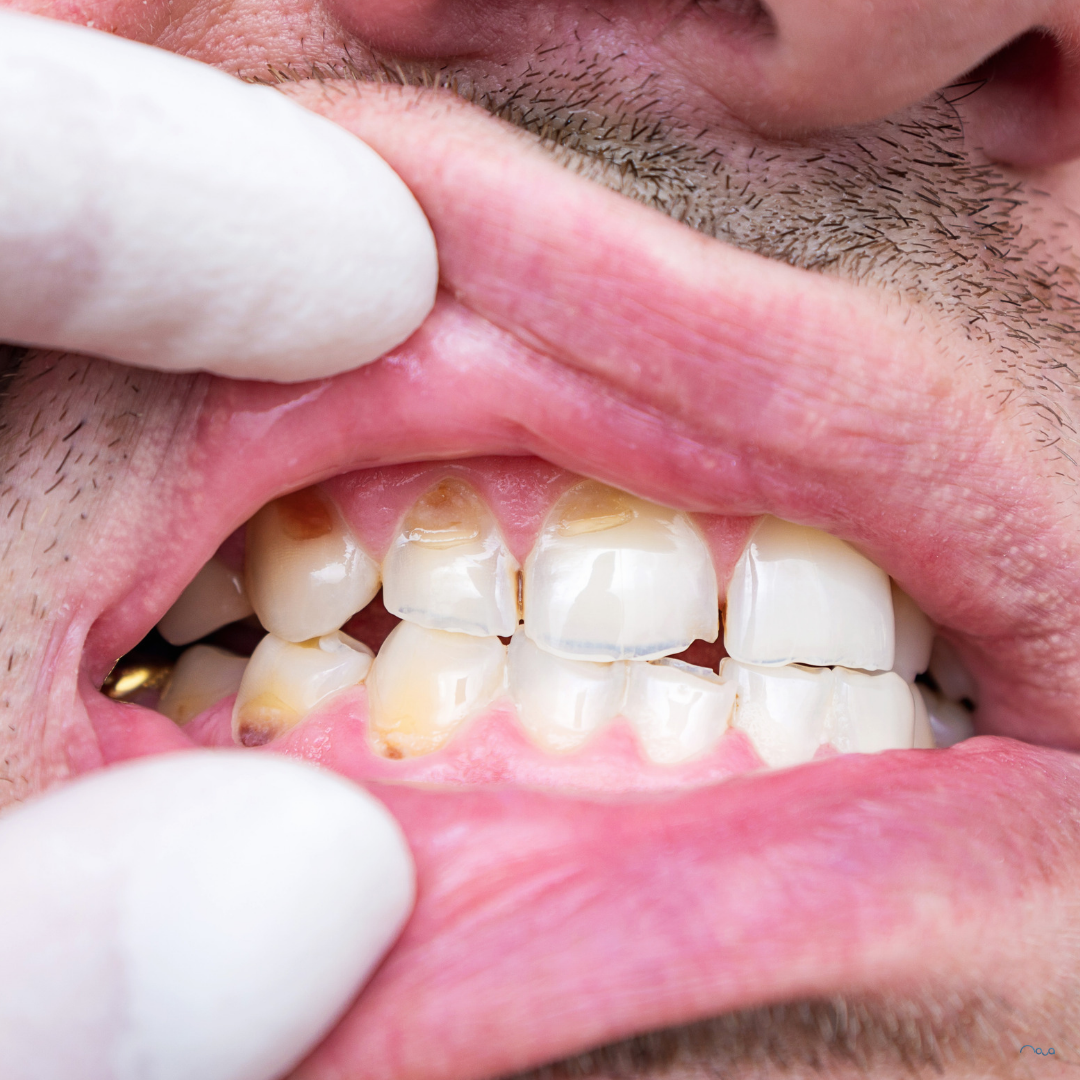
What causes teeth to feel rough or gritty?
Healthy enamel generally has a smooth surface, although teeth naturally have small ridges, grooves and variations in texture.
If your teeth suddenly feel rougher than usual, it's worth paying attention to whether the sensation affects several teeth or just one. A fuzzy coating across multiple teeth is often quite different from a single rough edge that catches your tongue.
Plaque building up on your teeth
Plaque is a soft, sticky film of bacteria that continually forms on your teeth.
Even after a thorough brushing, plaque begins accumulating again. That's normal. However, if it isn't removed effectively, it can leave your teeth feeling slightly fuzzy or coated.
You might notice this particularly when you wake up or towards the end of the day. If your teeth feel smooth immediately after brushing but develop that fuzzy sensation again later, plaque could be responsible.
Tartar that brushing can't remove
Tartar, also called calculus, develops when plaque becomes mineralised by substances in your saliva. Unlike soft plaque, it's a hard deposit that can't be removed with an ordinary toothbrush.
You might feel a rough ridge with your tongue or notice a yellowish or brownish deposit close to the gumline.
Brushing harder won't remove it; in fact, excessive pressure can damage your gums and contribute to tooth wear. A dentist or hygienist can remove tartar using professional cleaning instruments.
Changes to your tooth enamel
Sometimes the roughness is coming from the tooth itself rather than something sitting on top of it.
Enamel is the hard outer covering of your teeth, but it isn't indestructible. Over time, acid exposure and physical wear can alter its surface.
Repeated acid exposure can gradually dissolve enamel, changing the shape and texture of the tooth. You might also notice increased sensitivity or edges that look more transparent than they used to.
Because enamel doesn't grow back once it's been lost, identifying what's causing the damage is important.
A rough filling or chipped tooth
If the roughness is confined to one tooth, an existing filling or a small chip could be responsible.
Fillings can become worn, chipped or slightly uneven over time. Sometimes a small edge develops where the filling meets the natural tooth, creating a surface that catches your tongue.
You might also notice food collecting around the area or floss catching between two teeth.
A very small chip can be surprisingly noticeable. Your tongue is extremely sensitive to changes in texture, so even a tiny irregularity can feel much larger than it actually is.
Not every rough filling needs replacing. Depending on its condition, a dentist may be able to smooth or polish it.
Why do my teeth feel rough behind my bottom front teeth?
If you've noticed a rough or gritty feeling behind your lower front teeth, there's a good chance you're feeling tartar.
This is one of the most common places for tartar to accumulate, and there's a reason for that.
Saliva contains minerals, including calcium and phosphate, which can contribute to the hardening of plaque. Some of the major salivary glands release saliva into the mouth through openings beneath the tongue, close to the lower front teeth.
That means plaque in this area is regularly exposed to mineral-rich saliva, making it particularly prone to becoming tartar.
You might notice a hard ridge along the backs of your teeth, sometimes accompanied by a yellowish or brownish colour.
Once plaque has hardened into tartar, brushing and flossing won't remove it. Professional cleaning is needed.
If you find tartar building up here regularly, your dentist or hygienist can also show you how to clean the area more effectively between appointments.
Why do my teeth feel fuzzy even after brushing?
Brushing twice a day is important, but how you brush matters too.
It's possible to spend two minutes brushing and still consistently miss certain areas, particularly along the gumline or behind the lower front teeth.
An electric toothbrush can help some people clean more consistently, but technique remains important whichever brush you use.
Try angling the bristles towards the gumline, working systematically around your mouth and cleaning between your teeth daily.
You can also use disclosing tablets, which temporarily colour plaque to show areas you might be missing.
Nova Smiles has a toothbrushing coach designed to help you improve your brushing technique.
It's also worth remembering that plaque begins forming again after you've cleaned your teeth. A fuzzy feeling that develops several hours later doesn't automatically mean you've done a poor job.
Can rough teeth be a sign of enamel damage?
They can, although roughness alone isn't enough to tell you whether your enamel is damaged.
Enamel erosion happens when acids gradually dissolve the mineral structure of the tooth surface. These acids can come from food and drinks or, in some cases, from stomach acid reaching the mouth.
Over time, erosion can change the texture and shape of your teeth. The edges may become thinner, the surfaces may appear smoother or more worn, and sensitivity can develop as more of the underlying tooth structure becomes exposed.
Not all enamel damage feels rough. Some eroded surfaces can actually feel unusually smooth.
That's why it's difficult to diagnose enamel problems simply by running your tongue across your teeth.
If you've noticed a change in texture alongside sensitivity, discolouration or visible wear, a dentist can assess whether your enamel is being affected.
Can you make rough teeth smooth again?
In many cases, yes. But the right treatment depends on what's causing the roughness.
If it's plaque: Improving your brushing and interdental cleaning can help remove the soft deposits and leave your teeth feeling cleaner.
If it's tartar: A dentist or hygienist can remove the hardened deposits using professional cleaning instruments. This is often enough to restore a smoother feeling to the affected surfaces.
If it's a rough filling: A dentist may be able to polish or adjust the filling. If it's damaged or there's decay around its edges, repairing or replacing it might be necessary.
If you've chipped a tooth: Small irregularities can sometimes be smoothed. For more noticeable damage, composite bonding or another restoration may be appropriate.
If it's enamel erosion: Lost enamel cannot naturally grow back. Treatment focuses on identifying the cause, protecting the remaining tooth structure and, where necessary, restoring damaged areas.
The important thing is knowing what you're dealing with before trying to fix it.
Can I remove rough patches from my teeth at home?
If the roughness is caused by soft plaque, improving your daily cleaning routine may help. But hardened tartar, damaged enamel and chipped fillings are different.
You might have seen dental scraping tools advertised for home use, but trying to remove tartar yourself can injure your gums or damage your teeth.
Similarly, abrasive whitening products aren't a good solution for rough tooth surfaces. They won't repair enamel or fix a damaged filling.
Brushing harder isn't the answer either. More pressure doesn't necessarily mean cleaner teeth, and aggressive brushing can contribute to gum recession and tooth wear.
If an area remains rough despite normal cleaning, it's better to have it checked.
Why do my teeth feel rough after a professional clean?
After tartar has been removed, you may become more aware of the natural shape of your teeth.
Areas that were previously covered by deposits can feel unfamiliar to your tongue, particularly around the gumline or between teeth.
Your teeth should generally feel cleaner and smoother after a professional clean, though. If a particular area feels persistently sharp, unusually rough or uncomfortable afterwards, contact your dental practice so they can check it.
When should you see a dentist about rough-feeling teeth?
If your teeth occasionally feel fuzzy before brushing but return to normal afterwards, there's usually no immediate reason for concern.
However, it's worth arranging a dental appointment if you notice a rough patch that doesn't disappear, a new sharp edge on one tooth, or a hard deposit close to the gums that you can't remove.
You should also have the area checked if floss repeatedly catches around a filling, or if the roughness is accompanied by sensitivity, pain or changes in tooth colour.
A dentist can examine the tooth surfaces, check for tartar or damaged restorations and look for signs of enamel wear.
Rough teeth don't necessarily mean unhealthy teeth
It's satisfying when your teeth feel completely smooth after brushing, but texture alone doesn't tell you everything about their health.
Some roughness is caused by deposits that can be removed relatively easily. Other changes involve the tooth surface itself and need a closer look.
The useful thing is recognising what's normal for your mouth and noticing when something changes.
If you've spotted a rough patch, an unusual edge or something that doesn't feel quite right, you can send Dr Zaeem Jafri a photo and a description through Nova Smiles' free online dental assessment.
He can offer an initial opinion on what might be causing it and whether you should arrange an examination. Some problems can't be assessed reliably from photographs alone, and there's no obligation to proceed with treatment.