Noticing that one of your adult teeth feels loose can be quite unsettling. You might feel a slight movement when you press it with your tongue, notice something different when you bite down, or suddenly become very aware of a tooth that you've never given much thought to before.
Unlike children's teeth, adult teeth aren't supposed to become noticeably loose. But that doesn't necessarily mean the tooth is about to fall out.
There are several reasons an adult tooth might start moving, from problems with the gums to an injury or excessive pressure from grinding. Some causes are more serious than others, and the sooner you find out what's happening, the better the chances of protecting the tooth.
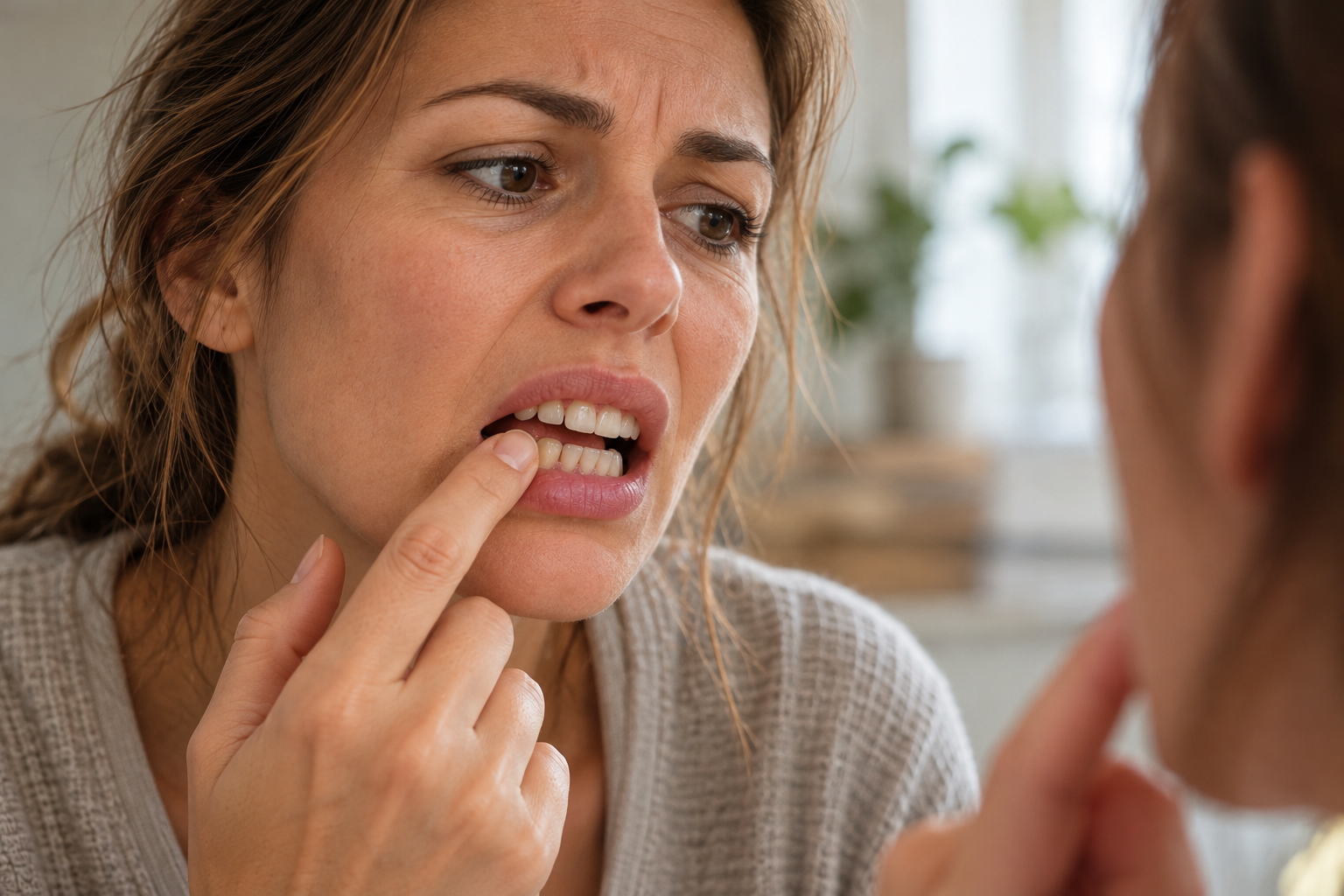
Is it normal for adult teeth to move slightly?
Your teeth aren't completely rigid. They're held in their sockets by tiny fibres called periodontal ligaments, which act as a cushion between the tooth and the surrounding bone.
This means healthy teeth have a very small amount of natural movement, although it's usually too subtle to notice.
If you can suddenly feel a tooth moving, particularly if it's something you haven't noticed before, it's worth having it checked. If you can, try not to keep testing it with your tongue or fingers. Repeatedly pushing a loose tooth isn't going to help it settle.
Why does my adult tooth feel loose?
There are several possible explanations, and the cause isn't always obvious just by looking at the tooth.
Gum disease
One of the most common causes of loose teeth in adults is periodontal disease, an advanced form of gum disease.
Your gums and the bone underneath them provide much of the support that keeps your teeth firmly in place. When gum disease progresses, inflammation and infection can damage these supporting tissues.
Over time, the bone around a tooth can be lost, leaving it with less support and potentially allowing it to move.
You might also notice bleeding when brushing, receding gums, persistent bad breath or gaps appearing between teeth. However, gum disease can progress without much pain, which is one reason people don't always realise there's a problem.
Teeth grinding or clenching
If you grind or clench your teeth, particularly during sleep, you may be putting considerable pressure on them without realising it.
This can irritate the periodontal ligament and make a tooth feel tender or slightly mobile. Some people also notice that their bite feels different or that their teeth are more sensitive when they wake up.
Grinding doesn't necessarily cause permanent looseness, but it can make an existing problem worse, especially if the tooth has already lost some support through gum disease.
A dentist can check for signs of excessive wear, pressure and changes in your bite.
An injury to the tooth
A knock to the mouth can damage the tissues holding a tooth in place, even if the tooth itself looks completely normal.
You might notice looseness immediately after an accident, or the tooth may become uncomfortable when biting.
A tooth that's been loosened by an injury needs prompt dental assessment. Depending on the damage, a dentist may need to stabilise it while the supporting tissues heal.
Even if there's no visible crack or bleeding, it's important not to assume everything is fine.
Infection around the tooth
An infection affecting the tissues around a tooth can sometimes cause it to feel loose or raised when you bite.
This may be accompanied by pain, swelling, a bad taste or tenderness around the gum. Occasionally, the discomfort is surprisingly mild. An abscess won't reliably resolve without dental treatment, even if the pain temporarily improves.
Changes in your bite
Sometimes a tooth is taking more pressure than it should when you bite together. This might happen after changes to dental restorations, tooth movement or changes in the way your teeth meet.
Excessive biting forces can irritate the tissues supporting a tooth, making it feel uncomfortable or more mobile. Your dentist can examine your bite to see whether pressure is contributing to the problem.
Can a loose adult tooth tighten back up?
Sometimes, yes. But it depends entirely on why the tooth has become loose.
If the movement is caused by an injury or temporary inflammation of the periodontal ligament, the tooth may become firmer as the tissues recover, provided there isn't significant damage to the supporting structures.
If gum disease is responsible, treatment can reduce inflammation and help stabilise the condition. Some teeth become less mobile after periodontal treatment, although bone that has already been lost doesn't simply grow back on its own.
This is why diagnosing the cause matters. A tooth that's loose because of grinding needs a different approach from one that's loose because of advanced gum disease.
While some loose teeth can be saved, others may have lost too much support for treatment to be successful.
What should I do if my adult tooth feels loose?
The first thing is to avoid putting unnecessary pressure on it.
Try chewing on the opposite side of your mouth, particularly if the tooth feels tender, and avoid biting into hard or chewy foods with the affected tooth.
Continue brushing gently and cleaning between your teeth. It's tempting to avoid the area altogether, but allowing plaque to build up can make gum inflammation worse.
Most importantly, arrange a dental appointment rather than waiting to see whether the tooth becomes noticeably looser.
A dentist can examine the gums, check how much movement there is, assess your bite and take X-rays where appropriate to look at the supporting bone and surrounding structures.
These findings help determine whether the tooth is likely to recover, needs treatment or requires closer monitoring.
When is a loose adult tooth an emergency?
A tooth that becomes loose after a fall, sporting injury or blow to the mouth should be assessed urgently, ideally on the same day. Early treatment can make an important difference to the outcome.
You should also seek urgent dental advice if the looseness is accompanied by significant pain, swelling, pus or signs of infection.
If you develop severe facial swelling, difficulty breathing or swallowing, or swelling affecting your eye, seek emergency medical care.
If a tooth has become gradually looser over several weeks or months without severe symptoms, it may not require emergency treatment, but you should still arrange a dental assessment promptly.
How does a dentist treat a loose adult tooth?
Treatment depends on the cause and how much support remains around the tooth.
If gum disease is involved, periodontal treatment may be needed to remove bacterial deposits from beneath the gums and help control inflammation. Ongoing cleaning and maintenance are important to prevent further damage.
If grinding or clenching is contributing, your dentist may recommend a custom-made night guard or investigate other ways of reducing excessive pressure.
A tooth loosened by an injury may need temporary splinting, which involves supporting it using neighbouring teeth while the tissues heal.
In some situations, bite adjustments or treatment of an underlying infection may help.
Extraction is generally considered when a tooth cannot be predictably maintained. It isn't automatically the first option simply because a tooth has become loose.
What if my tooth feels loose but doesn't hurt?
This is particularly important because a loose tooth doesn't have to be painful to indicate a problem.
Gum disease, for example, can gradually damage the tissues supporting your teeth without producing the kind of sharp pain you'd associate with toothache.
You might only become aware of it when a tooth starts to move, a gap appears or your bite begins to feel different. So although the absence of pain is reassuring in some situations, it doesn't tell you whether the tooth is healthy.
Don't wait for a loose tooth to get worse
A loose adult tooth is a symptom rather than a diagnosis. The important question is what's causing the movement and whether the supporting tissues can be protected.
Some teeth settle down once the underlying problem is treated. Others need more extensive care, particularly if there's already been significant bone loss.
The earlier you have it assessed, the more options you may have.
If you've noticed a change in one of your teeth and aren't sure what to do next, you can send Dr Zaeem Jafri a photo and a description of your symptoms through Nova Smiles' free online dental assessment.
He can offer an initial opinion on the appropriate next steps, although assessing tooth mobility and bone support usually requires an in-person examination and potentially an X-ray. There's no obligation to proceed with treatment.