Gum grafting is a minor surgical procedure used to treat receding gums by adding new tissue to areas where the gum has worn away. Simple cases are carried out by specifically trained dentists or specialist periodontists in general practice. More severe and advanced cases (like replacing tissue lost due to mouth cancer) may need to be carried out in dental hospitals by oral or maxillofacial surgeons.
What is Gum Grafting?
Gum grafting is a procedure that rebuilds and strengthens the gum around a tooth where it has receded. During treatment, a small piece of tissue is either taken from another area of your mouth or provided as a substitute material, then placed over the exposed root and secured in position. This helps restore a healthier band of gum, protects the root surface and improves sensitivity and aesthetics. It is a routine procedure carried out under local anaesthetic with a high success rate when planned correctly.
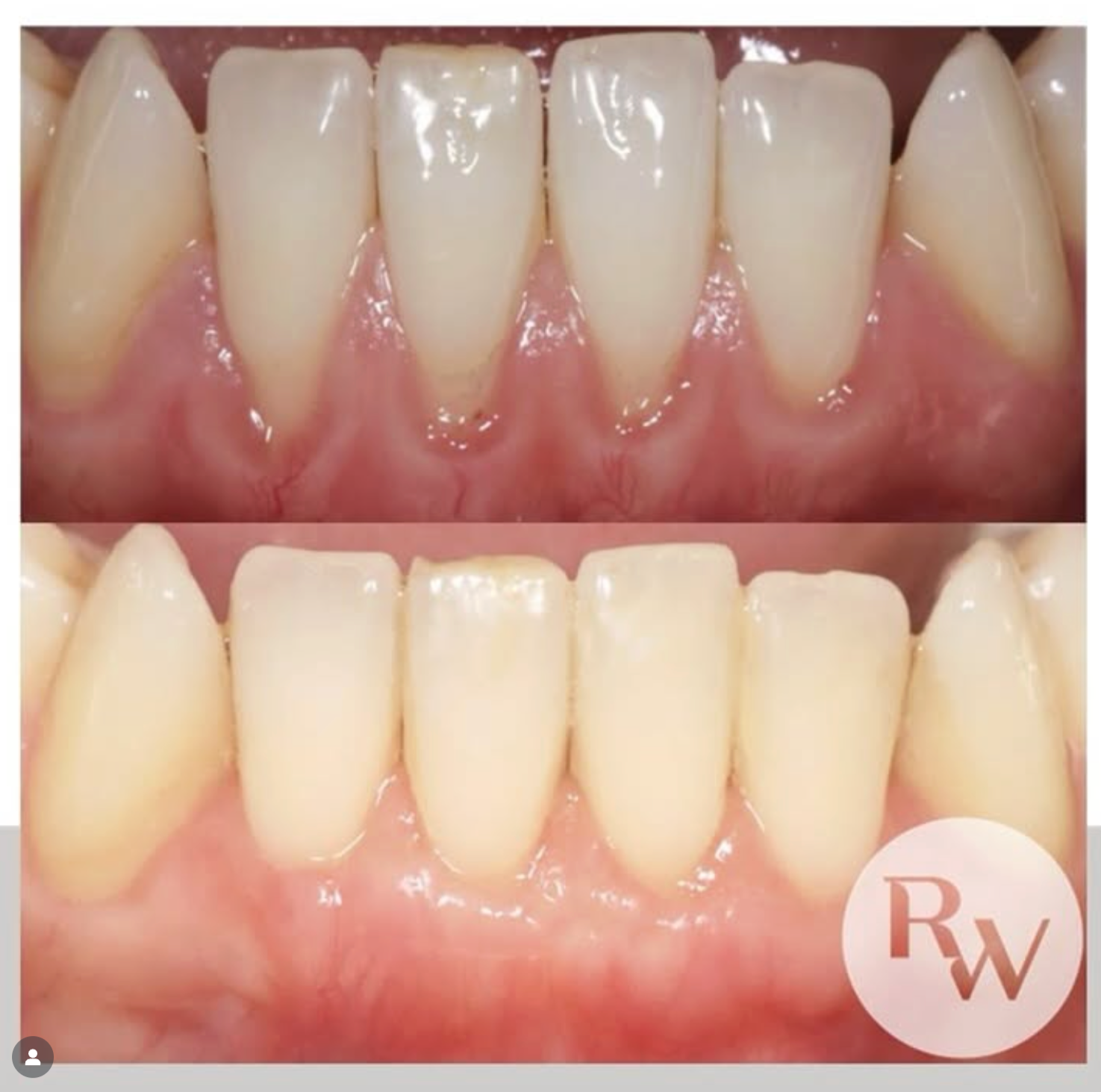
A gum graft may also be used to improve the thickness and appearance of the gum when missing teeth are being replaced with implants or bridges. In these cases, the aim is not only to protect the area but also to create a natural-looking contour around the new tooth so the final result blends in with the surrounding teeth and gum.
What is Gum Recession?
Gum recession is when the gum pulls back or wears away from the tooth, exposing more of the root surface. It often develops slowly, and many people do not notice it until they see longer-looking teeth or feel sensitivity. Recession can happen for several reasons, including:
Brushing too firmly
Gum disease
A naturally thin gum type
Orthodontic movement
Grinding
Once the gum has receded, it does not grow back on its own, which is why monitoring and treatment are important to protect the tooth and prevent the problem from getting worse.
Different Types of Gum Graft
There are several different approaches to gum grafting, and the right option depends on how much the gum has receded, how thin the tissue is and the aesthetic needs of the area. Some techniques use your own tissue, usually taken from the palate, while others use modern donor or collagen-based substitutes.
Each method has strengths, limitations and ideal situations where it delivers the best results. Below is an overview of the most commonly used graft types to help you understand how they differ and when each one is recommended.
Connective tissue graft
A piece of gum and connective tissue is taken from the roof of your mouth (your palate). Your dentist will then cut a flap of gum around the receded area and place this graft underneath the flap and stitch the area together. This type of gum graft is considered the gold standard for predictably covering exposed root surfaces.
Pros of a connective tissue graft
Excellent aesthetic results
High success rate
Cons of a connective tissue graft
The donor site on the palate can be a bit sore during healing
Free gingival graft
A small piece of gum tissue (without the connective tissue) is taken from the palate (roof of your mouth) and placed directly onto the area of recession and stitched in place.
Pros
Less invasive procedure both at the donor site and at the area of recession
Useful when the gum is extremely thin
Cons
Aesthetic match is not always perfect as the tissue can look slightly lighter
Pinhole technique
This is not technically a graft as no donor tissue is being used, but it’s a technique used instead of grafting, so it’s worth talking about. Instead of making larger incisions, your dentist creates a tiny hole in the gum above the receded area. Special instruments are then used through this opening to gently loosen and reposition the existing gum tissue so it can be slid down to cover the exposed root.
Small collagen strips are often placed underneath to support the new position while it heals. Because there are no stitches and no donor site, patients usually experience less discomfort and a quicker early recovery. It works best when the gum is already reasonably thick and the recession is mild to moderate.
Pros
No stitches and no palate donor site
Faster initial healing
Good for patients who prefer a minimally invasive option
Cons
Not always suitable when gum is very thin
Less predictable root coverage compared with connective tissue grafts
Long term evidence is still developing
Alloderm or collagen matrix grafts
Alloderm and collagen matrix grafts are alternatives to using your own tissue from the palate. Instead of harvesting gum tissue, the dentist places a processed donor membrane or a collagen-based scaffold over the area of recession. These materials act as a framework that your own cells gradually grow into, helping to increase the thickness of the gum and protect the exposed root.
They are particularly useful when several teeth need treatment in one visit or when you wish to avoid the extra healing required from a palate donor site.
Pros
No palate discomfort
Useful when treating multiple teeth in one visit
Good general thickening of gum tissue
Cons
Root coverage success is slightly lower than with your own tissue
Cost can be higher
Aesthetic match varies depending on healing
The Gum Grafting Precedure - Step By Step
Every case is different, so your dentist will always tailor the plan and approach to your specific needs. Even so, there is a general pathway most gum grafting treatments follow, and understanding this can help you feel prepared for each stage.
Before your treatment
Your dentist will carry out a full consultation to assess your general and dental health, the extent of recession and whether grafting is appropriate. You should then make sure:
The costs are all explained clearly, along with any available finance options to help you plan treatment.
Alternative approaches are discussed so you can make an informed choice about the best route for your situation.
You go through the consent process, covering the risks, benefits, limits and possible outcomes of the procedure.
You request to see a portfolio of your dentist’s previous gum grafting cases to understand the type of results they achieve.
Highlight the expected results, any limitations and backup plans so you have realistic expectations.
You should be guided through the treatment steps, the aftercare you will need and the expected healing timeline so you know exactly what to expect.
The gum grafting procedure
Local anaesthetic - The area to be treated, and if needed the donor site on the palate, is fully numbed with local anaesthetic so you are comfortable throughout the procedure.
Cleaning and preparation - The teeth involved are gently cleaned, and any plaque is removed. The gum around the recession is prepared to allow the graft to sit in the correct position.
Taking the graft or preparing the substitute - If your own tissue is being used, a small piece is taken from the palate or another suitable site. If a substitute (such as Alloderm or a collagen matrix) is being used, it is trimmed and hydrated, ready for placement.
Preparing the recipient site - A small gum flap is raised, or the tissue is carefully loosened around the recessed area so there is space for the graft to be positioned and for the gum to be moved into a healthier position.
Placing the graft - The graft or substitute material is placed over the exposed root surface and adjusted so it covers the area as planned and sits smoothly against the tooth.
Securing the graft - Fine stitches (sutures) are used to secure the graft in place and to stabilise the surrounding gum. In some techniques, small collagen strips or membranes are added underneath for extra support.
Checking your bite - Your dentist will check that your bite is not placing any extra pressure on the treated tooth or graft so it can heal undisturbed.
Dressing and protection - In some cases, a protective dressing is applied over the graft or donor site on the palate to reduce irritation and help with comfort in the first few days.
Immediate postoperative advice - Before you leave, you will be given written and verbal instructions on pain relief, how to clean the area, what to eat, and what to avoid in the first stages of healing.
Most gum grafting appointments take between forty-five and ninety minutes, depending on how many teeth are treated and which technique is used.
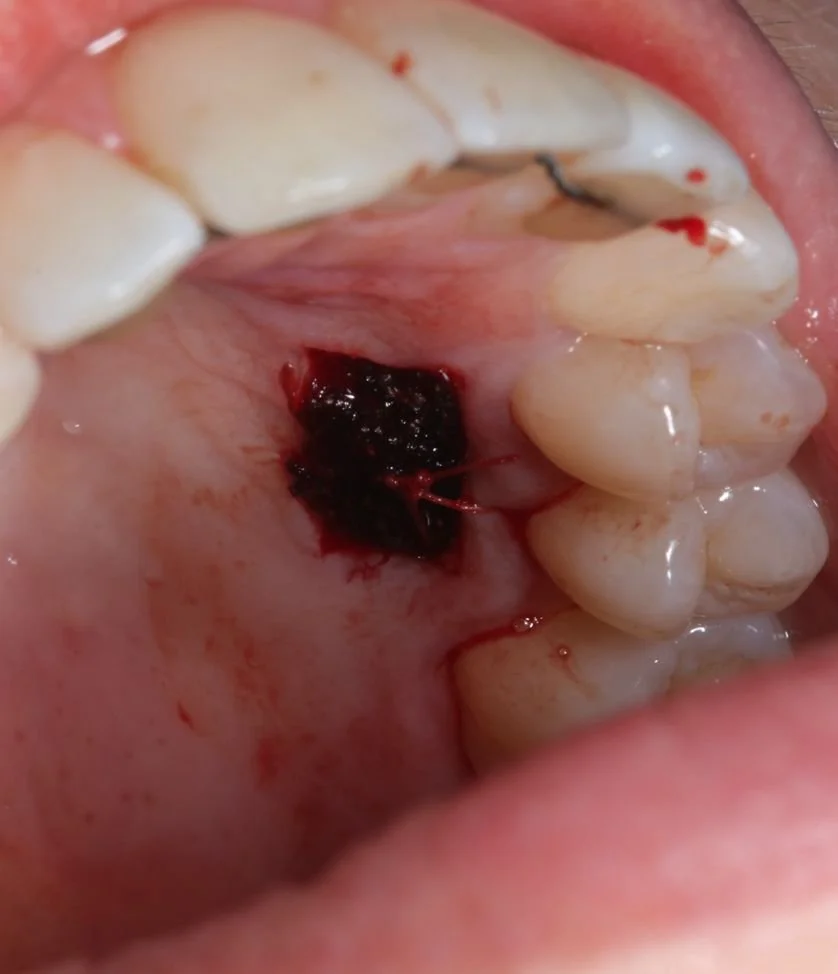
An example of the donor site of a gum graft - RW Perio
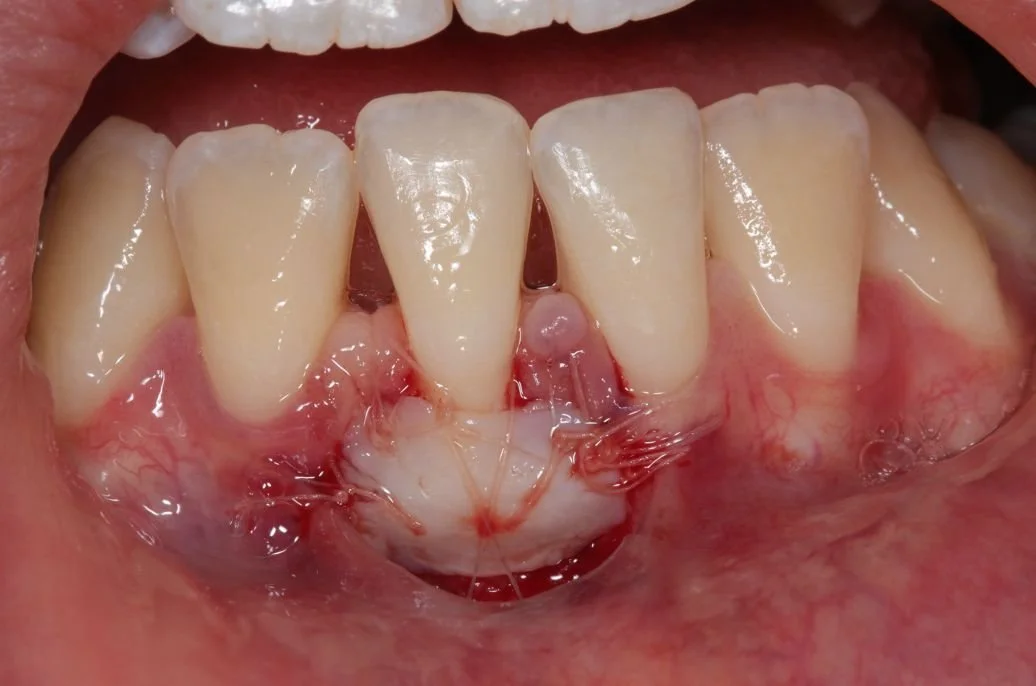
A gum graft that has just been stitched in place - RW Perio
Recovery and aftercare
Pain and swelling - Mild discomfort, tightness or swelling is normal for the first few days. This usually settles with standard pain relief. If tissue was taken from the palate, that area may feel tender for a little longer.
Eating advice - Stick to softer foods for the first week or two and avoid anything hard, crunchy or spicy that might disturb the graft. Chew on the opposite side where possible and avoid very hot drinks in the early stages.
Oral hygiene - Do not brush directly over the graft until your dentist advises it is safe. A gentle mouthwash may be recommended to keep the area clean. Continue brushing and flossing the rest of your mouth as normal.
Activity and exercise - Avoid strenuous exercise, heavy lifting and anything that could raise your heart rate significantly for the first few days. This helps reduce the risk of bleeding and allows the graft to stabilise.
Early healing takes one to two weeks, although the gum continues to mature over several months. Sensitivity usually improves quickly once the graft starts to integrate.
You will usually be reviewed one to two weeks after the procedure, again at around six to eight weeks and once more after the gum has fully settled. These visits ensure the graft is healing as expected and allow your dentist to monitor long-term stability.
What Does a Successful Gum Graft Look Like?
A healthy graft will usually appear slightly lighter or swollen at first before gradually blending in with the surrounding gum as healing progresses. Over the following weeks, the tissue becomes smoother, firmer and more natural in colour. The level of root coverage you can expect depends on the type of recession, the thickness of your existing gum and the grafting method used.
Many patients achieve full or near full coverage, particularly with connective tissue grafts, although in some cases the main aim is to increase thickness and stability rather than completely cover the root. In situations with severe recession or very thin tissue, your dentist may recommend a second graft at a later stage to further strengthen the area or refine the cosmetic result.
Risks and Complications of Gum Grafting
Like any surgical procedure, gum grafting carries some risks, although serious problems are uncommon when the treatment is planned well and carried out by an experienced dentist.
The most significant risk is that the graft may not fully take, which can happen if the area is disturbed during healing or if the blood supply is limited. Mild bleeding or oozing can occur in the first day or two, particularly if a donor site on the palate was used, but this usually settles quickly.
Infection is possible but rare and is managed with careful hygiene instructions and, if needed, medication.
Cosmetic limitations should also be understood, as the final colour and contour may not always match perfectly, especially in more severe cases of recession.
Some temporary sensitivity is common while the graft heals, but this usually improves as the new tissue matures.
Costs and Fees For Gum Grafting in the UK
The cost for gum grafting ranges depending on various factors such as:
Type of graft or procedure - Simpler grafts or small-area grafts generally cost less. Using substitute materials (collagen matrix, donor grafts) vs harvesting your own tissue, or using more complex techniques, affects the fee.
Extent of recession and number of teeth treated - Single-tooth grafts cost less than treatments covering several teeth or large gum-loss areas. Multiple grafts in one visit increase the materials used, surgical time, and follow-up care.
Dentist or specialist experience and clinic location - Clinics in central London or specialist periodontal practices tend to charge more than suburban or regional clinics. Expertise and reputation also contribute.
Complexity of the case - Thin gum biotype, need for extra preparatory work, or additional procedures (e.g. bone grafting, soft tissue regeneration) raises the cost.
Materials used - Whether the graft uses your own tissue or donor/substitute material, and any extra membranes or growth-factor products.
Follow-up care and after-care management - Post-operative reviews, hygiene recalls, and additional maintenance may influence overall cost.
Typical cost ranges for gum grafting
Based on advertised fees from a variety of UK clinics (London and beyond) the following ranges are common:
Many clinics quote from £750 to £1,200 per tooth or gum-site as a general ballpark
Specialist or more comprehensive grafting procedures often start around £950
For more complex gum-grafting, prices may range between £1,500 and £3,000 depending on complexity and the number of sites treated.
If several areas of the mouth need grafting and they can be done together, it can end up being cheaper per site sue to the time saved.
Because of these variations, it’s important that you have a detailed consultation to prepare a bespoke treatment plan and exact quote.
Speak to our online dentists about gum grafting
If you want to speak to one of our dentists for some personalised advice about gum grafting, click the button below and get in touch.