Broken, Chipped or Cracked Tooth: What to Do
Finding a piece of tooth in your mouth can be alarming, particularly when you’re not sure how much of it has actually broken.
The good news is that a chipped or broken tooth can often be repaired. What happens next depends on how much tooth has been lost, whether the deeper layers have been affected and whether the tooth is painful or sensitive.
A small chip with no pain is very different from a tooth that has split, become extremely painful or broken after an injury. Here’s what to look for, what you can do straight away and when you need urgent dental help.
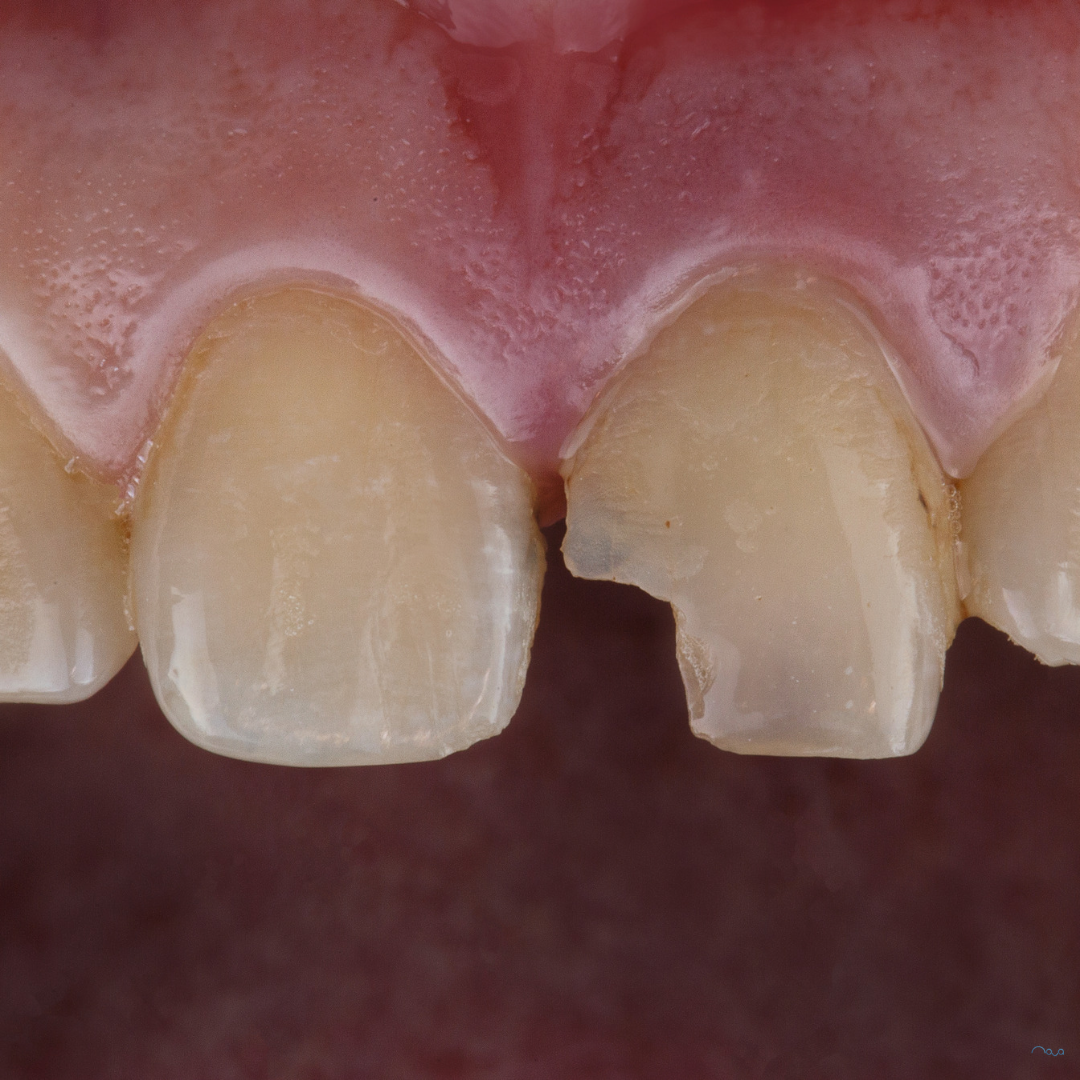
What should I do if I’ve broken a tooth?
Make an appointment with a dentist even if the tooth doesn’t hurt. A broken tooth needs to be assessed so your dentist can see how much damage there is and whether it needs treatment.
If you can find the piece that has broken off, keep it. Put it in milk or saliva and take it with you. In some cases, a dentist may be able to bond the original fragment back onto the tooth.
Until you’re seen, avoid biting hard foods with the damaged tooth. If it has become sensitive, very hot or cold food and drinks may be uncomfortable too.
How serious is a chipped tooth?
It depends on the chip.
A tiny piece breaking from the edge of a tooth may cause very little discomfort and can sometimes be relatively straightforward to repair. A deeper break can expose the layers underneath the enamel and may make the tooth sensitive or painful.
If a tooth is badly broken and the pulp at its centre has been affected, root canal treatment may be needed. Other possibilities include rebuilding the tooth with filling material or protecting it with a crown.
So the size of the piece you can see isn't the only thing a dentist is interested in. We also need to understand what's happening to the tooth underneath it.
How do I know if my tooth is cracked?
Cracks can be a little more difficult because you may not be able to see anything obvious in the mirror.
One clue can be pain or sensitivity. A cracked or damaged tooth is one recognised cause of toothache, and fractured teeth can react to cold, heat, air or sweet foods and drinks.
If you've suddenly developed pain in one tooth, particularly around the same time as biting something hard or damaging the tooth, it's worth having it assessed.
Don't worry about trying to diagnose a crack yourself. The useful information for your dentist is what happened, where you feel it and what seems to trigger the pain.
Why has my tooth broken when I didn’t injure it?
Not every broken tooth follows an obvious accident.
A tooth can already have been weakened by decay. Large fillings and previous dental treatment can also change how much natural tooth structure remains, while cracks and wear can develop over time.
Sometimes the final break happens during something completely ordinary, such as eating.
That's why the question isn't simply “what did you bite?”. A dentist will want to look at the remaining tooth and work out why it failed as well as how to repair it.
What if a filling has broken rather than my tooth?
It isn't always obvious which one you're looking at.
A filling can fracture or come away, leaving a hole or an unfamiliar rough edge that can feel as though part of the tooth itself has disappeared.
A broken or loose filling should be assessed by a dentist. NHS urgent-care guidance includes broken or loose fillings, crowns, bridges and veneers among problems for which you can seek urgent dental advice, depending on the circumstances and symptoms.
If you're not in pain, protect the area while you're waiting. Keep it clean, avoid biting hard food on that side and be careful with anything that triggers sensitivity.
Does a broken tooth always hurt?
No.
How a broken tooth feels depends partly on which part of the tooth has been affected.
A superficial chip may cause no pain at all. You might only notice a rough edge with your tongue or see that the tooth looks slightly different.
A deeper break may cause sensitivity or toothache. If the pulp inside the tooth becomes infected, the pain can become more significant and root canal treatment may be required.
No pain doesn't necessarily mean no treatment is needed, so it's still sensible to have a damaged tooth checked.
Can a broken tooth be saved?
Often, yes.
The treatment depends on the amount and location of the damage. NHS guidance lists several possibilities, including bonding the broken fragment back into position, repairing the tooth with a filling, covering it with a crown or carrying out root canal treatment when a badly broken tooth has affected the nerve.
If the damage is too extensive for the tooth to be predictably repaired, extraction may sometimes be necessary.
You won't know which category you're in simply by looking at the tooth in the bathroom mirror. An examination, and sometimes an X-ray, gives the dentist much more information about what can be saved.
Is a broken tooth a dental emergency?
Not every chipped tooth requires an emergency appointment.
A small chip without significant pain can usually be assessed through a routine dental appointment. But severe or persistent pain, significant dental trauma, or other worrying symptoms can make the situation more urgent.
Seek urgent dental advice if you have severe tooth or mouth pain affecting your sleep or daily activities, pain that isn't going away, or significant injury to your teeth. If you can't get an urgent dental appointment, NHS 111 can advise you.
Heavy bleeding that won't stop, serious injuries to the face or jaw, or severe swelling affecting your breathing require emergency medical help.
What if my whole tooth has been knocked out?
This is different from chipping or breaking a tooth, and time matters.
A knocked-out adult tooth should be handled by the white crown rather than the root. If it's dirty, rinse it gently in milk, saline or saliva. If possible, put it back into its socket without forcing it and seek emergency dental care straight away. If you can't replace it, keep the tooth in milk or saliva while you get help.
Never try to put a knocked-out baby tooth back into its socket because this could damage the permanent tooth developing underneath.
Not sure what you’ve broken?
It can be surprisingly difficult to tell the difference between a small piece of tooth, a damaged filling and something more significant when you're looking at it yourself.
If you've chipped or broken something and aren't sure what you're dealing with, you can send photos and a few details through Nova for a free initial opinion.
Tell us what happened, whether the tooth is painful or sensitive and when you first noticed the problem. A photograph can't show everything happening inside a tooth, so you may still need an examination or X-ray, but Zaeem can look at what you've sent and explain what he thinks you should do next.