How to look after your veneers
Last updated: 1 Oct 2026 | Written by: Dr Zaeem Jafri
If you've just had porcelain veneers fitted, the good news is that the porcelain itself is very hard-wearing. It can't decay, it resists staining much better than composite bonding, and normal brushing won't wear it away.
What you're really looking after is everything around the porcelain. That means the thin layer of resin cement holding the veneer on, the edge where the veneer meets your tooth, the gum next to that edge, and the natural tooth underneath, which can still decay and can still be affected by gum disease. When veneers run into problems, it's usually one of these rather than the porcelain simply wearing out.
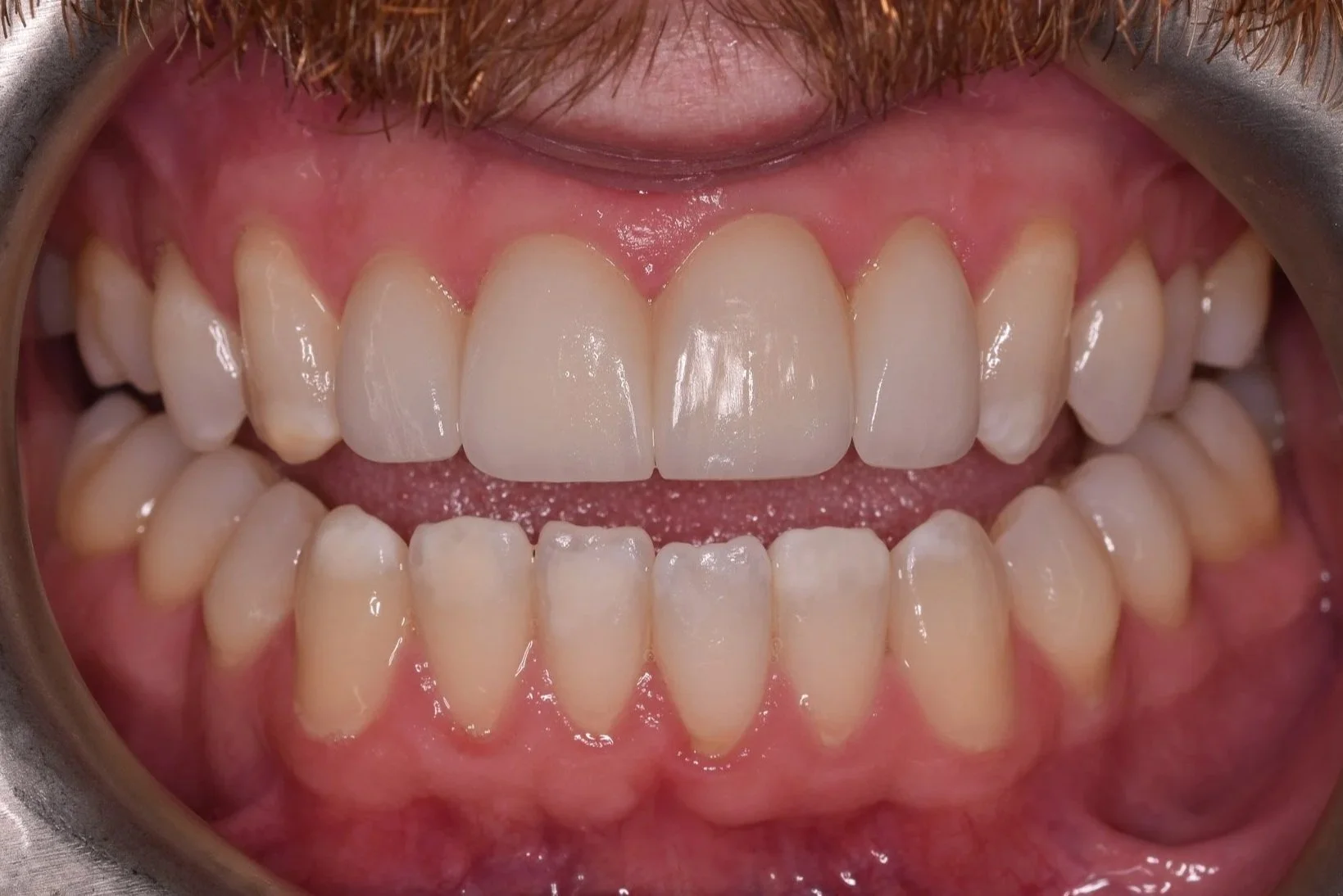
4 porcelain veneers fitted by Dr Zaeem Jafri at Innovadent Dental Clinic
The other thing that matters is force. Porcelain is strong when it's bonded to a tooth, but it's also brittle. Biting into very hard things, using your front teeth as tools and grinding at night are some of the most common reasons a veneer chips or comes away.
So looking after veneers isn't complicated. It's mostly good everyday cleaning, a few sensible habits, and regular check-ups with a dentist and hygienist who know the veneers are there.
The first few days with new veneers
It's normal for new veneers to feel slightly strange at first. Your tongue is very sensitive to small changes in shape, and it has spent years getting used to your old teeth.
What's normal
They may feel bulky or smooth in an unfamiliar way. Even very thin veneers change the feel of the backs and edges of your teeth slightly. This usually stops being noticeable as your tongue adapts.
Some sounds may feel different. If your veneers have changed the length or shape of your front teeth, sounds such as "s", "f" and "v" can feel a little different for a short while. Most people adjust quickly. If your speech still feels wrong after a couple of weeks, mention it to your dentist, because occasionally the shape of an edge needs refining.
Your teeth may be sensitive to cold. This is more likely if some enamel was removed to make room for the veneers. Mild sensitivity that gradually improves is common.
Your gums may be tender. Your dentist will have worked very close to the gum line during preparation, scanning and fitting, so the gums can be sore, slightly puffy or bleed a little for a few days. Keep brushing and cleaning this area gently but properly. Avoiding it because it's sore tends to make the inflammation worse, not better.
Eating on the first day
Wait until the numbness has completely worn off before eating or drinking anything hot. While you're numb, it's easy to bite your lip, cheek or tongue without realising, or to burn yourself. If you're not sure how long that will take, read our guide to how long you'll be numb after dental treatment.
The resin cement used to bond porcelain veneers is hardened with a curing light before you leave, so the veneers are firmly attached straight away. Even so, many dentists suggest going easy on very hard or sticky foods for the first day or two while you get used to how your new teeth meet.
You may also see advice to avoid tea, coffee and red wine for the first 48 hours. Glazed porcelain is very resistant to staining, so this matters much less than it does after whitening or composite bonding. If your dentist has given you specific instructions, follow those.
Your review appointment
Most dentists will see you again a week or two after fitting. At this visit, they'll usually check:
how your teeth meet when you bite and when you slide your jaw forwards and sideways
whether any excess cement has been left at the gum line
how your gums are healing
whether you can clean around the veneers properly
whether you're happy with how they look and feel
This is also a good time to discuss a night guard if your dentist thinks you need one (see below).
Contact your dentist before the review if:
one tooth seems to hit first when you bite, or your bite feels "high"
a veneer feels loose, moves or clicks
you can feel a sharp or rough edge with your tongue or lip which is causing discomfort or cutting your mouth
floss catches or shreds in the same place every time
sensitivity is getting worse rather than better, lingers after hot or cold, or you have a throbbing ache
your gums are becoming more swollen or sore after the first few days
A bite that is even slightly high is worth checking early. It concentrates force on one veneer every time you eat, which is exactly the kind of load porcelain doesn't like.
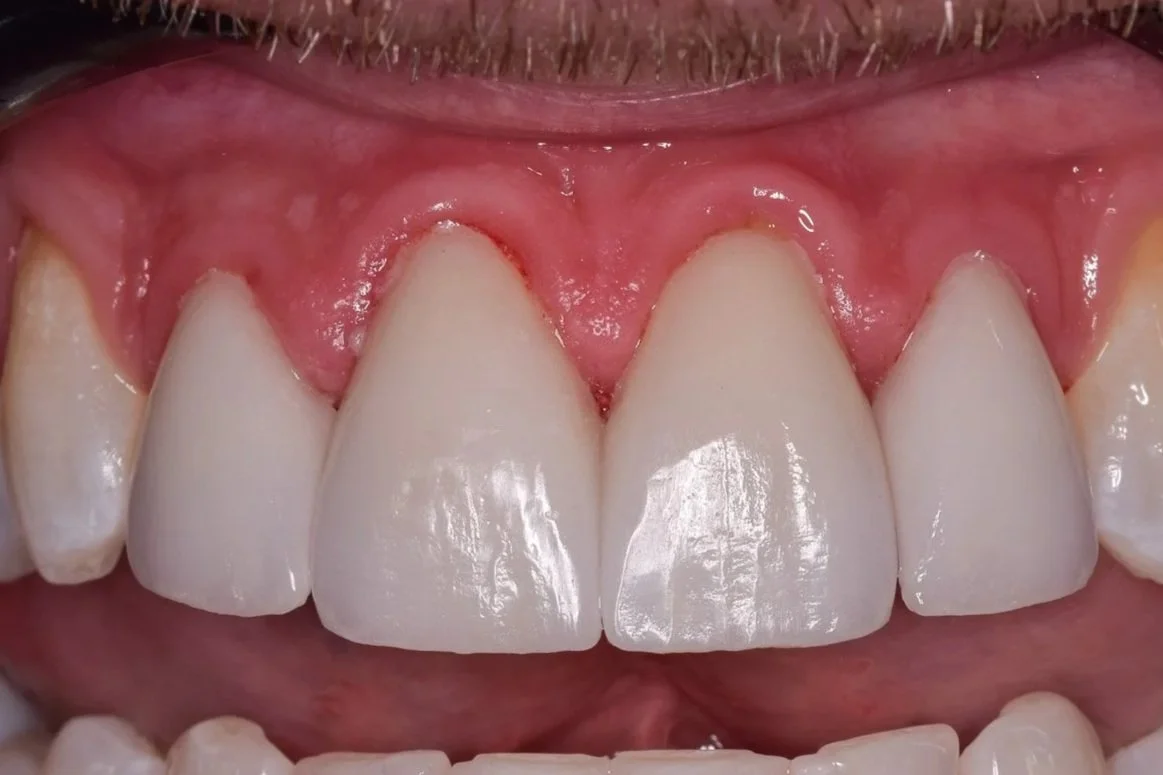
Some redness and leftover cement are fine straight after your fit appointment - as long as your dentist is planning to clear it all up at a follow-up
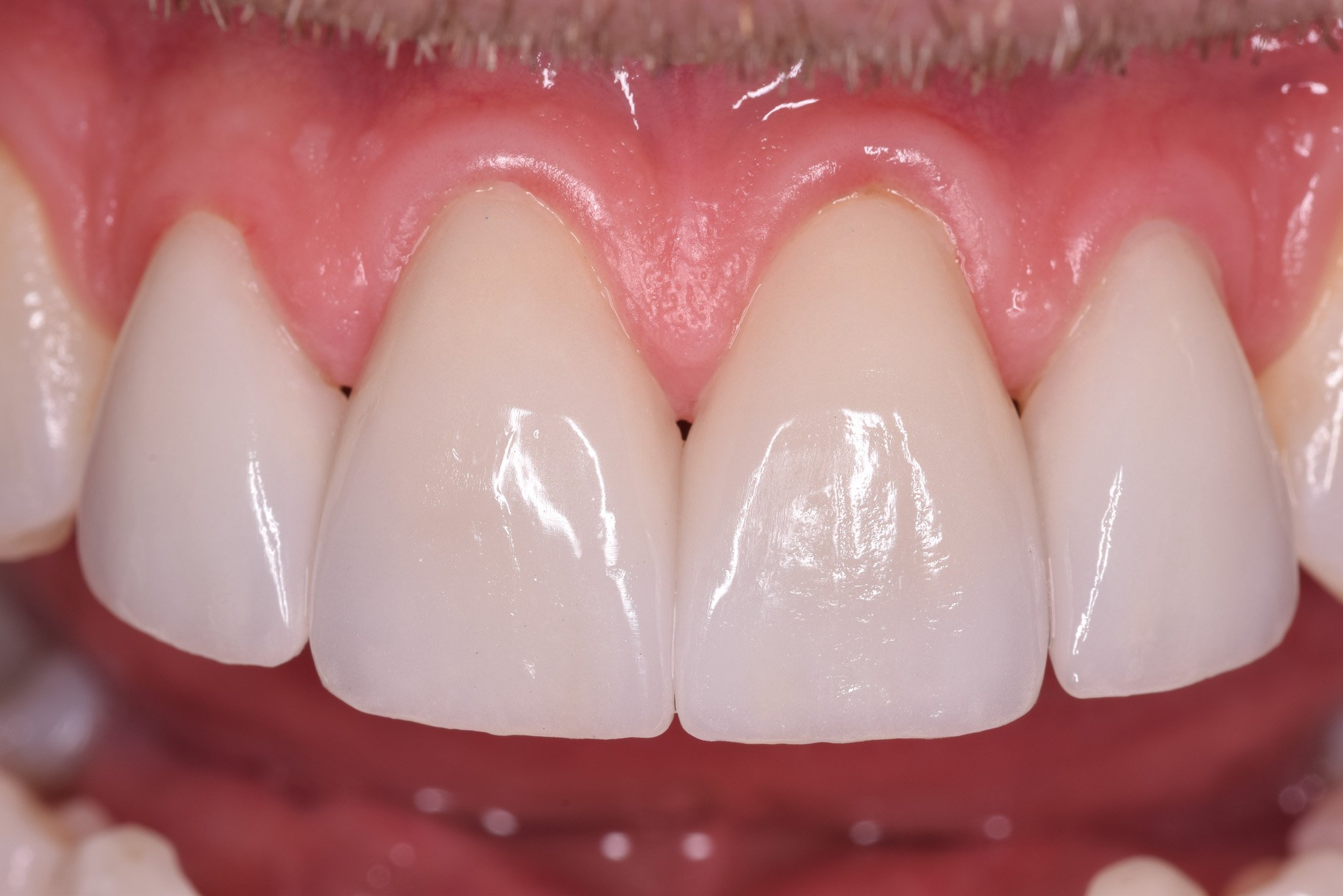
After 1 week the gums look much healthier
What you're actually looking after
It helps to think of a veneer as several parts working together, because each one fails in a different way and needs a slightly different kind of care.
The porcelain veneer. This is the part you see. It's hard, glazed and smooth, so plaque and stains don't stick to it easily, and it can't decay. Its weakness is that it's brittle. It doesn't flex, so a sudden or concentrated force (biting on something hard, or a knock) can chip or crack it.
The bond. Your veneers are held on by a thin layer of resin cement, bonded to the tooth surface. A bond to enamel is very strong and reliable, which is one reason careful dentists try to keep the preparation within enamel where they can. The bond is what stops the veneer coming away, and it's also part of what makes the porcelain strong. A thin veneer that's well bonded to a tooth is much tougher than the same piece of porcelain on its own.
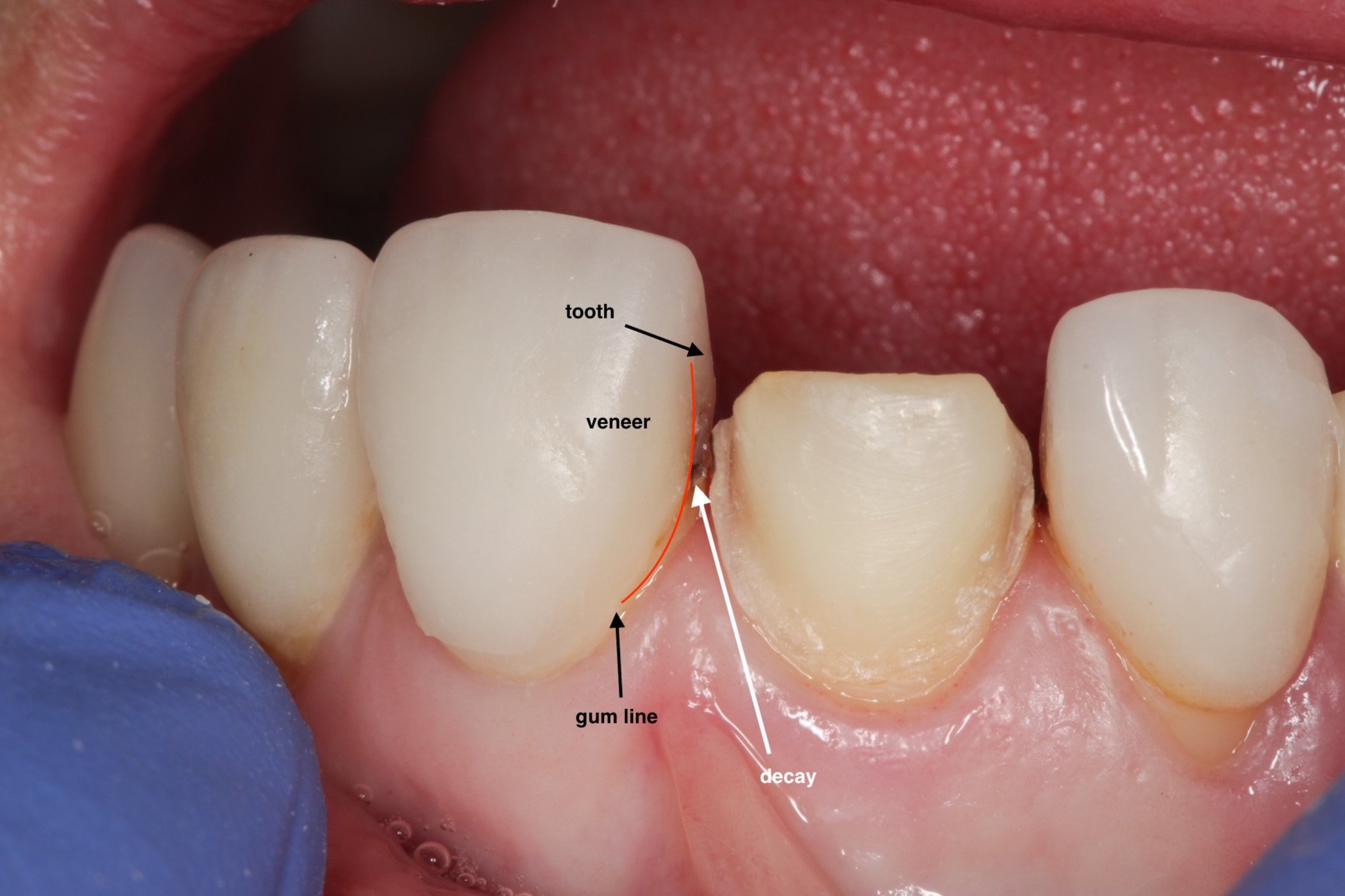
The edge (margin). This is the fine line where the porcelain meets your natural tooth, usually at or near the gum line. It's the most important area to keep clean. Plaque collects here, any staining of the cement line shows up here, and if decay develops under a veneer, it usually starts at an edge.
The gum. Your gum sits right up against the edge of each veneer. If plaque is left there, the gum becomes inflamed: red, puffy and prone to bleeding. Over the years, gums can also shrink back (recede), which can expose the edge of the veneer and a band of natural tooth above it.
The tooth underneath. In most cases, this is still a living tooth with a nerve. Veneers usually cover the front, and sometimes the biting edge, but the back surfaces of your teeth are still natural enamel. Those surfaces can decay and can be worn by acid just like any other tooth.
Once you see it this way, most veneer aftercare makes sense. Cleaning protects the edges, the gums and the tooth underneath. Sensible habits and, where needed, a night guard protect the porcelain and the bond.
Cleaning your veneers day to day
Veneers need more careful cleaning than natural teeth, not less. The porcelain itself stays clean easily, but the margins (the edges where each veneer meets your tooth) are where plaque collects. They're also where decay and gum problems around veneers usually begin, so keeping them clear is the main job of your daily routine.
Brushing
Brush twice a day for about two minutes, including last thing at night, using a toothpaste with 1,350 to 1,500ppm fluoride. This is the standard UK recommendation for adults, and most family toothpastes meet it. Afterwards, spit out the excess but don't rinse with water, so the fluoride stays on your teeth for longer.
Angle the bristles towards the gum so they clean the line where the veneer meets the tooth. That's where plaque sits and where problems usually begin.
Use gentle pressure. Scrubbing hard doesn't clean any better, and over time heavy brushing can contribute to gum recession, which is exactly what you want to avoid around veneer edges. Manual and electric brushes both work if they're used well. Many people find an electric brush with a pressure sensor makes good technique easier. If you're choosing one, our electric toothbrush guide compares the main options, and our free toothbrushing coach can help with technique.
Which toothpaste?
Any ordinary fluoride toothpaste is fine. A sensitivity toothpaste is fine too if your teeth are sensitive.
Whitening toothpastes won't change the colour of porcelain, so there's little point using them on veneers. Some are also more abrasive than standard pastes. Porcelain stands up to brushing far better than composite bonding, but there's no benefit in using a more abrasive paste on the cement line, the gum line or any exposed natural tooth. The same applies to charcoal toothpastes.
Cleaning between your teeth
With veneers, cleaning between your teeth matters even more than it did before. Your toothbrush can't reach the margins where neighbouring teeth meet, and that's exactly where plaque sits against the veneer edges. Clean between every tooth once a day.
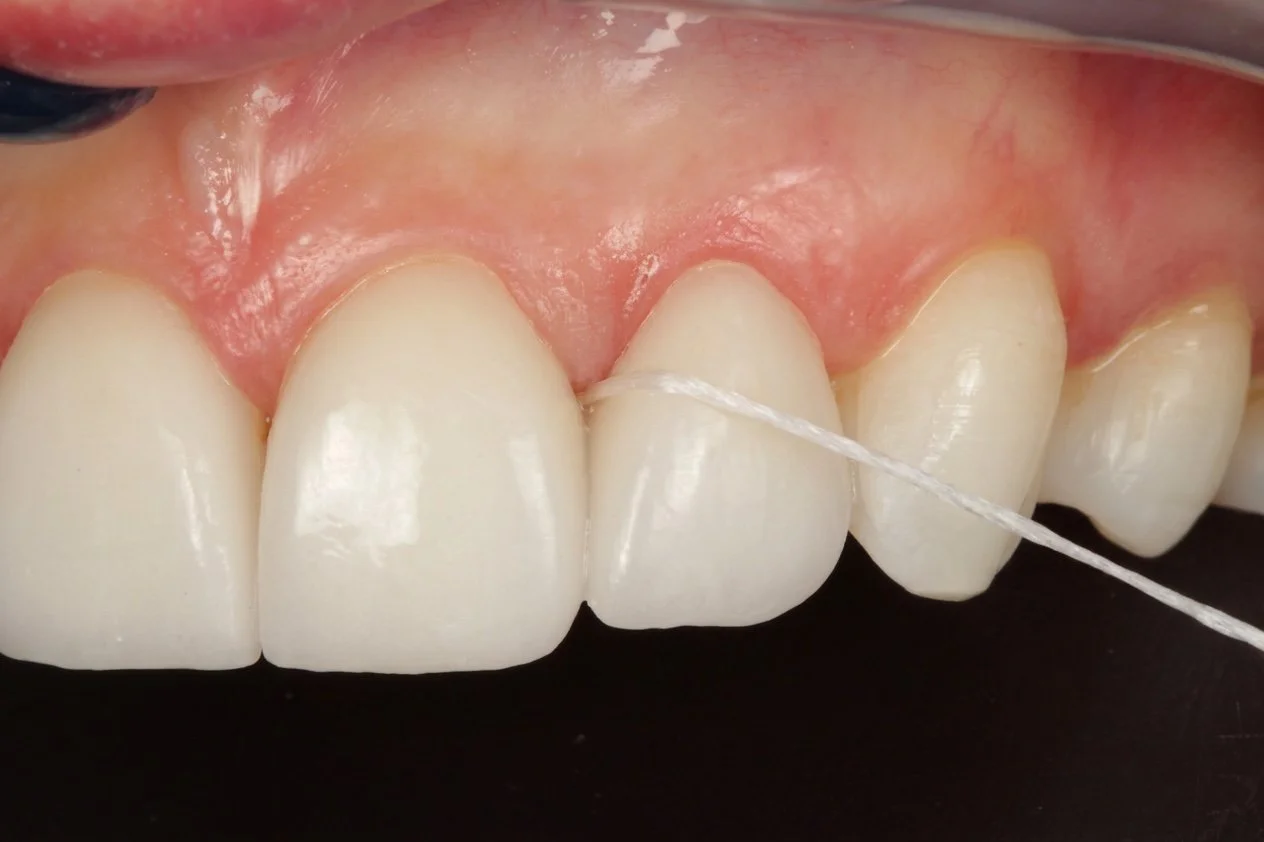
Flossing a veneer margin
The contacts between veneered front teeth are often tight, so floss or tape is usually the right tool there. Curve it around each tooth in turn and slide it gently just under the gum edge, so it cleans the margin rather than just the gap. Where there's more space, UK guidance suggests interdental brushes. Your dentist or hygienist can show you what to use for each gap.
Veneers are usually bonded individually, so floss should pass between them normally. If floss catches, frays or shreds in the same place every time, tell your dentist. It can mean there's a rough edge or a small amount of excess cement that can be smoothed away.
Water flossers can be useful, particularly if you find floss fiddly. Most dentists see them as a helpful extra rather than a replacement for interdental brushes or floss. We've reviewed the main models in our water flosser guide.
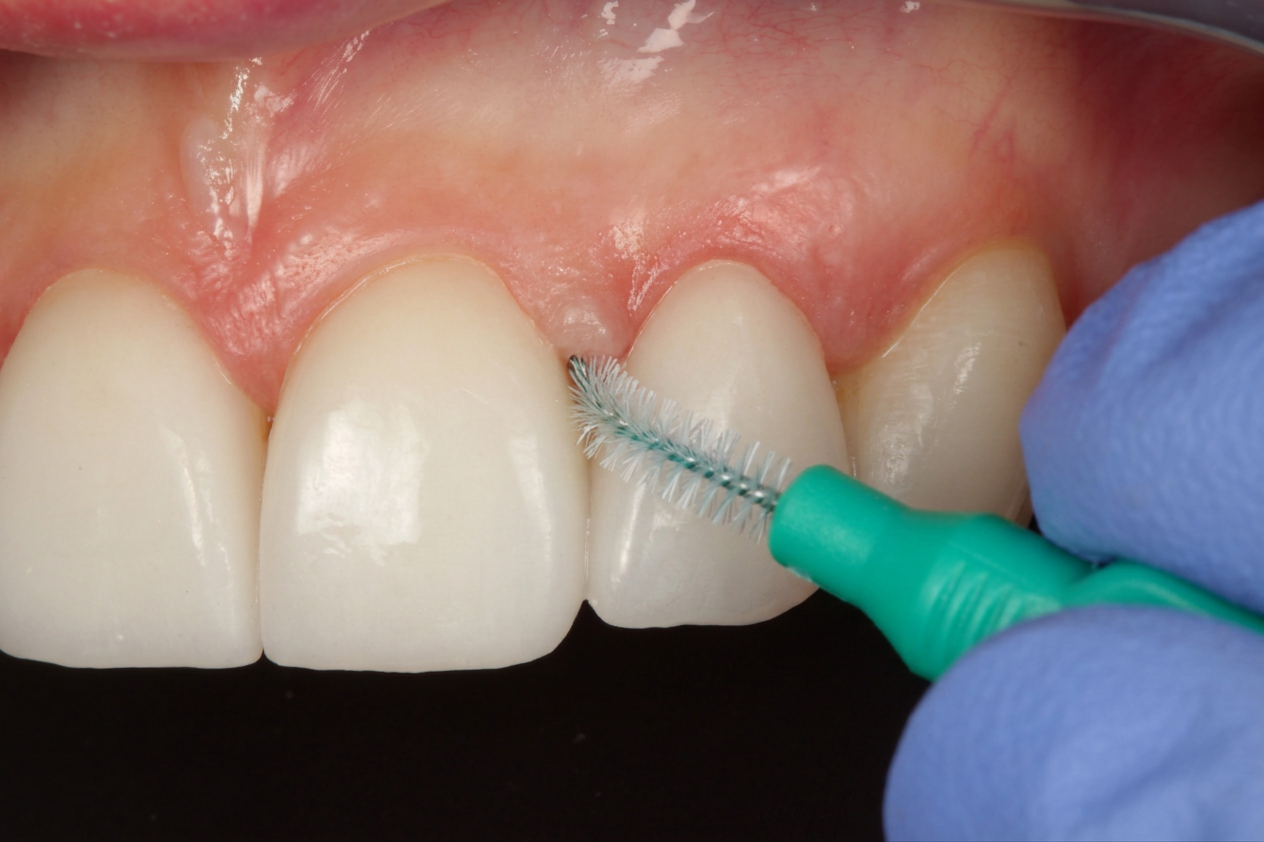
interdental brush cleaning a veneer margin
Do you need a mouthwash?
Most people don't. If you do use one, choose a fluoride mouthwash and use it at a different time from brushing (after lunch, for example), so it doesn't wash away the toothpaste.
You may read that alcohol-based mouthwashes soften the cement around veneers. Alcohol can soften some resin materials in laboratory tests, but there's little evidence that ordinary mouthwash use shortens the life of porcelain veneers. Choosing an alcohol-free fluoride mouthwash is a sensible default anyway.
One mouthwash worth knowing about is chlorhexidine, which is sometimes prescribed for a short period after gum treatment or surgery. With longer use it can leave brown surface stains on teeth and around veneer edges. These can usually be polished off, but let your hygienist know.
Eating, drinking and everyday habits
You can eat normally with porcelain veneers. The aim isn't to avoid food. It's to avoid the specific kinds of force that porcelain handles badly, and to protect the natural tooth around and behind each veneer.
Hard foods and using your teeth as tools
Porcelain copes well with normal chewing. What it doesn't like is a sudden, concentrated load on the edge of a front tooth. In practice, chips usually come from things like:
crunching ice, hard sweets or boiled lollies
biting down on something unexpectedly hard, such as an olive stone, a bone or an unpopped popcorn kernel
biting nails, pens or the arms of your glasses
opening packets, bottles or clothing tags with your teeth
biting through thread or tape
None of this means you can never eat an apple again. It's simply worth getting into the habit of cutting very hard foods (raw carrots, hard crusts, whole apples if your front teeth are heavily restored) into pieces and chewing them further back, rather than biting into them with your front teeth.
Staining: what can and can't discolour
Glazed porcelain is highly resistant to staining. Tea, coffee and red wine won't change the colour of the porcelain itself, so you don't need to cut them out.
What can change over time is everything around it:
Surface stain. A light film of stain can build up on porcelain, especially if you smoke or drink a lot of tea or coffee. This usually polishes off at a hygiene visit.
The cement line. The thin line of cement at the edge of each veneer can slowly pick up stain and show as a faint darker line. Keeping the gum line clean helps, and minor marginal staining can often be polished.
Your natural teeth. Any teeth that aren't veneered will stain and darken with age at their own pace. Over the years this can create a mismatch between natural teeth and veneers.
Smoking makes all of this worse, and it's also one of the biggest risk factors for gum disease around veneer edges.
Sugar and acid
Porcelain can't decay, but the tooth underneath it can. Decay under a veneer usually starts at an edge, and it can be hard to see until it's quite advanced.
How often you have sugar matters more than how much. Keeping sugary foods and drinks to mealtimes, rather than grazing or sipping through the day, gives your teeth time to recover between exposures. Our free diet analysis tool can show you where hidden sugar and acid exposures are coming from.
Frequent acidic drinks (fizzy drinks, fruit juice, sports drinks, fruit teas or lemon water sipped through the day) can wear away the natural enamel on the uncovered surfaces of your teeth, particularly the backs. If that sounds familiar, read our guide to acid erosion.
Grinding, clenching and night guards
If there's one thing that shortens the life of porcelain veneers more than anything else, it's grinding or clenching, especially at night when you don't know you're doing it.
The forces involved are much higher and more sustained than normal chewing, and they often load the edges of the front teeth sideways, which is exactly the direction porcelain handles worst. Long-term studies have consistently found higher failure rates in people who grind.
Do you grind your teeth?
Many people don't realise they do. Signs include:
waking with an aching jaw, tight jaw muscles or a headache around the temples
a partner hearing you grind at night
teeth that looked worn, flat or chipped before you had veneers
previous fillings or crowns that have chipped or broken
Your dentist will usually have looked for signs of grinding before fitting your veneers. If they've recommended a night guard, it's because they think your veneers need it. Our guide to teeth grinding (bruxism) explains the causes and signs in more detail.
Types of night guard
A hard acrylic splint is a custom-made, rigid guard that covers all the teeth in one jaw, usually the upper. Your dentist adjusts it so your teeth meet it evenly. This is the type most dentists prefer for protecting porcelain, because it spreads the load and gives the teeth a smooth surface to slide over.
A thin vacuum-formed guard looks like a clear orthodontic retainer. It's cheaper and less bulky, and it stops your teeth grinding directly against each other. Heavy grinders tend to wear through these more quickly. If you had orthodontic treatment before your veneers, ask whether your retainer can do both jobs or whether you need a separate guard.
Pharmacy boil-and-bite guards and soft sports guards aren't designed for nightly grinding. They tend to fit poorly and haven't been checked against your bite. Guards made from home impression kits ordered online are better fitting, but nobody has checked how your teeth meet on them.
Looking after your night guard
Wear it every night, not just when you remember or when your jaw aches. Rinse it and clean it gently with a soft brush and cool water (hot water can warp it), and keep it dry in its case during the day. Bring it to your check-ups so your dentist can see whether it needs adjusting or replacing.
What does a night guard cost?
Privately, a custom night guard from a UK dentist typically costs somewhere in the region of £150 to £600. Hard acrylic splints and London practices tend to sit at the upper end. When you're quoted for veneers, ask whether a night guard is included or charged separately.
Daytime clenching and sport
Some people clench during the day, often while concentrating, driving or at the gym. Your lips should normally be together with your teeth slightly apart, so if you catch your teeth touching, relax your jaw.
If you play a contact sport or anything with a risk of a ball, stick or elbow to the face, wear a properly fitted sports mouthguard. This is a different appliance from a night guard: thicker and designed to absorb impact.
Whitening once you have veneers
Whitening gels don't change the colour of porcelain. The shade of your veneers is fixed when they're made, and the only way to change it is to replace them.
This matters if you have natural teeth showing alongside your veneers. If you whiten those teeth now, they may end up lighter than the veneers. That's why, when whitening is part of the plan, it's usually done before the veneers are made, so the porcelain can be matched to your whitened shade.
If your veneers were matched to whitened teeth, your dentist may suggest occasional top-up whitening with your trays to stop your natural teeth drifting darker over the years. If you're thinking about whitening for the first time, speak to your dentist before you start so you know how the result is likely to compare with your veneers.
In the UK, effective tooth whitening can only legally be provided by a dental professional. Our teeth whitening guide explains how it works and what to expect.
Check-ups and hygienist visits
Regular check-ups matter more once you have veneers, not less. Many of the problems that affect veneers, such as early decay at an edge, a small crack or gum recession, are painless and easy to miss yourself.
Your dentist will recommend how often to see you based on your own risk. At a check-up they'll usually look at:
the edges of each veneer, for staining, gaps, rough areas or early decay
the porcelain, for chips or fine cracks (sometimes by shining a bright light through the tooth)
your gums, for inflammation or recession around the veneers
your bite and any signs of grinding, and the fit of your night guard if you have one
X-rays where needed, to check for decay between teeth
Many dentists also take photographs, which makes it much easier to spot slow changes such as recession or marginal staining over several years.
Tell your hygienist about your veneers
Hygienists clean around veneers all the time, but it's worth making sure they know yours are porcelain, especially if you change practice. Some coarse polishing pastes and air-polishing powders can gradually dull a glazed porcelain surface, so your hygienist may choose finer materials and adapt how they clean around the edges.
The same goes for fluoride treatments. The fluoride varnish commonly used in UK practices isn't a concern. Acidulated fluoride gels, used more often in some other countries, can roughen porcelain in laboratory studies, so mention your veneers if you're ever offered a fluoride gel treatment.
Keep a record of your veneers
Ask your dentist to note down what your veneers are made of, which teeth they're on, the shade and the date they were fitted, and keep a copy of your before and after photos. If you move house, change dentists, or need a repair years later, this information makes it much easier for the next dentist to match or repair them.
If something goes wrong
Most veneer problems aren't emergencies, but they're easier to deal with early. Here's what to do in the most common situations.
If a veneer chips
A very small chip at the edge can often just be smoothed and polished. A slightly larger chip can sometimes be repaired by bonding composite to the porcelain. These repairs can work well, but the join is never quite as strong or as invisible as the original porcelain, and the composite may stain or lose its shine sooner. A larger fracture usually means making a new veneer.
In the meantime, if the edge is sharp, a small piece of orthodontic wax (from a pharmacy) or sugar-free gum pressed over it will protect your tongue and lip. Keep any piece that breaks off and take it with you.
The important question for your dentist is why it chipped. A chip is often a sign of a force problem, such as a high spot on the bite, grinding or a habit. If the cause isn't addressed, a repair or replacement may chip again.
If a veneer comes off
This is unsettling, but it isn't usually urgent unless you're in pain.
Keep the veneer safe in a small container. Don't wrap it in tissue, which is how veneers get thrown away.
Don't stick it back on yourself. Superglue and pharmacy dental cements aren't designed for bonded porcelain. They can damage the tooth and the veneer, and they make it much harder for your dentist to re-bond it properly.
Contact your dentist and arrange to be seen as soon as you reasonably can.
Until then, the exposed tooth may be sensitive and look rough. Avoid very hot or cold food on that side and don't bite into anything hard with it.
If the veneer is intact and still fits, it can often be cleaned and re-bonded. If it comes off more than once, your dentist will want to find out why, because repeated debonding usually has a cause, such as the bite or the surface it's bonded to.
If you notice a dark line at the edge
This usually has one of three causes:
Stain in the cement line. This is cosmetic and can often be polished.
Gum recession. As the gum shrinks back, a band of natural tooth or root appears above the veneer. Whether this needs treatment depends on how visible it is and what's causing the recession. Options range from monitoring to adding composite at the margin, replacing the veneer or, in some cases, gum grafting.
Decay at the edge. This is less common but needs to be checked, because it can progress under the veneer without much warning.
If a whole veneered tooth looks greyer than it used to, the tooth underneath may have darkened. This can happen if the nerve has been damaged, for example after a knock. It needs assessment. Our guide to dead or darkened teeth explains why.
If a veneered tooth becomes sensitive or painful
Mild sensitivity in the first few weeks is common. Sensitivity that doesn't settle, gets worse, lingers after hot or cold, or a throbbing ache, pain when biting or a small gum boil near a veneered tooth all need checking.
Occasionally, a tooth with a veneer needs root canal treatment, sometimes years later. This can often be done through the back of the tooth without removing the veneer, although it depends on the tooth.
When to get urgent help
Contact your dentist the same day, or call NHS 111 out of hours, if you have:
swelling of your face, gum or jaw, especially if it's getting bigger
swelling with a high temperature or feeling generally unwell
a knock to the mouth that has loosened, moved or broken a tooth, not just a veneer
Go to A&E or call 999 if swelling is affecting your eye or neck, or if you're having difficulty breathing, swallowing or opening your mouth.
How long will your veneers last?
Well-planned porcelain veneers have a good track record. A 2021 systematic review that pooled 25 clinical studies and around 6,500 veneers estimated that about 95% were still in place after 10 years, where failure meant the veneer fracturing, coming off, developing decay underneath or the tooth needing root canal treatment.
That figure needs some context. The studies defined failure differently, many were carried out by experienced clinicians, and the estimates become less reliable beyond 10 years because fewer patients are followed that long. "Still in place" also isn't the same as "still looks perfect". A veneer with some marginal staining or a little recession counts as a success in these studies, even if you'd prefer it replaced. So rather than a fixed lifespan, it's more useful to think about what makes problems more or less likely. We cover this in more detail in how long do veneers last?
Why the first couple of years matter
The same review found that fractures and debonding, the two most common problems, tended to happen in the first couple of years after fitting. Decay and nerve problems, on the other hand, tended to appear later.
In practical terms, that means:
Early on, the priority is the bite and force. Report a high bite promptly, wear your night guard from the start if you've been given one, and avoid using your front teeth as tools.
Over the long term, the priority is the edges, the gums and the tooth underneath. That means daily cleaning, sensible sugar habits and regular check-ups.
What you can and can't control
Some factors are set when your veneers are made: the type of porcelain, how much of the bond is to enamel, whether the teeth had large fillings or root canal treatment, and how your teeth meet. These are the dentist's and technician's job.
The factors you control are the ones in this guide: whether you protect your veneers from grinding and hard objects, how well you clean the edges, how often you have sugar, whether you smoke and whether you keep up with check-ups.
It's also worth knowing that veneers will eventually need replacing. Replacing a veneer usually means removing the old porcelain and cement, and it can mean losing a little more tooth each time. Looking after them well doesn't just save money. It also helps preserve your natural teeth for longer.
Frequently asked questions about recent veneers
My gums still bleed around my veneers. Is that normal?
A little bleeding in the first week or so is common while the gums settle after treatment. If it carries on beyond that, it usually means plaque is sitting at the gum line. Keep cleaning that area gently and thoroughly, including between the teeth. If the bleeding doesn't improve within a couple of weeks of good cleaning, see your dentist or hygienist. Occasionally a veneer edge that's slightly over-contoured or a trace of cement makes an area hard to clean. Our guide to bleeding gums explains more.
My veneers look duller than they used to. Can they be polished?
Glazed porcelain normally keeps its shine for many years. If the surface has dulled, for example from abrasive polishing or acid exposure, your dentist can often bring back much of the lustre with polishing kits made for porcelain. Deeper damage can't always be fully reversed.
What happens if a veneer breaks? Is it covered?
That depends on your practice. Some offer a guarantee on veneers, but these usually come with conditions, such as attending regular check-ups and hygiene visits and wearing a night guard if one was recommended. Ask for the terms in writing before treatment, and keep to them afterwards.
I had my veneers done abroad. Is aftercare any different?
The day-to-day care is exactly the same. The main difference is that you may not be able to get back to the dentist who made them. Register with a local dentist and have your veneers and gums checked early, ideally with any records, X-rays and notes on materials from the clinic that treated you. Our guide to getting veneers in Turkey covers what to look out for.
Need a second opinion?
If something doesn't feel right with your new veneers, your own dentist should always be your first call. They know exactly what was done and can see your teeth.
If you'd like an independent view on a problem with your veneers, or help understanding what you've been told, you can speak to one of the Nova Smiles dentists through our online consultation.