You Have Had a Deep Filling ‘Close to the Nerve’ - What This Means and What to Expect
If your dentist has sent you this page, it means your recent dental filling was placed very close to the nerve of the tooth. This is quite common with deeper decay and does not mean anything has gone wrong. However, these teeth sometimes need a little extra explanation and monitoring while they settle.
This guide explains what to expect, what is normal, and when to contact your dentist.
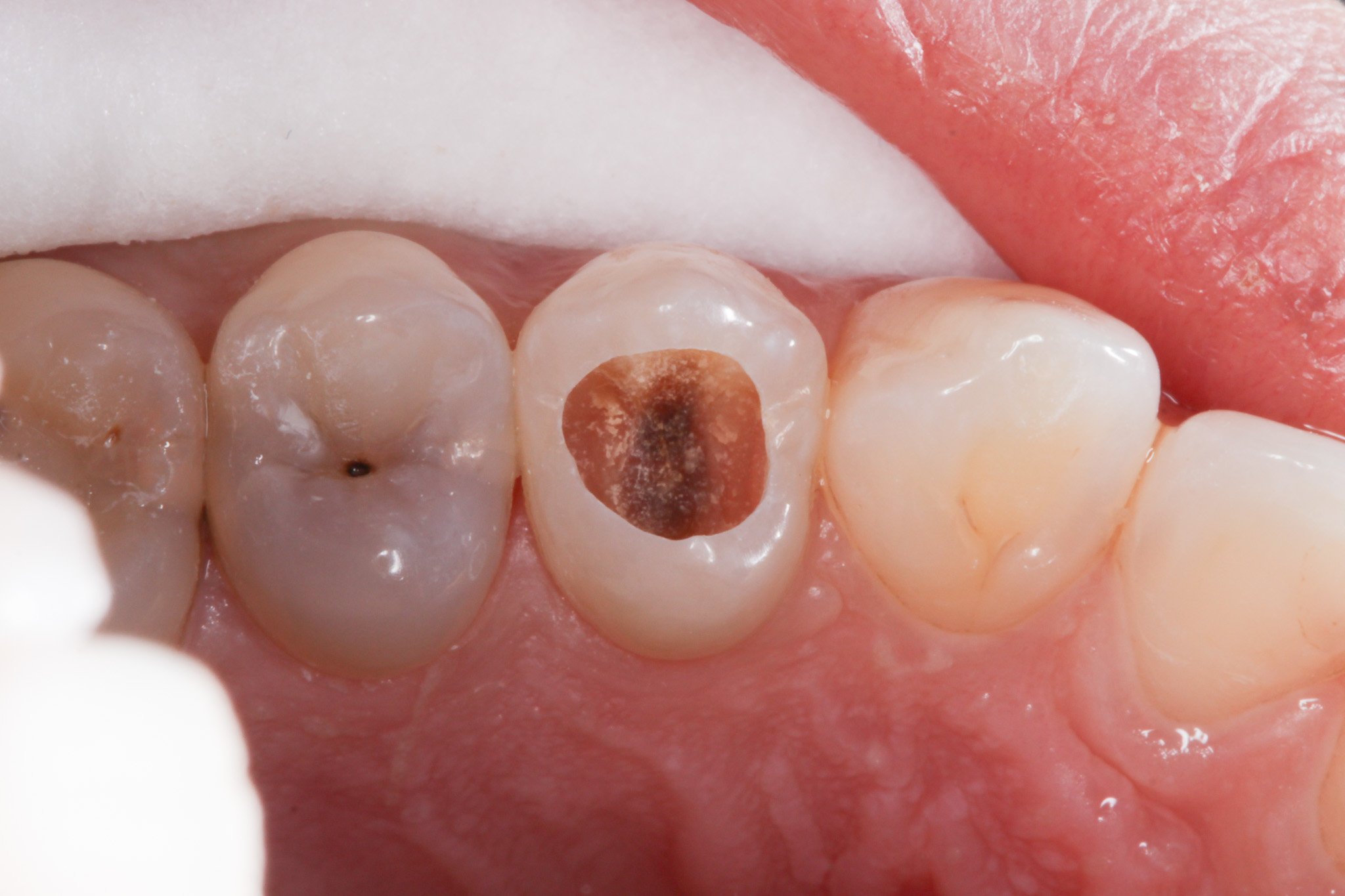
A deep cavity in a premolar tooth
Why might the tooth feel sore?
Inside every tooth is a nerve and blood supply called the pulp. When tooth decay or a cavity is deep, the floor of that cavity can sit very close to this nerve. Even when the decay is thoroughly cleaned and the filling is carefully placed, the nerve can still become irritated.
This irritation of the nerve may cause:
Sensitivity to hot or cold
Aching or tenderness
Siscomfort when biting
In many cases, the nerve calms down on its own over time.
Is there a risk that the nerve could die?
Unfortunately, yes, there is a risk that the nerve may not fully recover after a deep filling. This can happen because:
Bacteria were already close to or inside the nerve space before treatment (the most likely scenario)
The nerve was inflamed prior to the filling, and the filling process (pressure, heat, water) has further inflamed the nerve
If the nerve does not settle, the tooth may need root canal treatment in the future to remove the dying nerve.
This is not because the filling has failed. It is a biological response that can occur even when the treatment has been done perfectly.
Many deep fillings heal completely and do not require further treatment. Hopefully, that is the case for you as well.
What symptoms are normal after treatment?
It is very normal to experience some discomfort after a deep filling. You may notice:
Sensitivity to cold or hot
Tenderness when chewing
A dull ache in the tooth
Mild throbbing that comes and goes
These symptoms can last several days, and sometimes a couple of weeks, while the nerve settles. This does not mean there is a problem. As long as the symptoms are manageable and showing signs of improvement, everything should be okay.
If the symptoms are present for over 1 week and are either not improving at all, very severe or getting worse, then contact your dentist for a review.
What you should do now
There are a few things that you can do now to help manage your tooth.
Take painkillers early (before your anaesthetic wears off) rather than waiting for pain to build. Unless your doctor has told you that you can’t, take 400mg of Ibuprofen every 8 hours and if it still hurts, you can add 500mg of paracetamol every 8 hours as well.
Avoid chewing very hard foods on that side for a few days.
Try not to keep testing the tooth repeatedly by pressing it or tapping it, as this can irritate the nerve further.
Make sure you keep the tooth clean by brushing thoroughly and flossing both sides of the tooth to keep the margins of the filling clean
Keep an eye out for the symptoms listed below
Please continue to clean the tooth normally:
Brush twice daily with fluoride toothpaste
Clean carefully along the gum margin
Floss or use interdental brushes around the filling
Keeping the area clean helps prevent bacteria from accumulating around the edges of the filling and supports nerve healing.
What signs and symptoms should you look out for that indicate the nerve is dying
Please contact your dentist if you notice any of the following:
Pain - Deep throbbing or aching pain that wakes you at night or lingers for several minutes after hot or cold exposure. Or pain that can not be managed with over-the-counter painkillers
Biting symptoms - Pain when biting down on something or when releasing your bite
Tenderness when pressing the gum on the cheek side of the tooth
Swelling around the tooth or a raised lump/spot on the gum
Darkening or colour change of the tooth
These symptoms do not necessarily mean anything dangerous is happening, but they may indicate that the nerve is dying and needs further assessment.
If you are unsure whether what you are feeling is normal, please contact your dentist. We would always prefer to review the tooth early rather than have you worrying at home.
Sometimes the best treatment is simply giving the tooth more time. Other times, further treatment may be required.
In summary
Your filling was close to the nerve
Some sensitivity or discomfort is expected
Most teeth settle with time
A small number may need root canal treatment later
If symptoms worsen or worry you, contact your dentist
If you have any concerns at all, the Nova Smiles team is here to help and you can contact one of our online dentists for advice.