Dyson CameraJet Toothbrush Review: A Dentist's Honest First Impressions
Written and Reviewed by Dr Zaeem Jafri BDS | Updated 4 September 2026I ordered the Dyson CameraJet the day it was released (paying the eye-watering price of £419), and it arrived the next morning. It is by far the most expensive toothbrush I have ever bought, and to be honest, I would not have gone near it if I wasn't keen to review it properly.
I’ve only had it for a day, so this is a first-impressions review, and I'll update it once I've lived with it for a few weeks. But a day is plenty of time to tell you how it feels, how it behaves, and whether the idea behind it holds up.
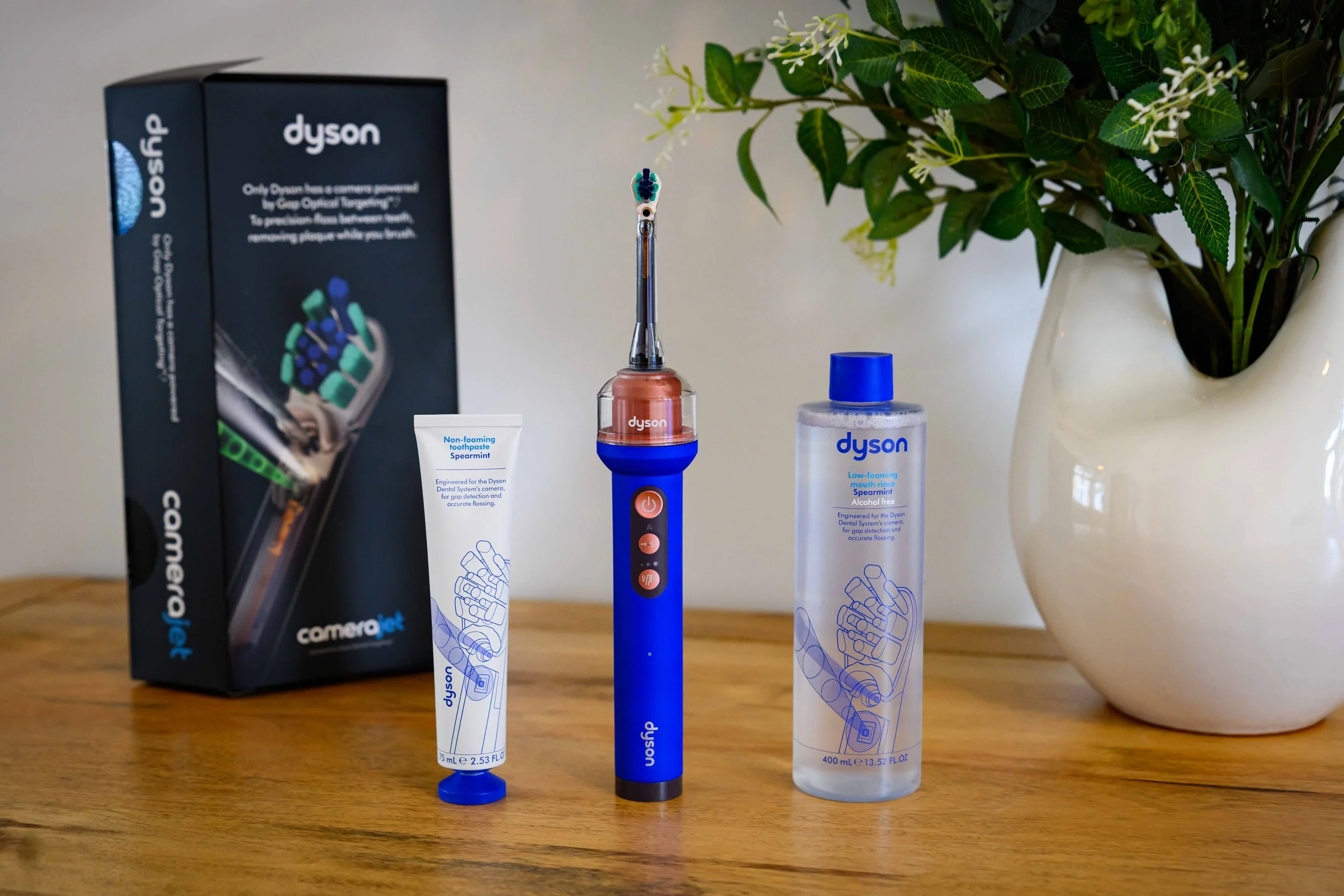
The short version
The Camerajet is an impressive piece of engineering, and I'm glad Dyson has walked into oral care, because the category badly needs someone to make a great high-end product that actually improves oral health. After a day of using it, I don't see a problem it solves that a decent electric toothbrush and a water flosser don't already solve for a tenth of the price.
My verdict so far: Impressive engineering, unconvincing dentistry.
My rating: 2 out of 5. ★★☆☆☆
My favourite electric toothbrush, which has advanced engineering and unique features that actually fix small everyday problems around toothbrushing without being ridiculously expensive, is the Laifen Wave Pro. Then you can use a water flosser for the in-between bits.
If in the future Dyson improves the camera and allows people to take pictures of potential decay, broken fillings and problematic crown margins to send to their dentist … THAT would be amazing!
What the Dyson CameraJet actually is
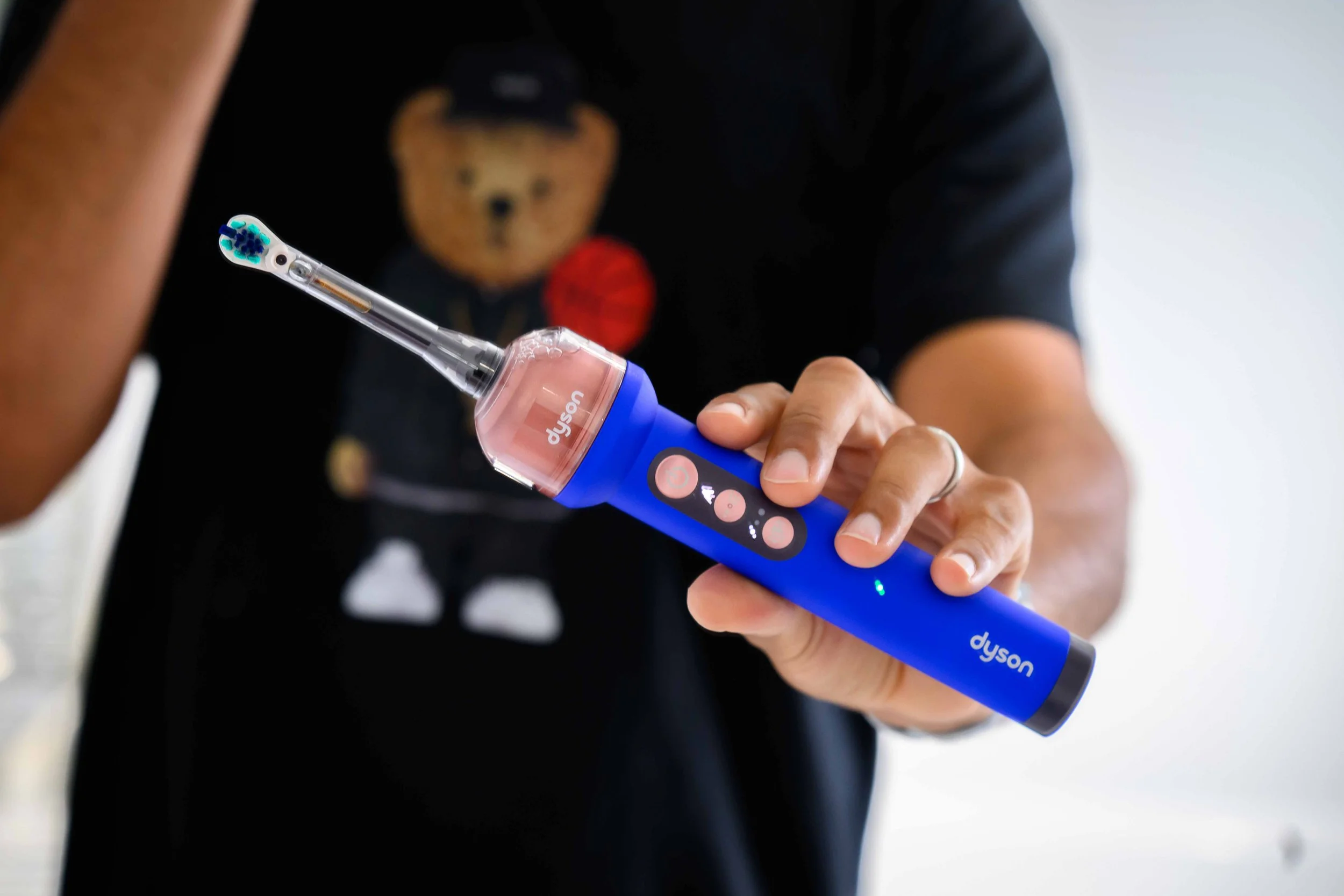
It’s a combined sonic electric toothbrush and water flosser with a camera in the head.
The headline specs:
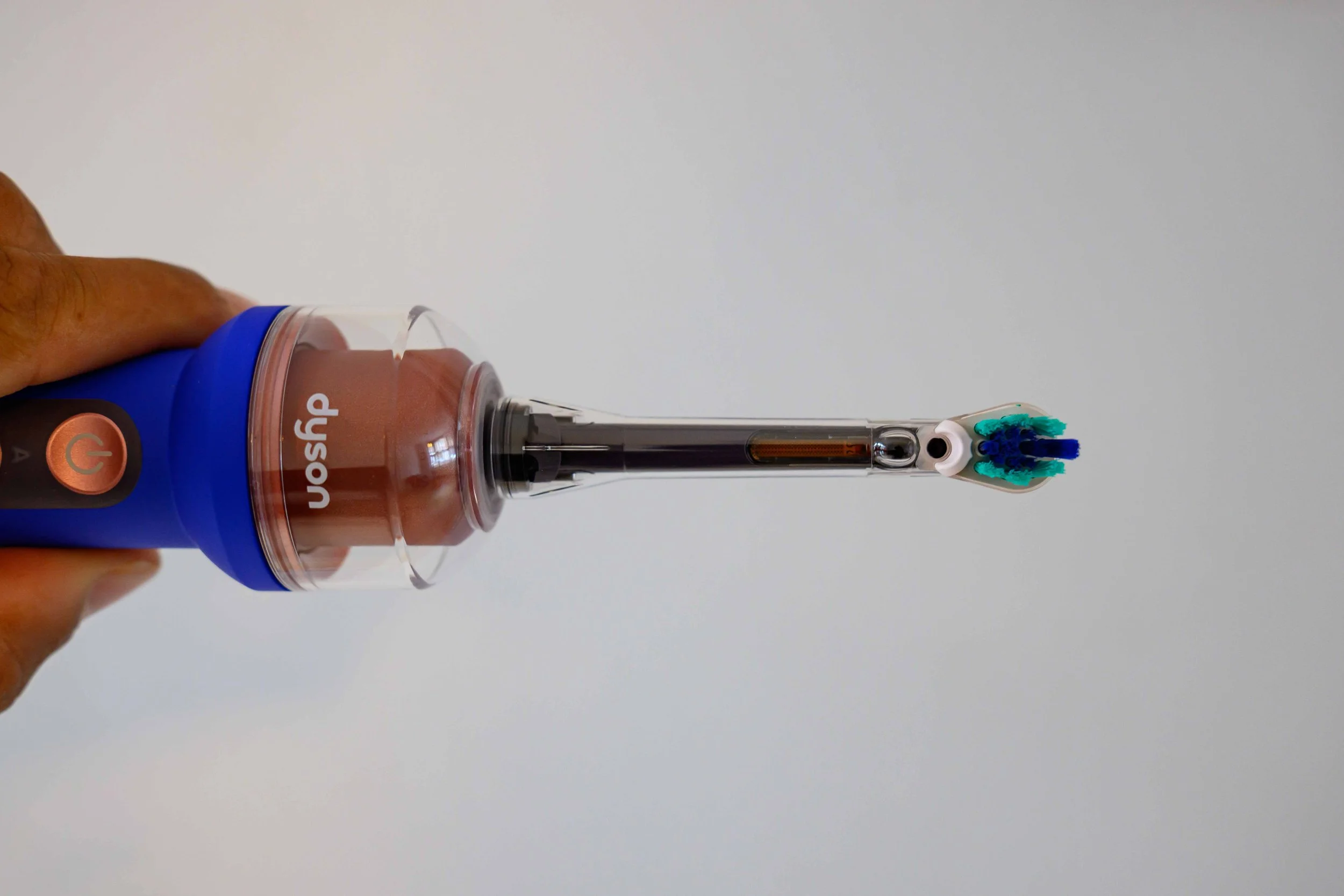
A 100,000 pixel macro camera in the brush head that scans 28 images a second
Gap Optical Targeting, Dyson's machine learning system, trained on around 470,000 dental images, which spots the gaps between your teeth and fires a jet within 100 milliseconds
A conical jet rather than the needle-shaped jet used by traditional water flossers, designed to sweep plaque away at lower pressure and be kinder to gums
A 12.5ml "anti-gravity" tank that Dyson says delivers a consistent jet whatever angle you hold the brush at
Variable sonic oscillation, with the head moving close to 1,000 times a second and varying its angle to stop the bristles stalling against the tooth
A dual-bristle head with firmer inner bristles for stain and softer outer bristles for the gumline, plus an RFID tag that tracks how many cleans it has done
A refill and charging dock, a travel case, and Dyson's own non-foaming toothpaste and low-foaming mouthrinse
It took six years, 661 engineers, 38 patents and 16 million lines of code to launch this toothbrush.
Using the Dyson CameraJet: Day One
It feels lovely and premium
The handle is cool to hold, beautifully weighted and obviously premium. Dyson knows how to make an object feel expensive and once you get through all the layers of the packaging it comes in, it is satisfying to open.
It’s really messy when using it
The jet bursts catch you out at first, especially if you’re not used to a waterflosser and you get used to that, but it stays messy throughout. The combination of vibrations, air and water means you instinctively want to close your lips, and liquid builds up in your mouth fast.
If you open your mouth whilst brushing you end up spraying your bathroom mirror with a delightful cocktail of spit, paste and mouthwash.
The clean feels fine, not special
The sonic action is much like other sonic brushes, but the brush head is noticeably smaller, so I didn't get the sense of thorough mechanical cleaning I get from my usual brushes. My teeth felt clean afterwards but I am still very much used to the physical feeling of a larger brush head scrubbing my teeth.
The jet didn't fire into all of the gaps
This is the part that concerns me most. The jet worked well on my upper back teeth, but it hardly ever fired on my lower teeth or my front teeth.
If the whole premise of the toothbrush is that the camera finds the gaps you miss, and it isn't finding the gaps in the areas that are hardest to keep clean, then the premise isn't landing. My technique may be the real issue here, and we shall see as I use the brush more, but a device that requires you to learn a technique before it targets correctly is doing less work for you than the marketing implies.
The camera is interesting rather than useful
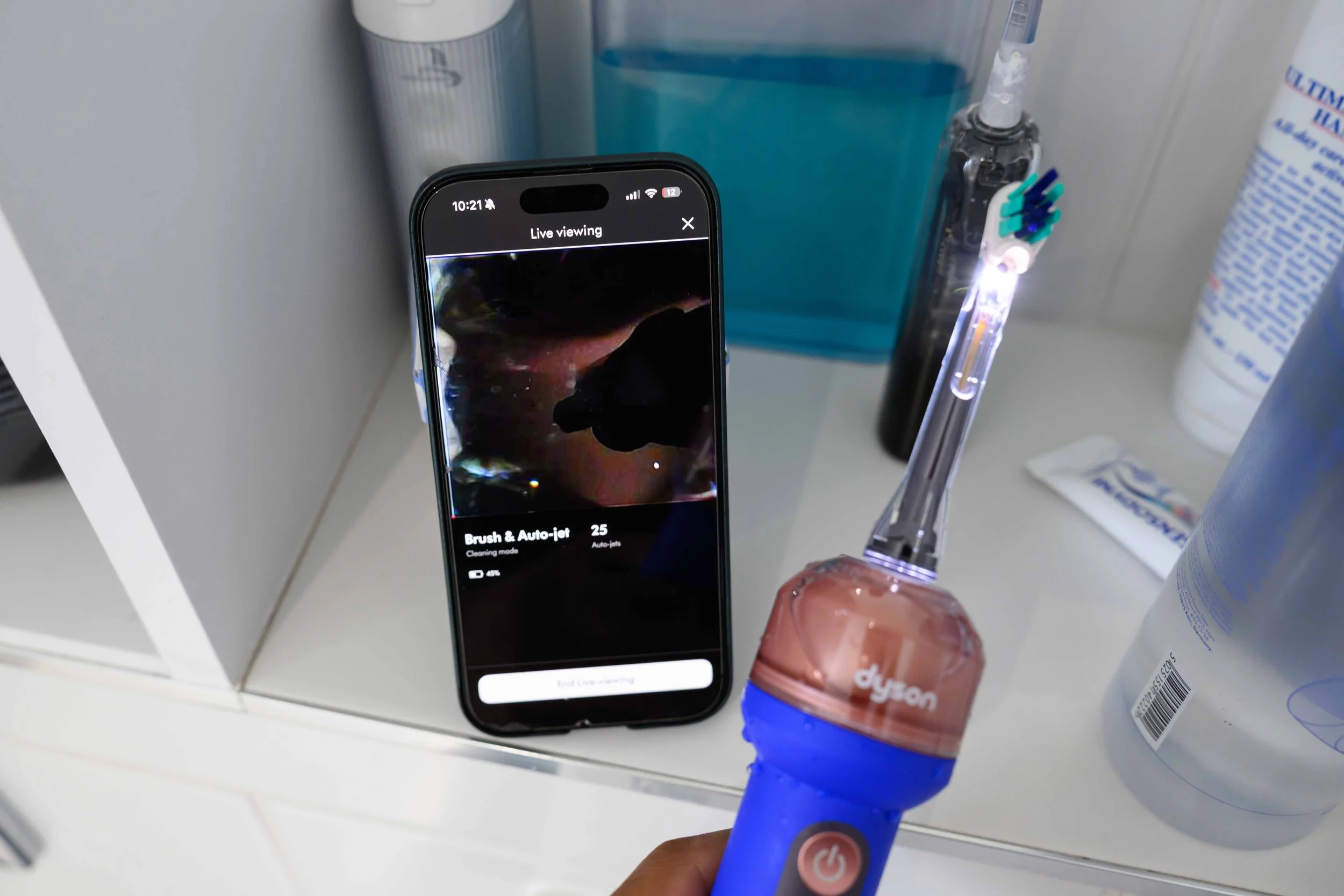
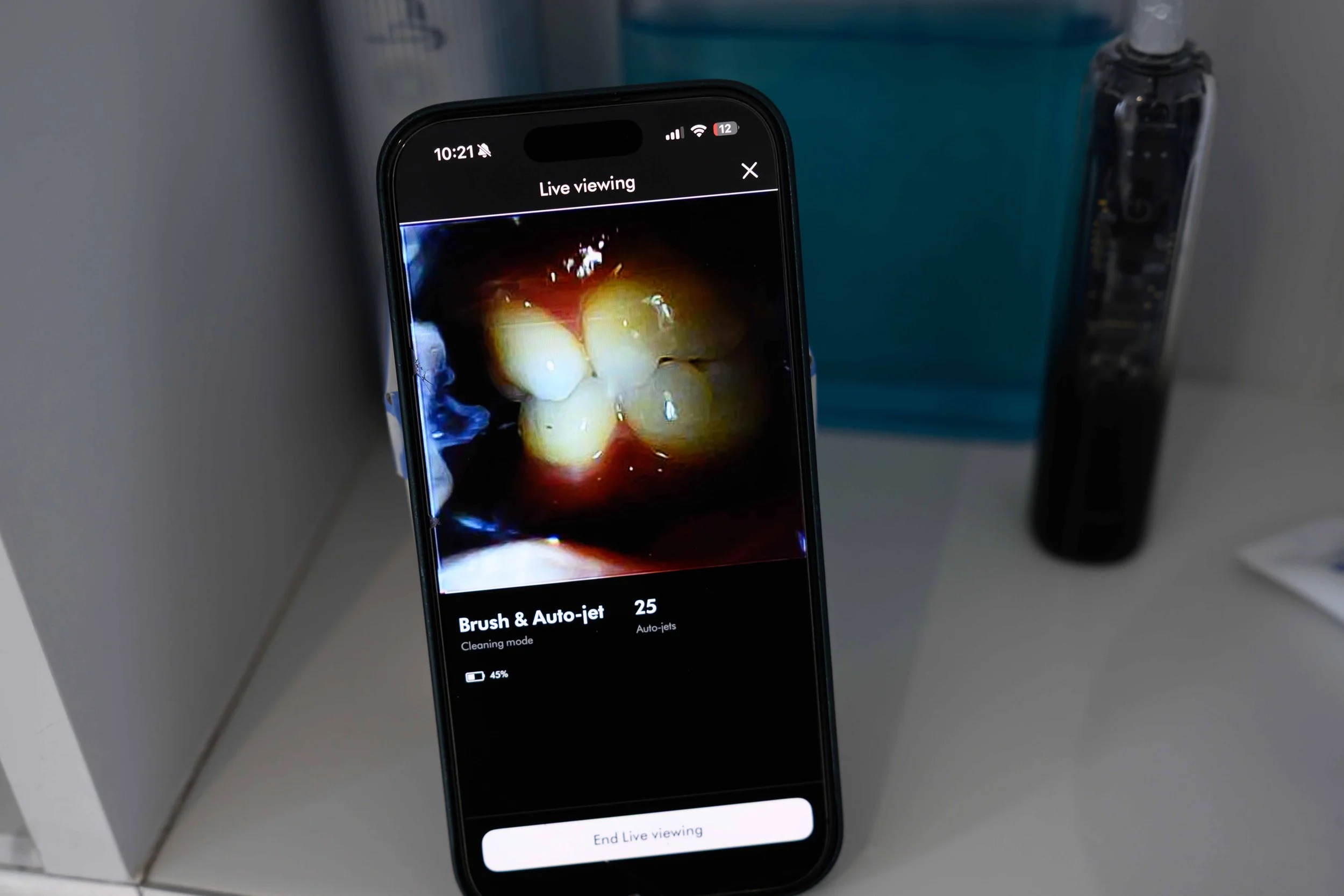
The live stream is a nice novelty. In practice, the view is compromised by lips, cheeks and water; the lens is wide-angle, and you can't see much of clinical value. You also have to manually connect to the brush's own Wi-Fi to activate it each time, which adds a step before brushing.
On privacy: a lot of people have raised concerns about a camera in your mouth, and to be fair to Dyson, they walk you through the choices at setup, so you decide what is and isn't shared with them. They also state that images are not stored on the device or in the cloud.
The charging setup is very annoying, for me anyway.
This is a recurring theme in my toothbrush reviews, and it's a personal bugbear.
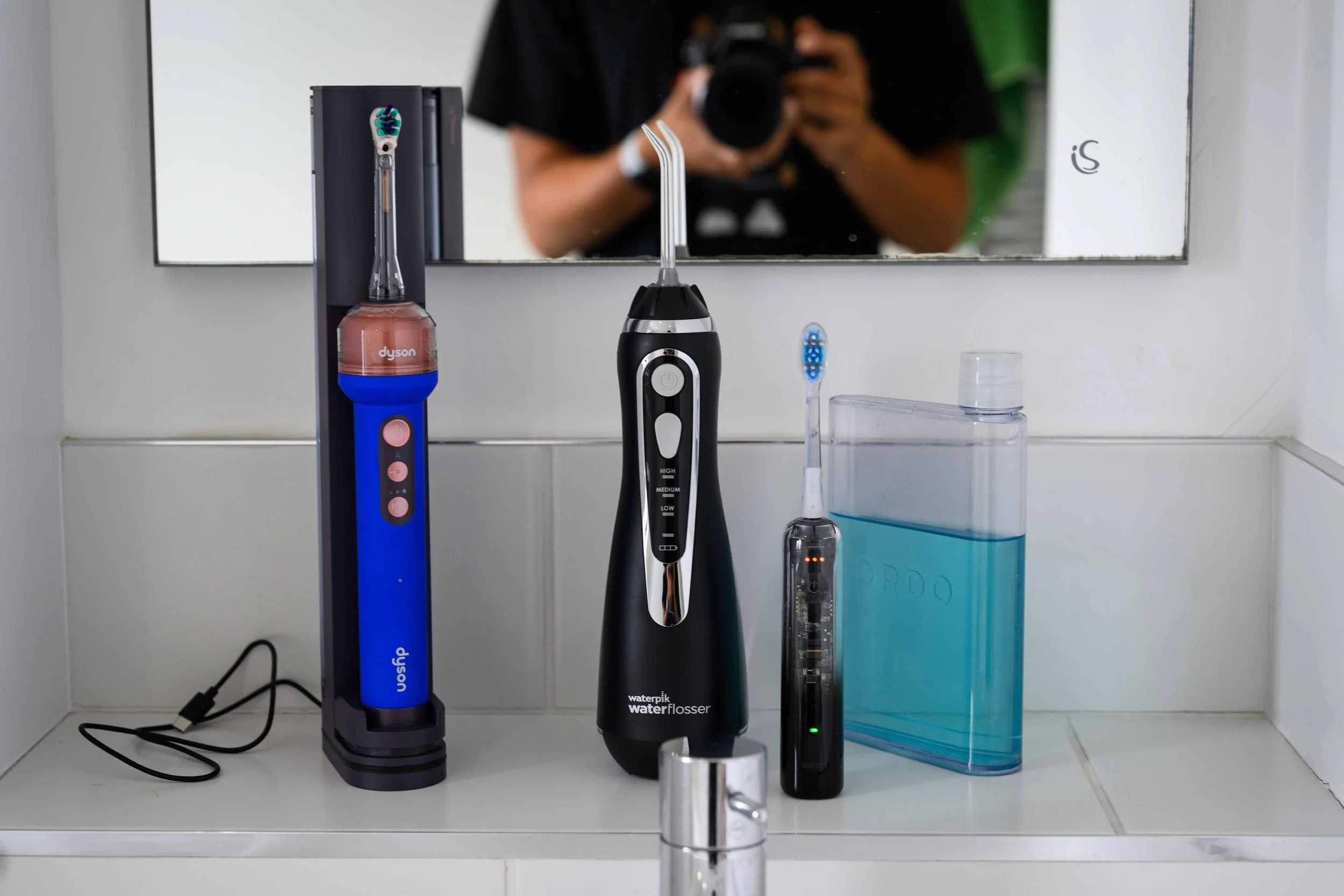
There are two ways to charge the CameraJet. You either plug the brush directly into Dyson's own proprietary cable, or you sit it in the dock. Both end in a USB-C connector, and UK bathrooms don't have USB sockets. So you're either buying a chunky adapter to get it into a bathroom socket, or the dock lives in another room and the brush travels back and forth every time it needs a top-up.
You can leave the dock in the bathroom unplugged and use it purely as a stand, but then you lose its best trick. The dock refills the mouthrinse chamber at the touch of a button, and it can't do that without power. So you end up refilling by hand from the bottle instead, and the opening is small enough that you spill a good amount of rinse each time. Getting the chamber back onto the brush without losing more is fiddly too.
What stings is that other brands have moved to standard USB-C, often built into the travel case or straight into the handle. You take the brush to your laptop or your phone charger, top it up, bring it back, done. With the CameraJet, you need the specific cable Dyson gives you, and the dock is far too big to carry around.
The travel case isn't a travel case
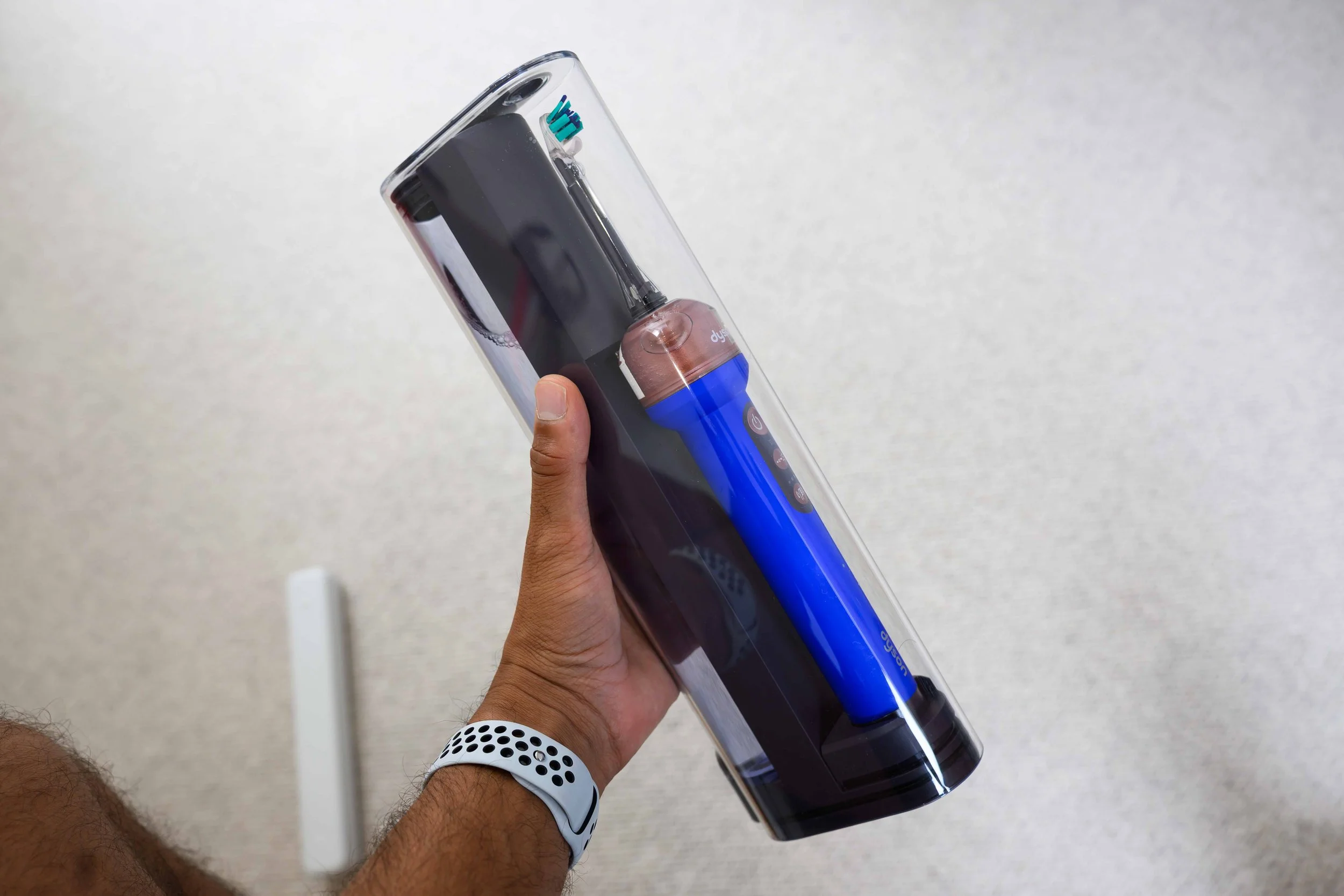
Dyson includes what they call a travel case, and the product listing sells it as a transparent travel case. It isn't one. It's a clear hard plastic cover that sits over the dock.
To be fair, it does package the whole system up neatly, and it looks great, just like a Dyson product. It would sit stylishly on display in your bathroom if you have space. But as a travel case it doesn't work for me at all.
It's enormous. It also means that if you're taking it away with you, you're taking the mouthwash liquid as well (unless you decant it, in which case it doesn’t need to be that big). And because it's clear hard plastic that doubles as the thing on show in your bathroom, you’ll want something to protect the case itself to prevent scratching or cracking it.
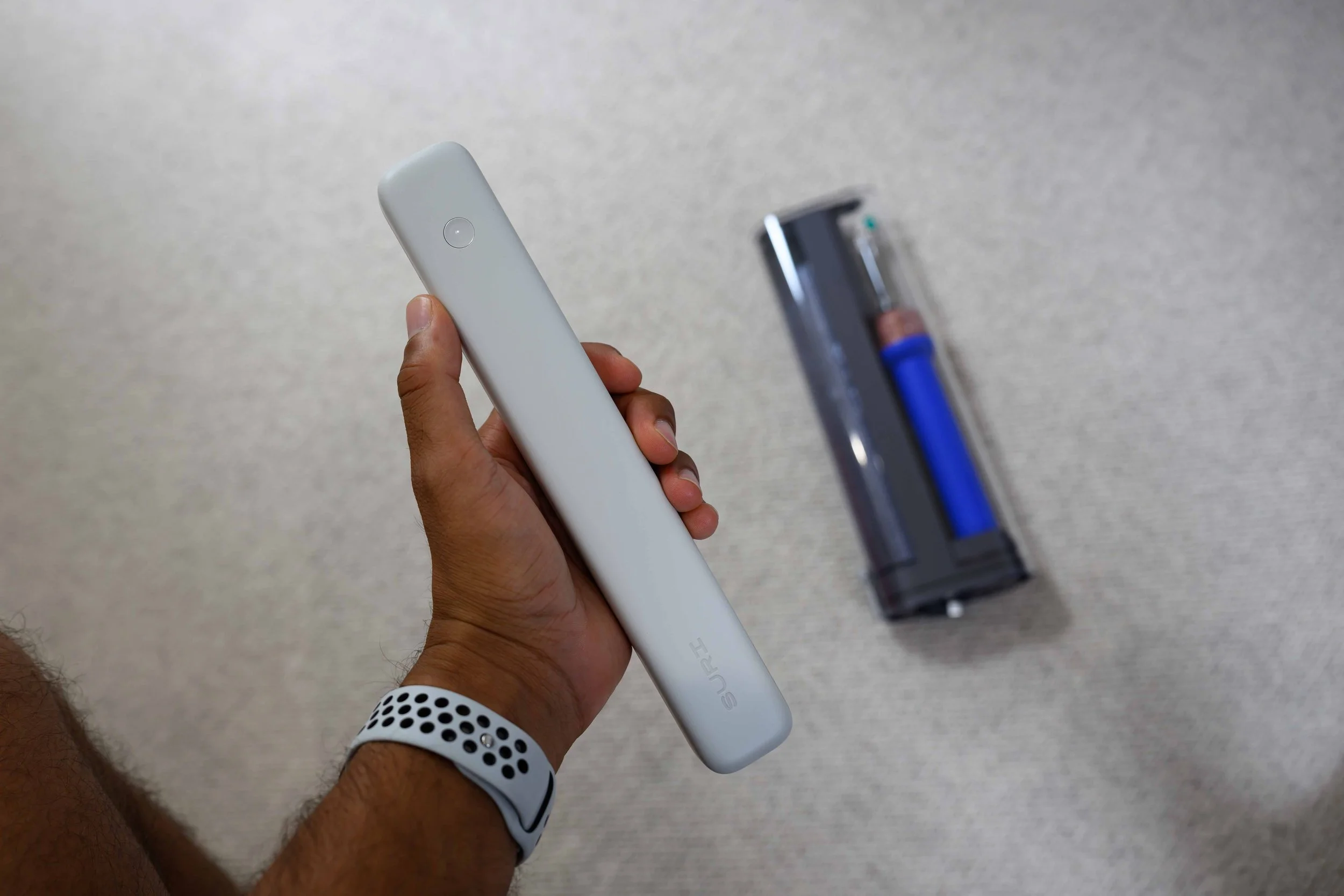
A travel case needs to be small, robust and forgettable. You throw it in a washbag and stop thinking about it. This is the opposite of that. If I were taking the CameraJet away for a weekend, I'd leave the case at home, in fact, if I’m honest I’ll be grabbing my SURI or Laifen instead anyway.
A dentist's problems with the Dyson CameraJet
Here is the bit I care about most, and the bit the tech reviews may skip over.
The clinical evidence Dyson cites compares it to a manual toothbrush, not to a good electric brush and waterflosser. Dyson's clinical claims come from studies against manual brushing, with lab tests using their own proxy plaque model for the rest. Almost any toothbrush beats a manual brush used badly. What I want to know is whether the CameraJet beats a £60 sonic brush plus a water flosser in someone's actual bathroom over a year. Nobody has shown that yet.
Nothing here has been shown to reduce decay or gum disease. Plaque removal in a lab is a proxy, not an outcome. Fewer fillings, healthier gums and well looked after teeth and dental work are the actual outcomes we want to see as dentists.
You're buying into an ecosystem. The camera needs non-foaming toothpaste to see, so you use Dyson's SLS-free paste, and the jet is designed around Dyson's low-foaming rinse. Both contain sodium fluoride, so the fluoride is still there, but you're now committed to their consumables on top of £29.99 for a pair of replacement heads.
Rinsing whilst brushing? Standard clinical advice is to spit and not rinse after brushing, so the fluoride in your toothpaste stays on your teeth. The CameraJet jets mouthrinse into your mouth while you brush. Dyson's rinse is fluoridated, which mitigates this, but the interaction between a diluted toothpaste slurry and a fluoride rinse hasn't been shown to be as good as simply not rinsing.
Dyson is right that most people don't clean between their teeth, and that's where a lot of dental problems start. I just don't need a camera to find the gaps between my teeth; it’s obvious where they are! An air flosser or an interdental brush pointed between the teeth does it faster, and my fingers find the spaces perfectly well.
Would I use the Dyson CameraJet?
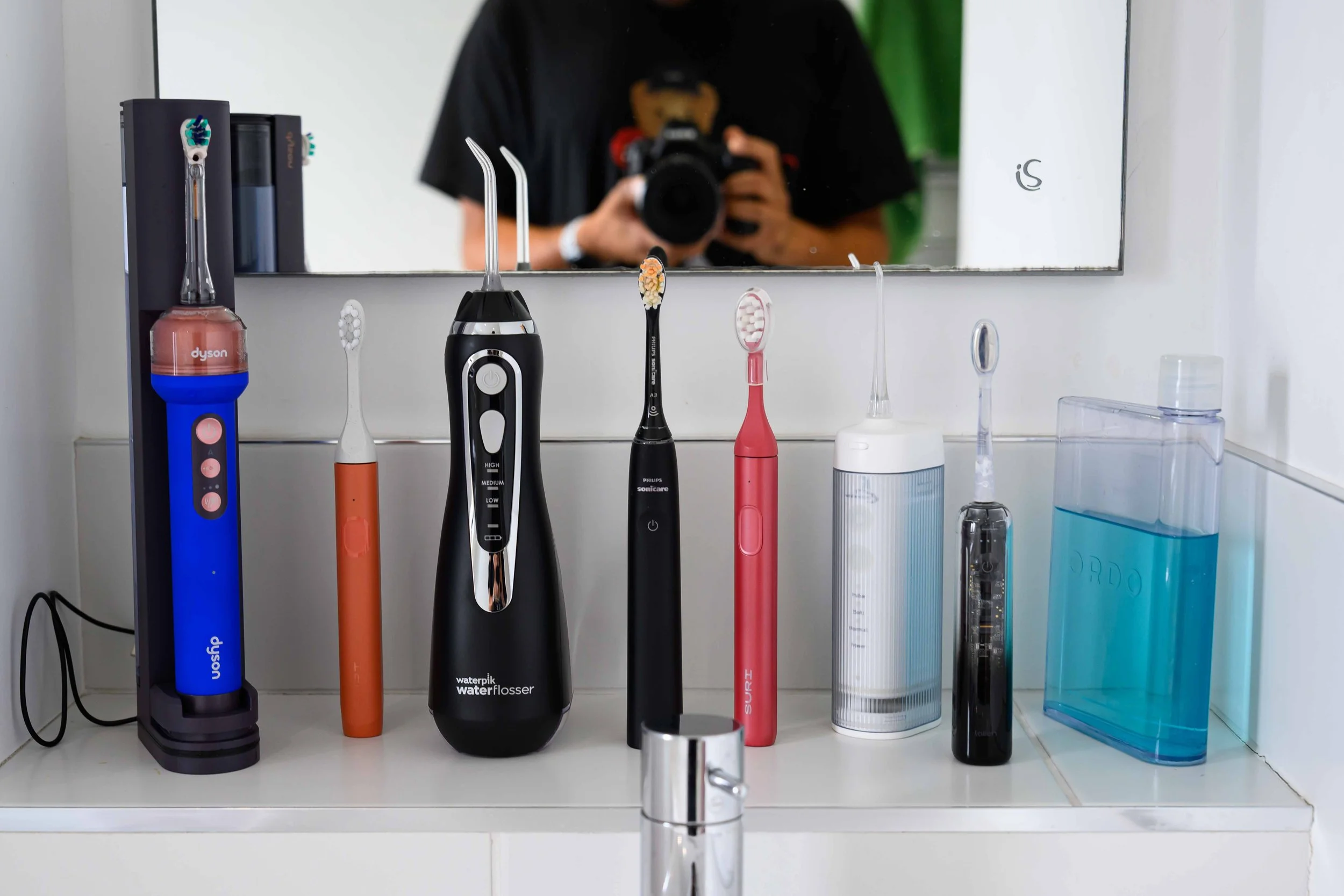
Honestly, no. I'd reach for my Philips Sonicare, my Laifen Wave Pro or my SURI. They're smaller, easier to travel with, easier to charge, and easier to keep clean over years of use. Then, I would use my water flosser, which takes seconds and needs no camera at all.
Who should use it?
Someone who genuinely will not floss, has tried everything, and might do it if it happens automatically while they brush and they have a lot of cash burning a hole in their pocket.
If you're already brushing twice a day with a decent electric brush and cleaning between your teeth, this will not improve your mouth. Spend the £420 on a hygienist appointment, a good brush and a year of interdental brushes, and you'll be better off.
What happens next
I'm genuinely excited to see where Dyson takes this. First-generation products from them tend to get much better fast, and having a serious engineering company in oral care is good for everyone. I'll keep using it and update this review at the two-week and one-month marks, particularly on whether the jet targeting improves with technique.
What I would LOVE to see introduced in this toothbrush is if patients can take good intra-oral pictures of their teeth or areas of their teeth they are concerned about (such as staining, broken fillings and crowns) for their dentist to have a look. THAT would be an amazing feature.
If you've bought one, I'd love to know how you're getting on with it.
I bought this toothbrush myself at full price. Dyson did not provide it and has had no input into this review.