Electric Toothbrush Buying Guide: Features That Actually Matter
Medically reviewed by Dr Zaeem Jafri BDS
When it comes to upgrading your oral care routine, swapping a manual toothbrush for an electric one can make a noticeable difference. There’s a reason dentists up and down the country recommend you switch up to a motorised brush, but the truth is, there’s likely a right and a wrong model for you. Brands like Oral-B and Philips’ Sonicare dominate the market with feature-packed options, with a huge range of devices to suit all needs and budgets.
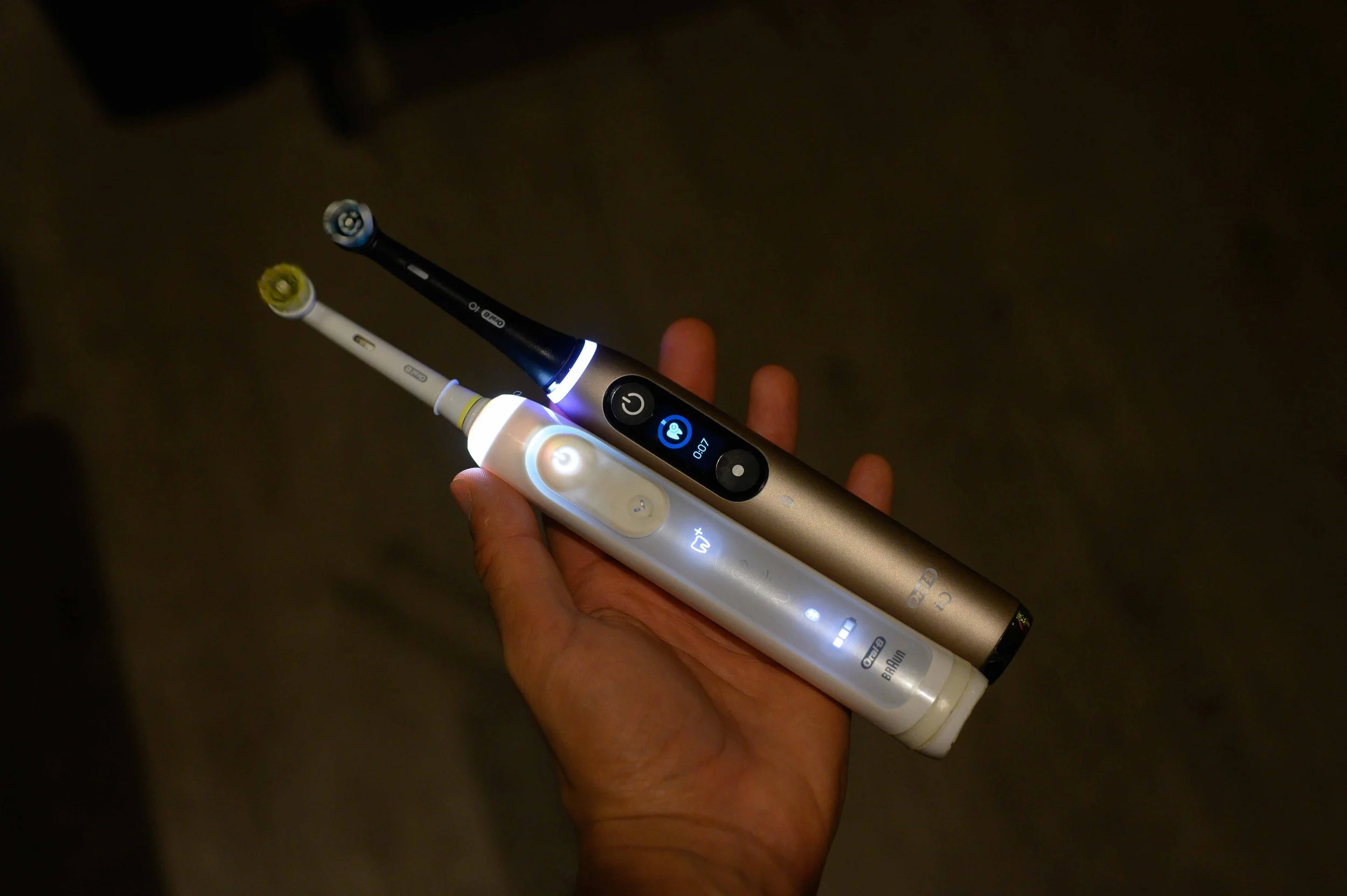
However, not all bells and whistles are equally useful. As dentists consistently point out, some features genuinely improve brushing effectiveness and dental health, while others are cleverly marketed add-ons that may matter more to gadget lovers than to everyday users. Face it. Are you really interested in staring at your phone screen while brushing, instead of just getting the job done and trusting in the power of the brush’s powerful vibrations?
Therefore, it’s worth doing your research and figuring out which features matter most to you, helping you cut down on the potential options, eliminating higher-priced products that won’t really assist you, and ultimately lead you to a healthier mouth. To help you work out what actually is important and not just a gimmick, we’ve laid out the genuinely useful features you really need to focus on in order to level up your toothbrushing routine, and make sure you avoid overspending on items that probably won’t really matter. Dr Jafri has provided some expert opinion on what actually matters, ad what you can afford to skip out on.
Key Features Of An Electric Toothbrush
Brushing types
The first and most important feature dentists recommend is brushing technology that delivers consistent, effective cleaning. Both Oral-B and Philips Sonicare offer a different type of cleaning option. Oral-B uses oscillating circular brush heads, that rotate the brush at a high speed around the tooth, using the rapid motion to spin the bristles between the teeth and along the gum line to remove plaque. It’s a great option for targeting specific teeth and focusing on areas that you know need special attention.
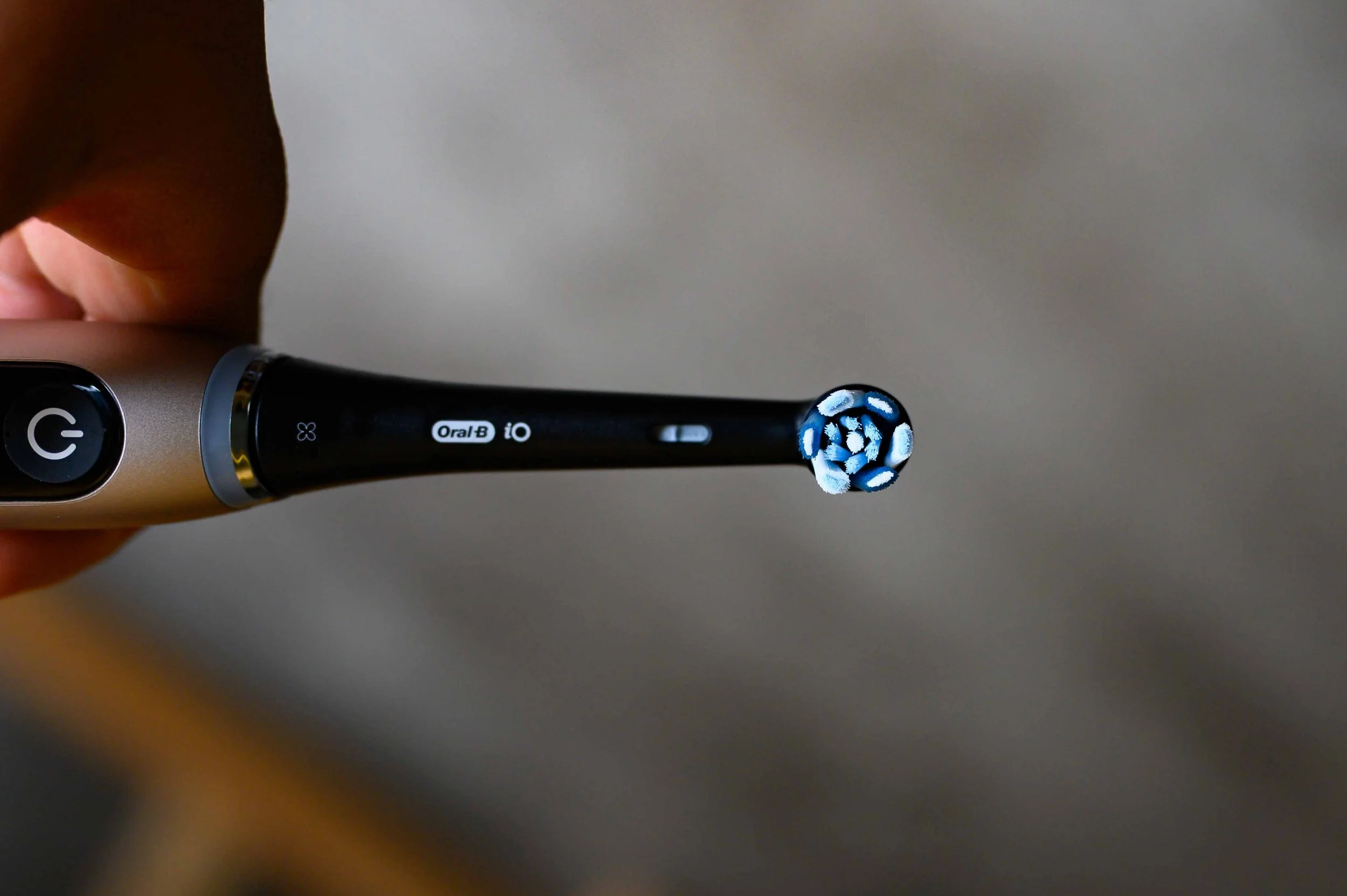
An Oral-B brush head
Generally, Oral-B brushes are good options for clearing away plaque and reclaiming a dazzling white smile, and there are always plenty of deals and offers on replacement heads to ensure you’re not using old, worn brush heads that quickly become ineffective.
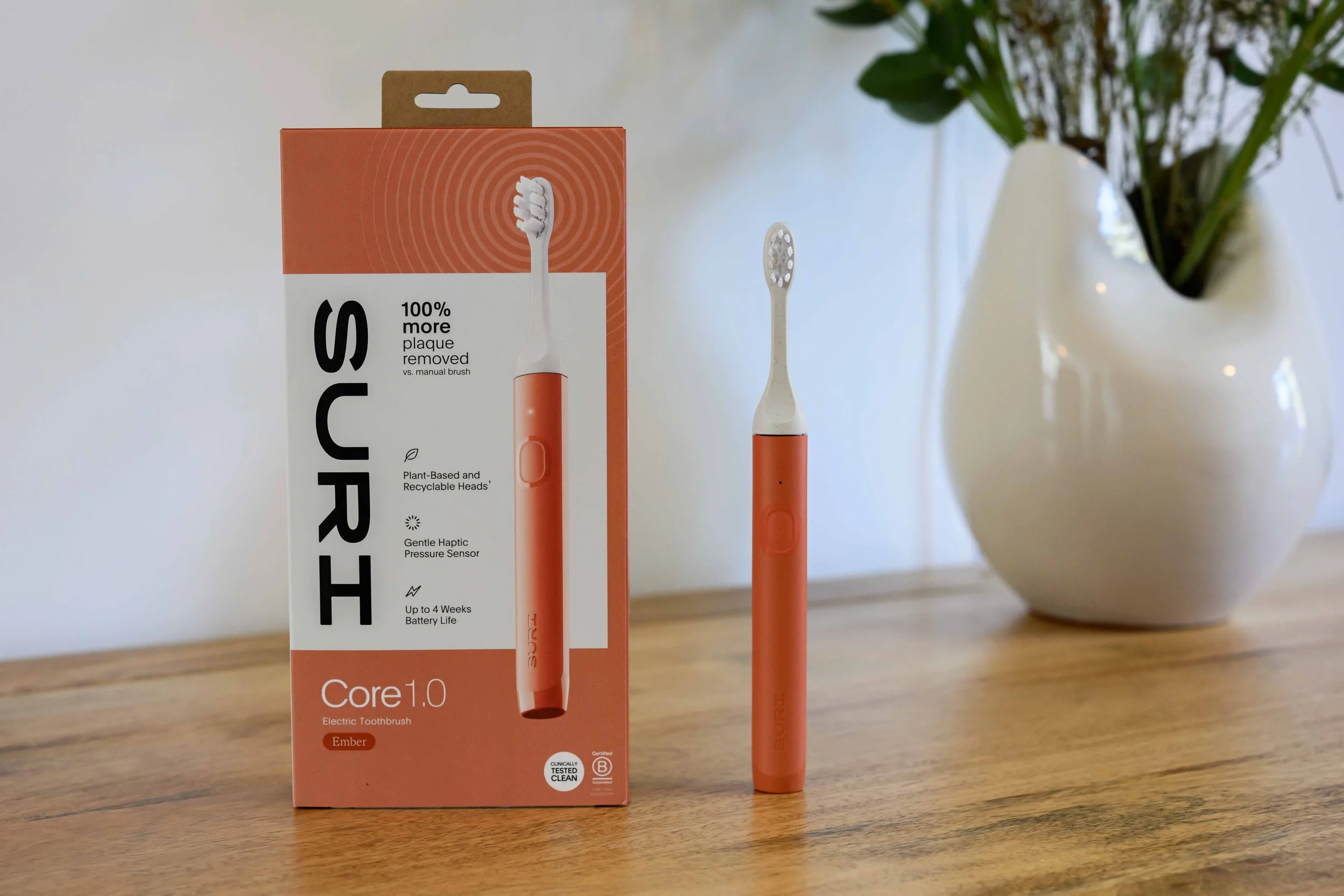
Philips, and other brushes like Suri, use sonic pulses, vibrating the brush head at thousands of motions per minute to lift plaque from your teeth and clear it away. The brush heads are typically oval-shaped and longer, providing more surface area. These brush heads allow you to target more teeth at once.
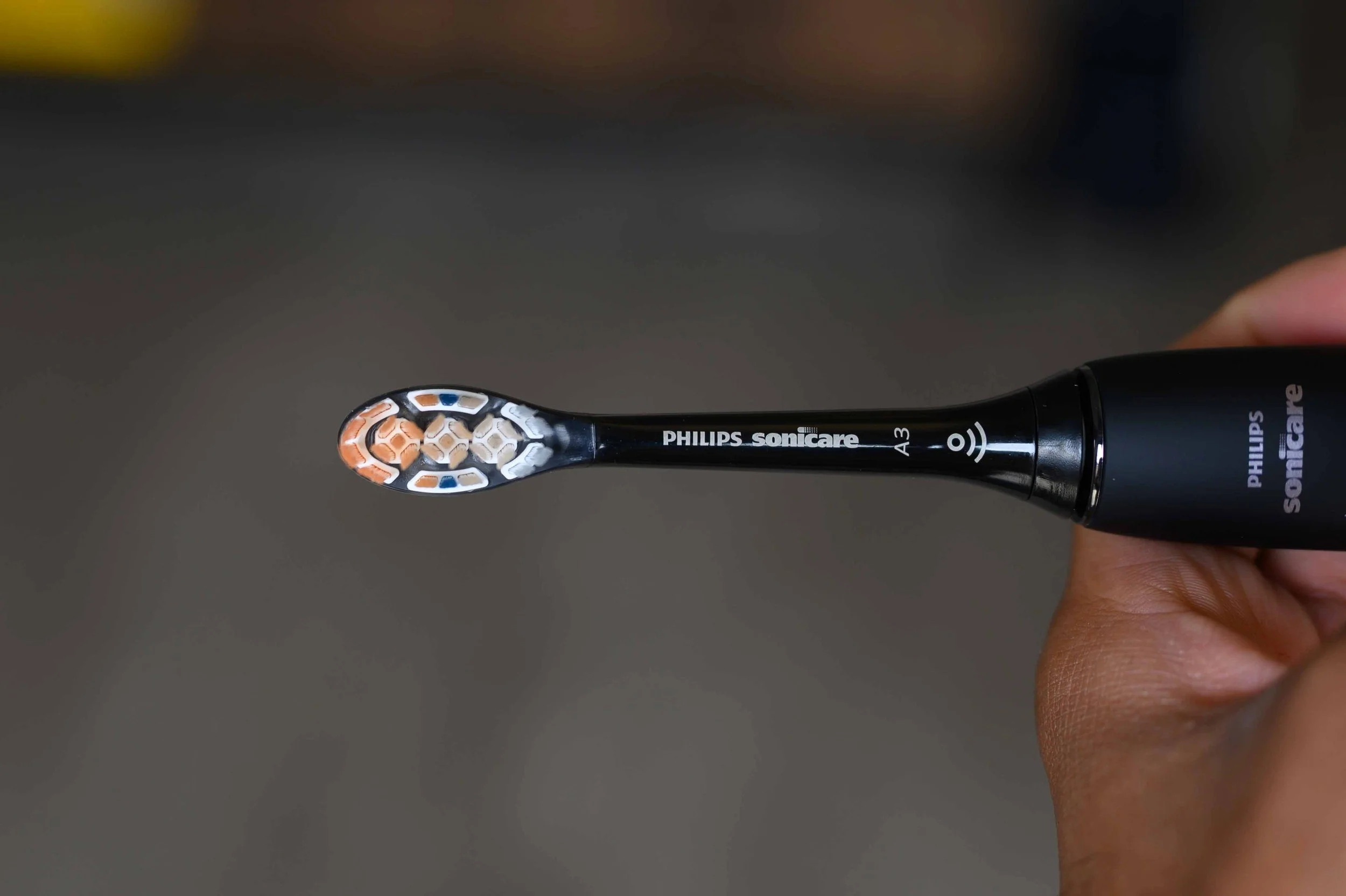
In both cases, it’s clinically proven to reduce major oral issues like gingivitis, bad breath and stained teeth. Either choice is incredibly effective at cleaning your teeth, and for most people, the difference between the two is your own personal preference.
Dr Jafri says that, “regardless of brand you choose, so long as you’re getting a brush that has a motorised motion that quickly cleans your teeth, it doesn’t really matter. There hasn’t been any firm research to land in the camp of either brand as the best option, so go with one that fits your budget and style. ” Think less about the brand and more about what other features are genuinely important.
Pressure Sensors
For Dr Jafri, pressure sensors are one of the key features you need to look at when buying an electric toothbrush. For many, the temptation to press too hard on your teeth, after having used a manual brush for most of your life, will be too great, which is a big mistake.
If you press too hard, you can wear away the enamel wrapped around your teeth and damage your gums, causing bleeding and gum recession.
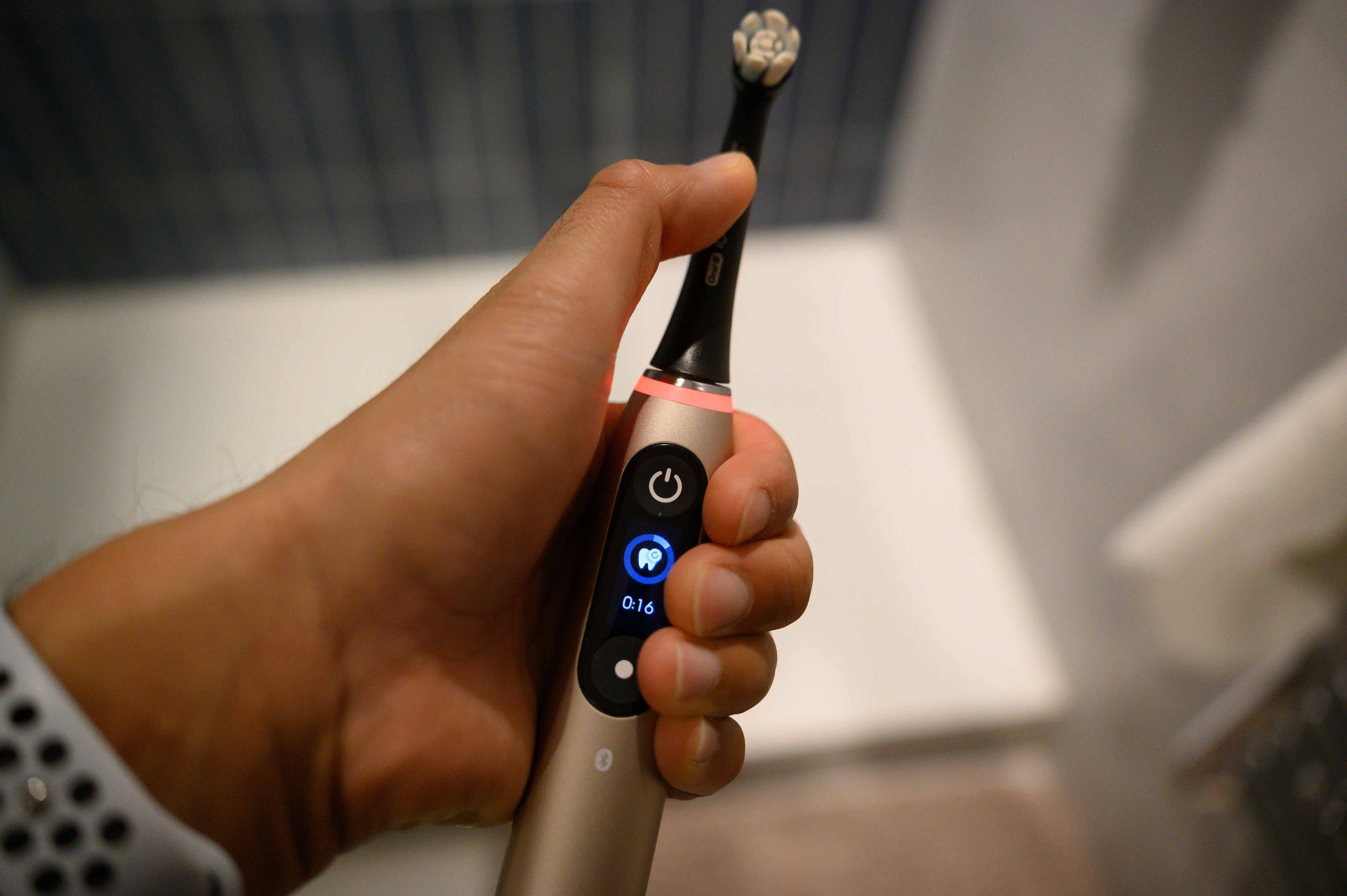
To combat this, the majority of electric toothbrushes have a pressure sensor to warn you when you’re pressing too hard. In many cases, this is an LED light ring that wraps around the neck of the brush, phasing from Green, optimum pressure, to Orange, too much, to Red, damaging pressure levels.
Some brushes like SURI that don’t have lights will give an audio warning when you’re pressing too hard.
Learning these pressure scales and using them properly can ensure you’re not damaging your gums or forcing the brush too much, and is seen as a key feature by many dentists. Keep in mind that Philips’ Sonicare Prestige range also has a movement sensor, which warns you when you’re “brushing” with sideways motion too much.
The benefit of an electric toothbrush is that you don’t need to do that much hard work moving the brush side to side to clean them. The motor does a lot of the heavy lifting to clear away plaque, and all you need to do is hold the brush against your teeth to get it to work effectively. This motion sensor warns you when you’re being a bit too proactive with your cleaning, helping you cut down on the bad habits.
Regardless of budget, most toothbrushes have this as standard, but it is one of the most important features to hunt for.
Two-Minute Timers
Beyond health-related tech, timers and pacers are useful for encouraging thorough brushing. Dentists recommend brushing for a full two minutes, and electric toothbrushes with integrated timers, often splitting the session into 30-second quadrants, help make that easy. This is a simple and affordable feature that benefits virtually every user.
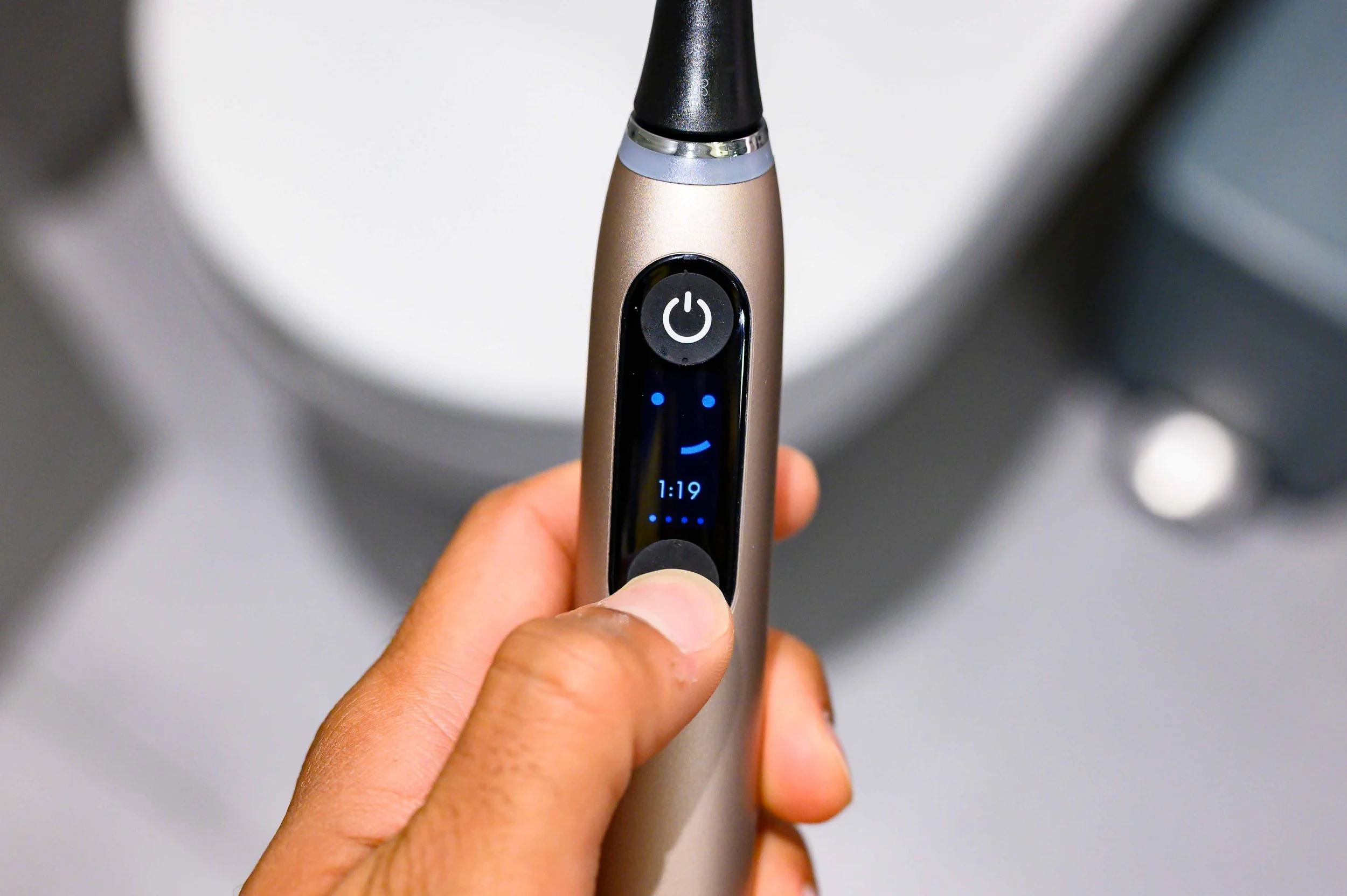
The Oral-B io10 has a visible timer on the handle
It can be hard to purposefully brush for the full two minutes unless you’ve got a timer, so having a gentle reminder of when you’re done can ensure you never miss out on a full cleaning session. It’s also handy to have a device that nudges you to move on and clean another section of your mouth, spreading out your time evenly and guaranteeing you don’t miss those back teeth or hard-to-reach places.
Battery Life And Recharging
Electric toothbrushes have batteries built in, but the longer you spend away from the charging point, and actually brushing your teeth, is time well spent. As you’re only cleaning for two minutes twice a day, most brushes can last anywhere between two weeks and a full month of cleaning before needing a recharge.
To remove some of the headache of getting midway through a brush and running out of juice, many of the top-end brushes have charging stations that store and recharge the brush when not in use. Philips has many options that have aesthetically pleasing charging pads or even mini glasses that make the brush look nice on the sink-side, but also keep the battery topped up.

Most brushes are wirelessly charged, as many are fully waterproof and don’t have space on the design for a USB port, meaning you’ll get plenty of charge back quickly, saving you some bother waiting by the plug socket to get back up to 100%. It’s worth noting that the cheaper the brush, the shorter the overall lifespan of the battery is, so keep this in mind if you want to avoid buying a new brush in a few years to replace the old one.
Additional Accessories, Brush Heads And Charging Cases

Any additional extra items that come with your brush are a bonus, but some should be expected, like replacement brush heads, charging cables and a travel case. More expensive options will come with fancier additions, like a UV cleaning case or fast-charging wireless pads. While this shouldn’t factor into your choice when it comes to brush quality, it is a contributing factor in which brush you ultimately end up buying. These will be things that you use regularly, be that a case that keeps the brush secure and safe when you’re traveling around, or multiple brush heads that will have you cleaning properly for several months.
Bluetooth Connectivity And Smartphone Apps
That said, not every feature is essential for everyone. Some models include Bluetooth connectivity and smartphone apps that track brushing habits and offer coaching. While these can be fun and motivating for some, they’re not critical for achieving clean teeth. If you’re not a gadget fan, you may find these extras unnecessary — and they often add to the price tag without improving core brushing performance.
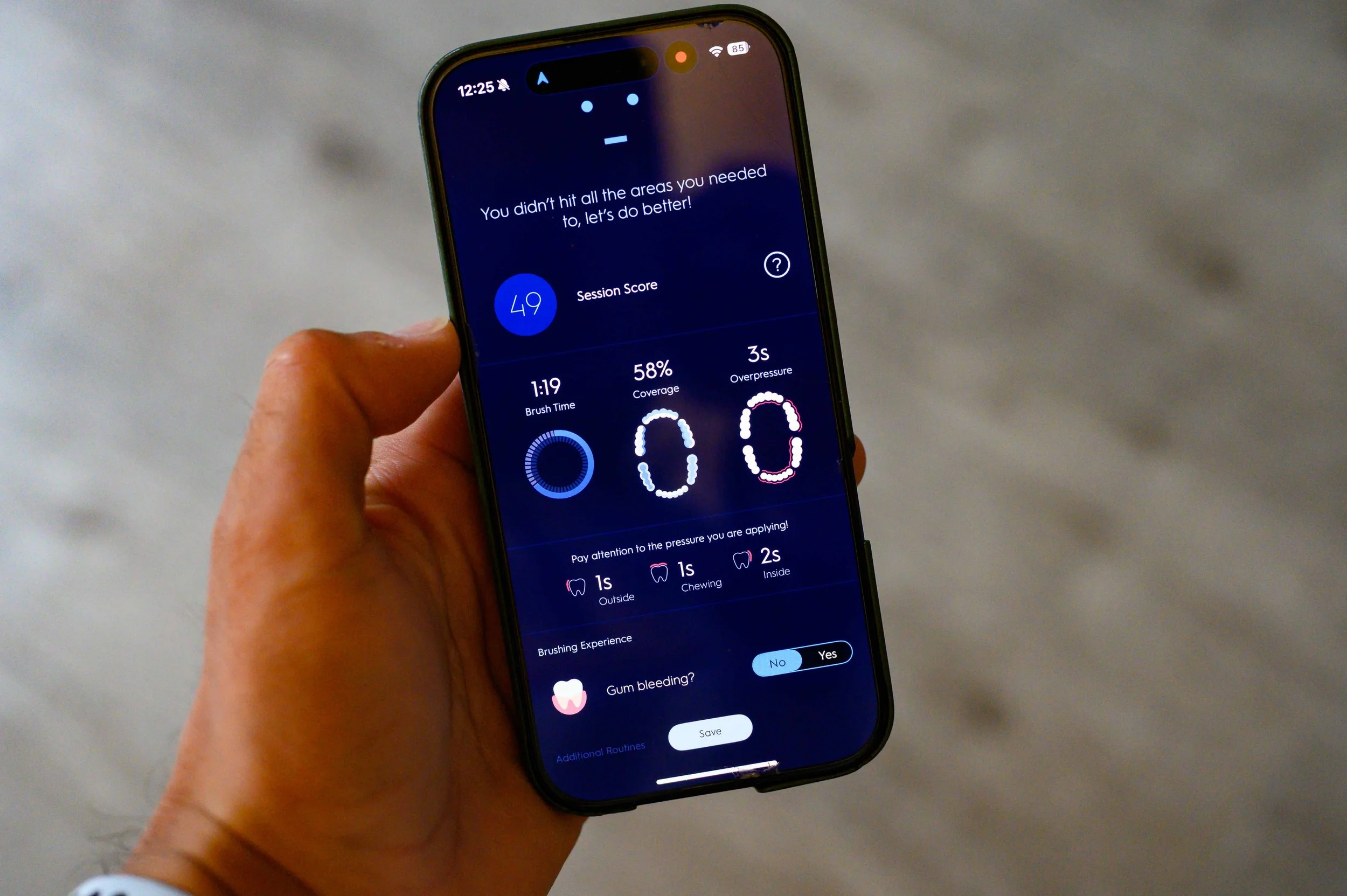
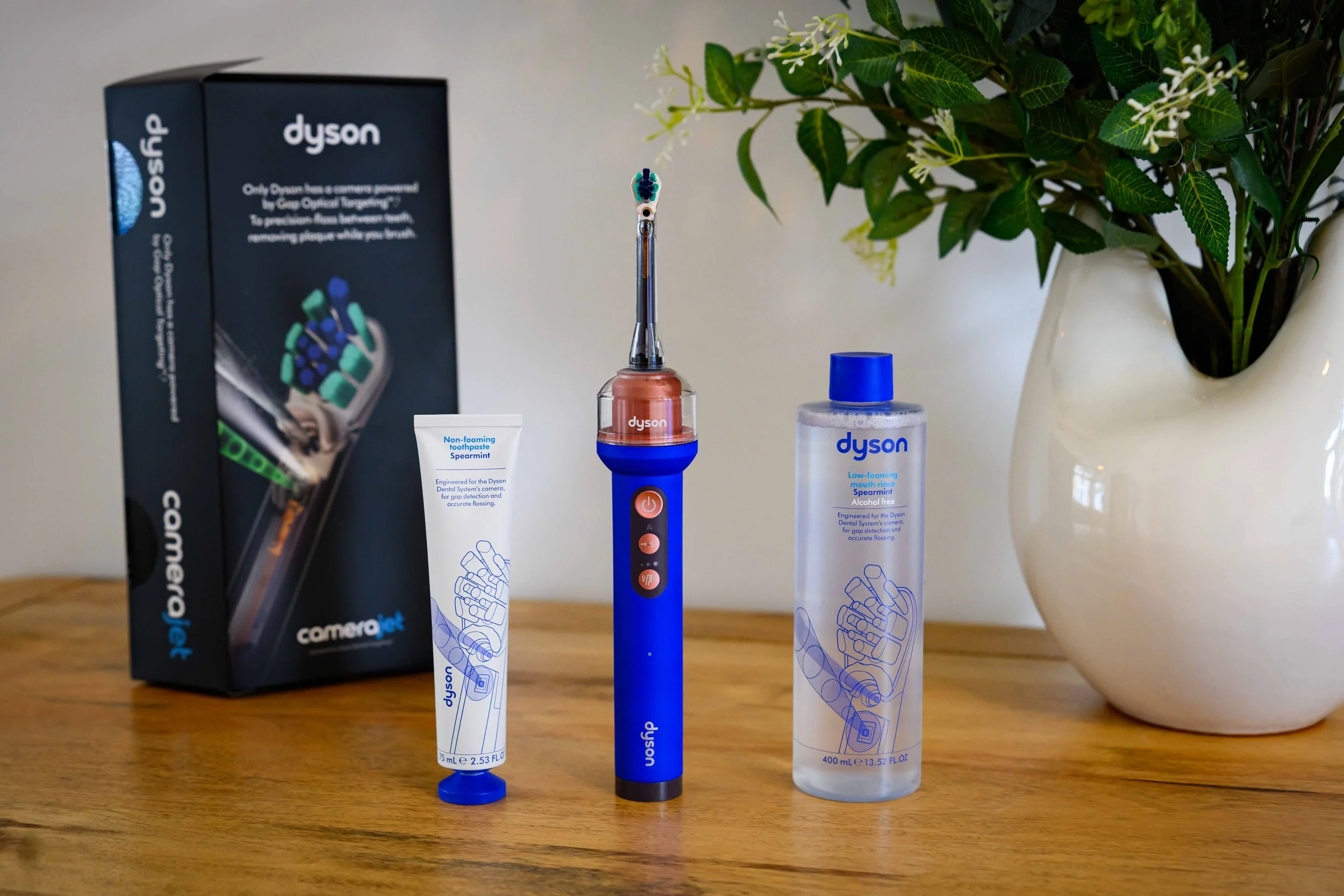
Top-end brushes like the Oral-B iO10 are incredibly expensive and offer AI mouth mapping and real-time toothbrush tracking to help you brush more effectively. If you’re really into tech and love testing out gadgets and seeing stats about your brushing routine, this is great, but is it worth the high cost for most users? Will it actually improve your tooth-cleaning in a tangible way? The answer to both is: probably not.
Cleaning Modes
Similarly, multiple brushing modes (like whitening, gum care, or sensitive) can be appealing, as it feels like they can help target a specific issue, but they matter more for niche needs. A basic daily-clean mode paired with good brushing habits will do the heavy lifting for most people.
Across our testing, many cleaning modes simply feel like micro-adjustments in intensity rather than any genuinely noticeable difference. That being said, if there is a particular brush that has many intensities is something that interests you, by all means consider it.
Summary
If pushed to pick three key features to keep in mind when buying an electric toothbrush, Dr Jafri recommends the following:
Two-Minute Timers
Pressure Sensors
Long-lasting battery life and quick recharging
Ultimately, the three most important aspects of dental hygiene is a good, consistent routine, proper technique, and the willingness to continue working on it. These three features assist you with managing your routine while brushing, helping you keep the brush at the best pressure to actually clean your teeth without harming them, and brushing for the recommended length of time, without cutting corners or over-brushing.
Everything else is largely down to personal preference. If you feel like you’ll get some enjoyment out of the AI tracking and deep data analytics of your brushing habits, then by all means, splash out on the premium models. Whatever helps you maintain healthy habits is a good measure of value.
As mentioned above, the majority of electric toothbrushes we’ve tested have these three features as standard, and you’ll find it tough to see any options that don’t have these features, but regardless, they are the most important.
More from Nova Smiles


Just had porcelain veneers fitted? Dr Jafri explains what's normal in the first few days, how to clean them, night guards, and what to do if one chips.