Oral-B vs Philips Sonicare: Which Electric Toothbrush Is Better?
Medically reviewed by Dr Zaeem Jafri BDS
Choosing the right electric toothbrush can feel surprisingly complicated. Spending any time browsing online to hunt for your new brush will present essentially two options: Oral-B and Philips Sonicare. Sure, other brands exist, and they are worth exploring, but the two titans of the industry are the most prevalent on shop shelves and also in the recommendations of dentists across the country. Backed by decades of research and the anecdotes of millions of users, they are the most trusted to help you level up your oral hygiene. But if they’re both “the best,” how do you decide which one is actually better for you?
At first glance, Oral-B and Sonicare may seem similar. They’re both premium electric toothbrush brands designed to remove more plaque than manual brushing, improve gum health, and make daily oral care easier and more effective. Dig a little deeper, however, and you’ll find that their approaches to cleaning are fundamentally different.
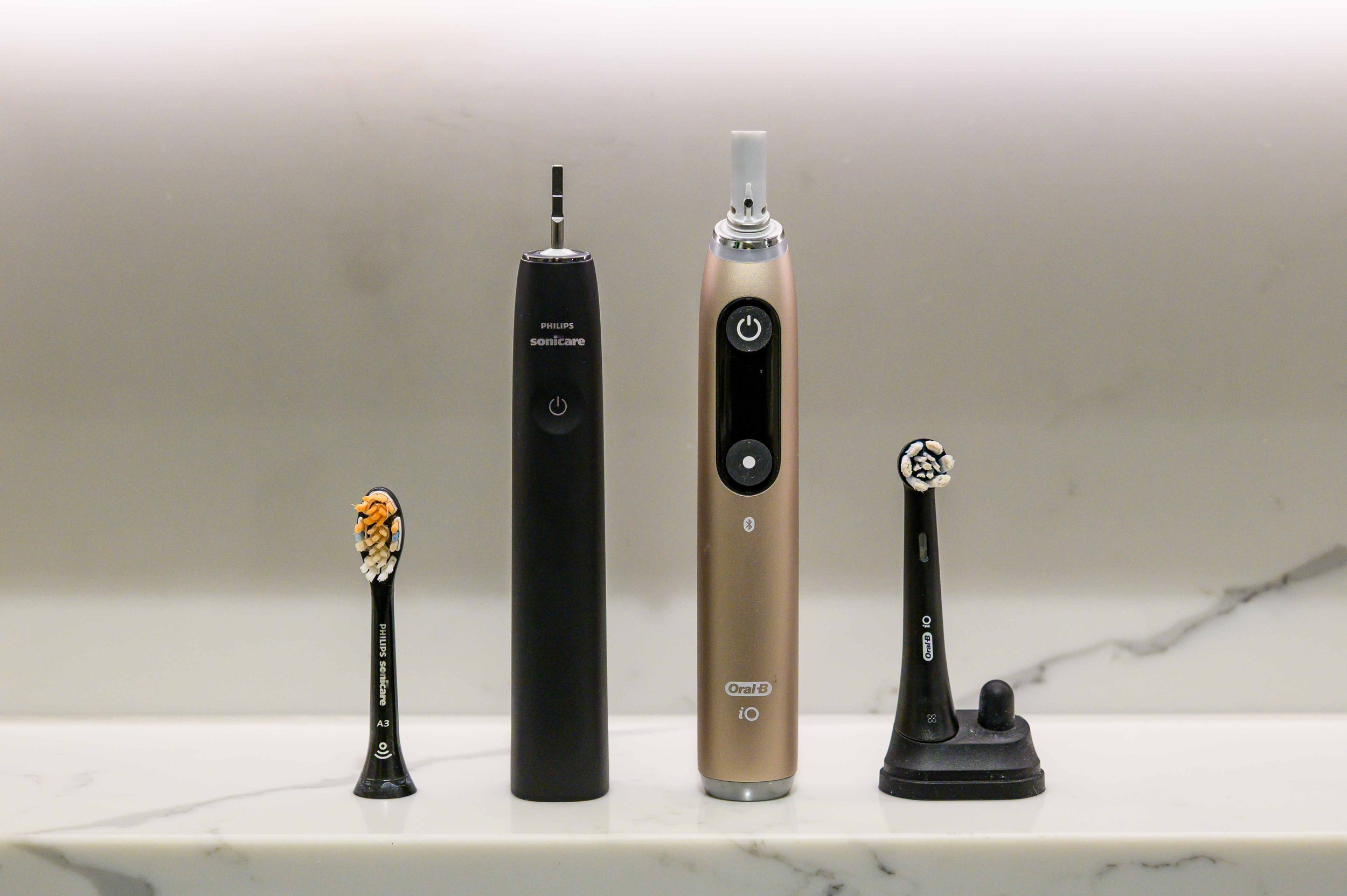
Most people simply want a quality electric brush that’ll get their dentist off their back and actually do a good job, but each brand offers something different that could align with your dental health goals. So, which one is actually better for you? The short answer: it depends on your mouth, your preferences, and your brushing habits. The long answer, and the one that will help you spend your money wisely, is below.
How Oral-B And Philips Sonicare Technologies Work
While the goal is to give you healthier, cleaner teeth, Oral-B and Sonicare take very different mechanical approaches. Before we get stuck into straight comparisons, it’s worth learning how each brand approaches dental care.
Oral-B Oscillating Brush Heads
Oral-B toothbrushes use a small, round brush head that oscillates back and forth, rotates, and pulses against the tooth surface in a tight circle.
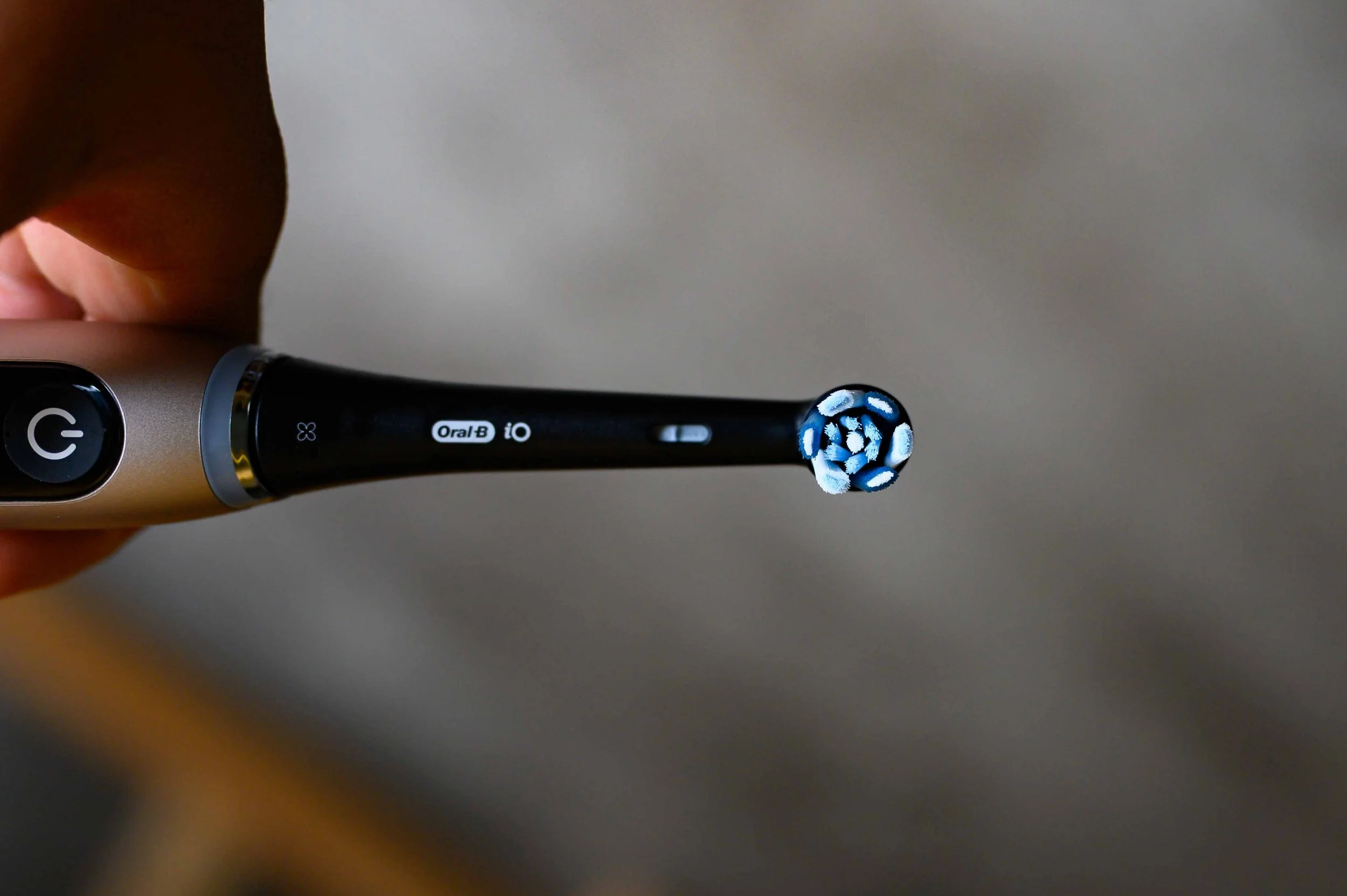
Oral-B’s circular, oscillating brush heads
Why this matters:
The circular head allows you to clean one tooth at a time, similar to how hygienists polish teeth.
The motion is particularly effective at breaking up and removing plaque from tooth surfaces.
Philips Sonicare Sonic pulses
Philips toothbrushes use high-frequency micro-vibrations that “buzz” the brush head powerfully against the tooth, with a longer, oval-shaped brush head.
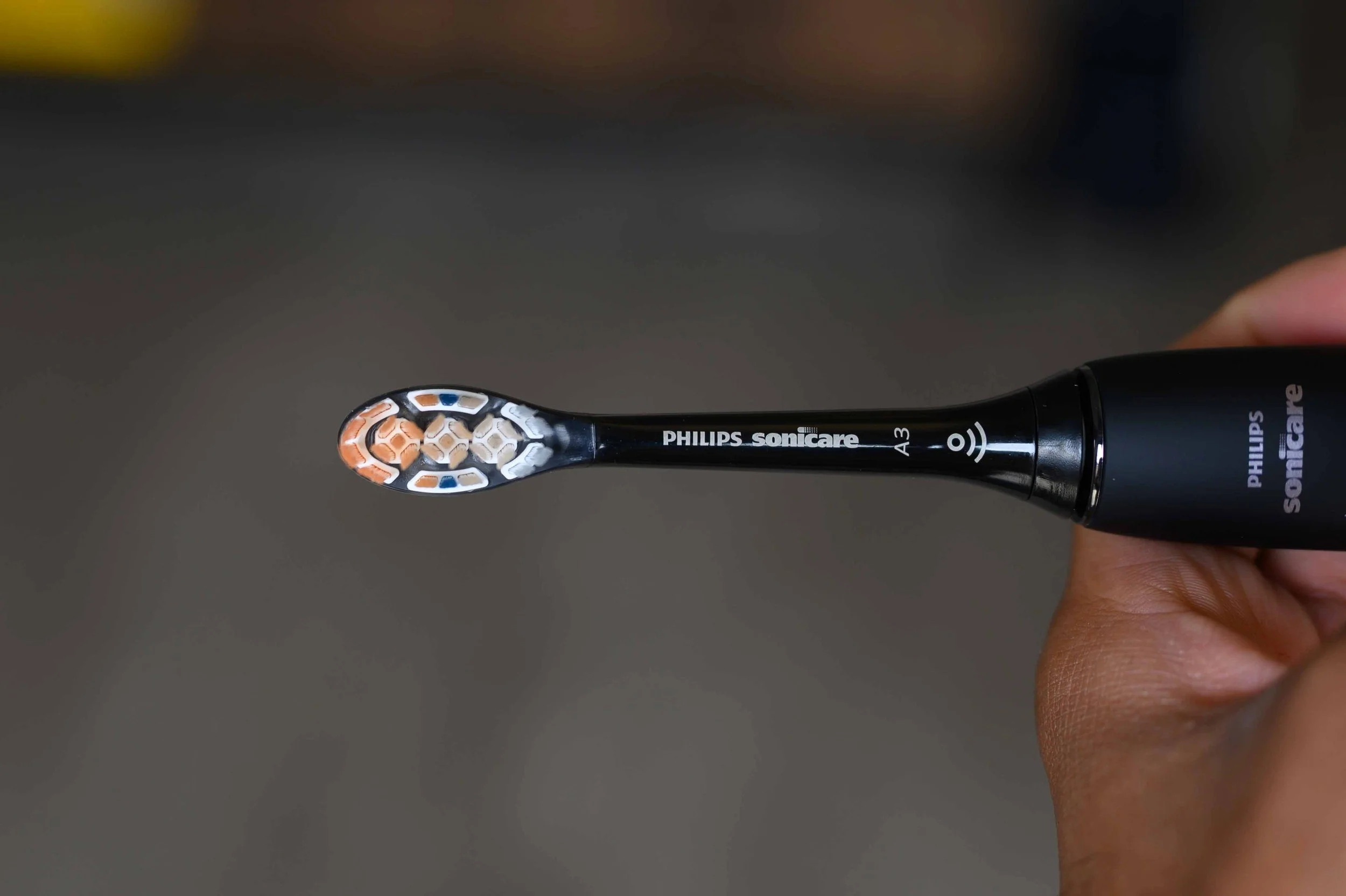
Philips Sonicare’s oval-shaped sonic brush heads
Why this matters:
Sonic pulses lift plaque and bacteria off your teeth for efficient cleaning
The brushing sensation is smoother and often perceived as gentler
The oval heads allow for more coverage across your teeth
Now, which is actually better? Clinically speaking, there is no evidence to suggest which is better. There are some trials that show that the Oral-B reduces more plaque because it has a mechanical movement in the brush head, but that’s largely because Oral-B has a firmer grip on the market in the UK, and therefore, more trials are completed. Realistically, the difference is negligible, and you should really align yourself with the brand that makes the most sense for you.
The take-home message here is that any electric toothbrush is better than a manual one, so we’d recommend selecting one that either fits in your budget, or has features that matter to you.
Key Features To Consider When Comparing Oral-B and Philips Sonicare
Beyond brushing motion, modern electric toothbrushes come packed with features, from two-minute timers to smartphone compatibility and waterproofing. Here’s what actually matters.
Brush Heads
Oral-B uses round heads; Sonicare uses elongated, traditional-shaped heads.
Both offer specialised options for whitening, gum care, plaque control, and sensitive teeth.
Replacement heads vary in cost, but both brands require changes every three months.
Brushing Modes
Each brand will call cleaning modes different things, but they largely follow the same logic. Common modes include:
Daily Clean
Gum Care
Sensitive
Whitening
Deep Clean
Premium models add tongue-cleaning modes and intensity adjustments that scale up the strength of the brushing motion for a tougher clean. More expensive models will offer more modes, but in our opinion, the modes are mostly the same, but with varying degrees of intensity, so we wouldn’t suggest you focus too much on this aspect.
Pressure Sensors
Over-brushing is a major cause of gum recession, so every brush from Oral-B and Philips will have a pressure sensor. This will be an LED light around the neck that warns you when you’re pressing too hard or using too much of a “brushing” motion on your teeth and gums. This is a really important feature to look out for and will instantly improve your dental hygiene if you pay attention to it.
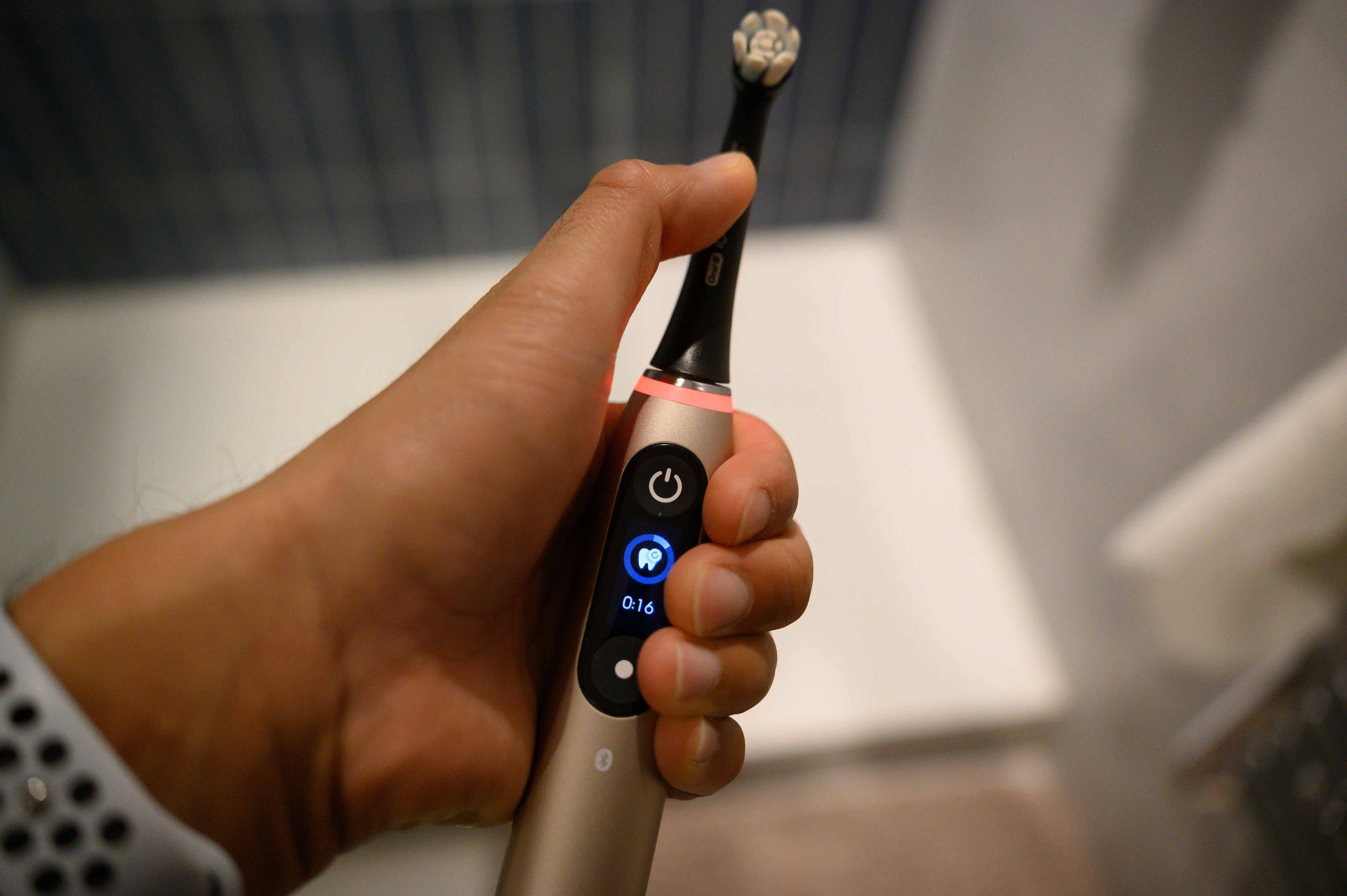
LED lights highlight when you’re pressing too hard
App Connectivity
Higher-end models connect to smartphone apps that:
Track brushing time and coverage
Provide coaching feedback
Help build better habits
These apps can give you live real-time feedback through a digital “map” of your mouth, tracking your brush while you’re using it to monitor which teeth you’re cleaning, how efficiently you’re being, and also providing useful tips and guidance on how to improve. It’s a great feature if you love tech and getting stuck into gadgets, but for the majority of users, it’s simply not that useful to improving your oral health.
It’s a feature reserved for the most expensive models, so if you really love the idea of using technology to improve your brushing and your budget can stretch to it, by all means use it as motivation to improve your brushing, but if you don’t care about the tech and don’t want to spend the money on it, it’s not really worth your time.
Top Oral-B vs Sonicare Models to Know
Top-Of-The-Range Options: Oral-B iO10 vs Philips Sonicare DiamondClean 9900 Prestige
The two best electric toothbrushes from Oral-B and Philips respectively, are the iO10 and the Sonicare DiamondClean 9900 Prestige. Both offer wireless charging on huge batteries, pressure sensors, two-minute timers, solid build-quality and premium features like AI smart-tracking to help you improve on your cleaning. Both are also incredibly expensive. You’ll notice in the “Key Specs” section below that the Philips brush has fewer modes and also a shorter battery, but in practice, this isn’t much of a difference, as the modes available are more than enough to get the job done, and you’ll be displaying the toothbrush on the charging station anyway, meaning the shorter longevity doesn’t come into play.
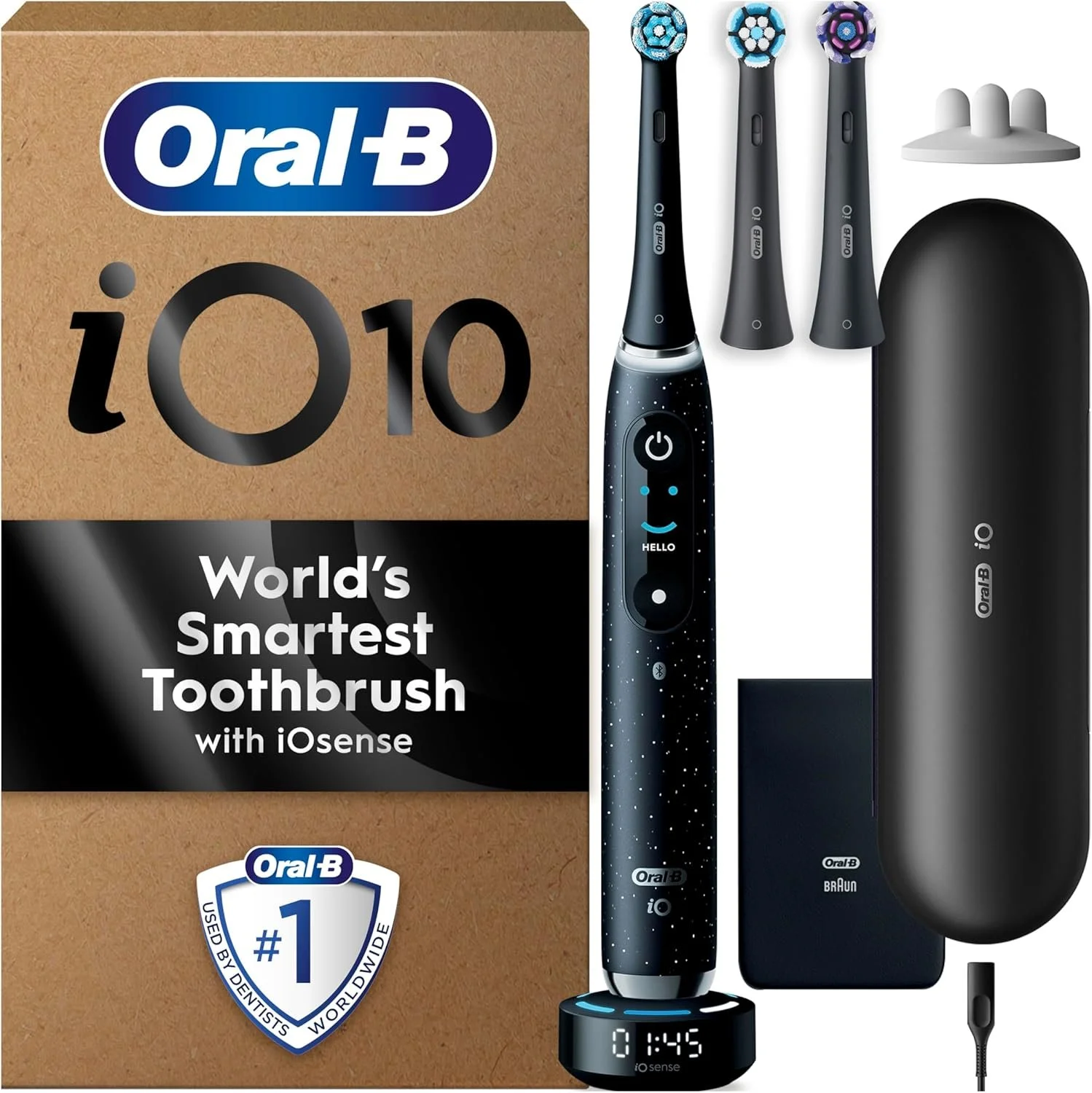
Key specs
2-min timer: Yes
Pressure sensor: Yes
Cleaning modes: 7
Battery life: 1 month
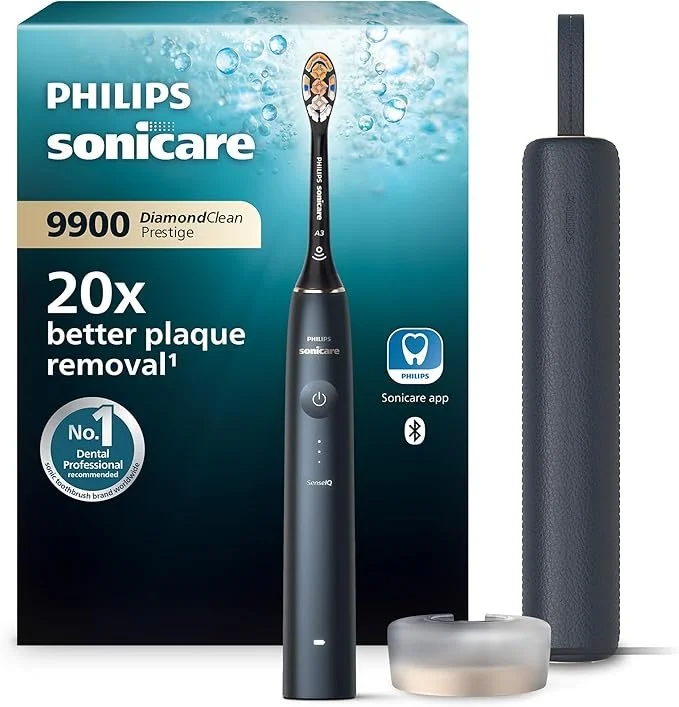
Key specs
2-min timer: Yes
Pressure sensor: Yes
Cleaning modes: 3
Battery life: Two weeks
Mid-Range Options: Oral-B iO5 vs Philips Sonicare ProtectiveClean 6100
If the two models above are too pricey, a good mid-range option set is the Oral-B iO5 and the Philips ProtectiveClean 6100. Both maintain the smartphone compatibility, syncing up to the app to give you expert guidance on how to improve your technique, and they also both feature the top-end cleaning methods from each brand, two-minute timers and replacement brush heads as standard.
For us, the Oral-B wins out here, largely because the iO5 still has the AI oral tracking to help you discover areas of the mouth you’re missing, but both are the same price, so go for whichever brand works for you.
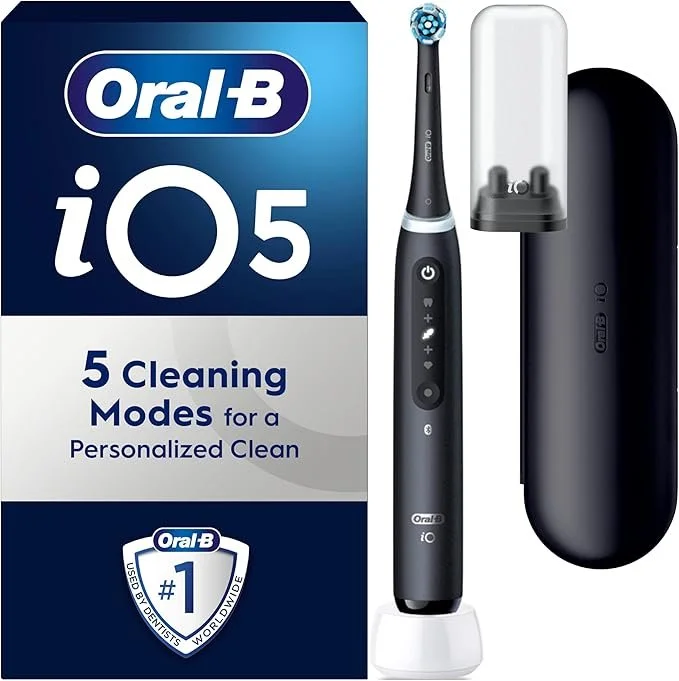
Key Specs
2-min timer: Yes
Pressure sensor: Yes
Cleaning modes: 5 - Daily Clean, Sensitive, Whiten, Gum Care, Super Sensitive
Battery life: 1 month
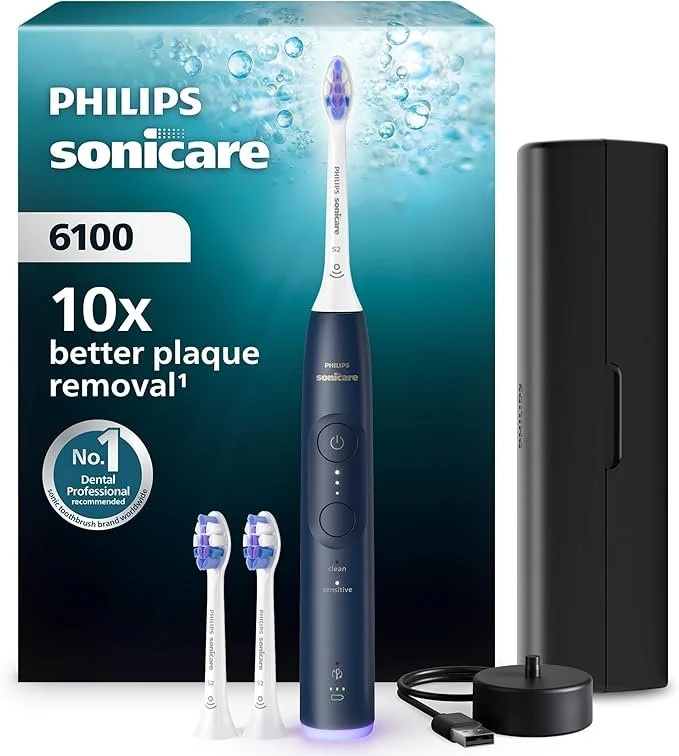
Key specs
2-min timer: Yes
Pressure sensor: Yes
Cleaning modes: 4 - Clean, Sensitive, Gum Health and White at 3 intensities
Battery life: Two weeks
Entry-Level Options: Oral-B Vitality vs Philips Sonicare 4100
Down at the baseline of the budget spectrum is Oral-B’s vitality and the Sonicare 4100, both under £50 and both providing excellent features at this price point. Here, both brushes are stripped down to the basics, with only a few cleaning modes, a minimalist design on the handle, and no AI features; just quality build and top-tier electric brushing motions. The Vitality is slightly cheaper than the Philips model, but does have a shorter battery and a lower build quality overall, so the Philips Sonicare 4100 wins it for us here.
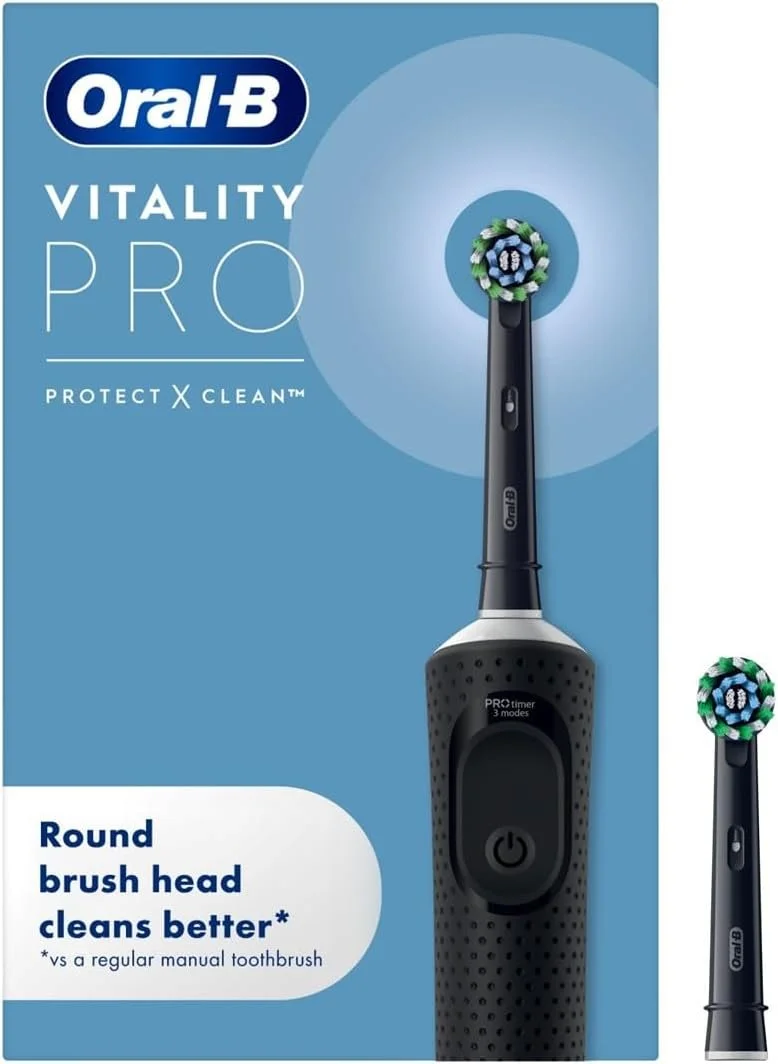
Key Specs
2-min timer: Yes
Pressure sensor: Yes
Cleaning modes: 3
Battery life: 2 weeks
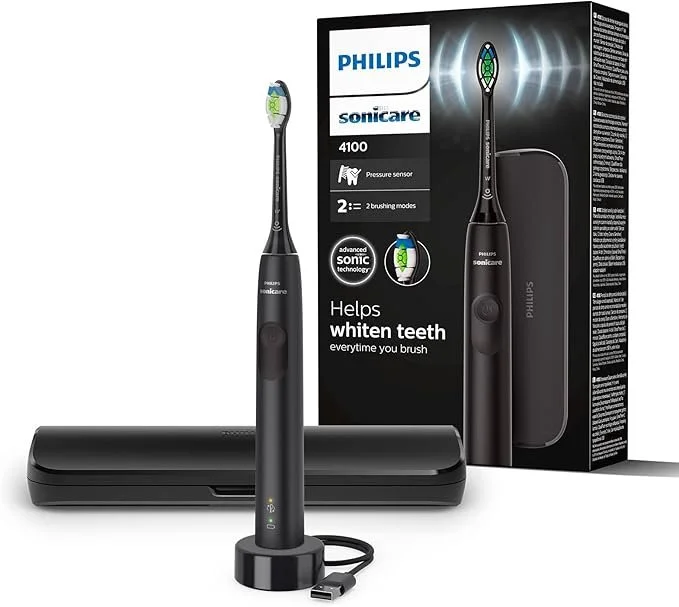
Key specs
2-min timer: Yes
Pressure sensor: Yes
Cleaning modes: 2 - Clean, Sensitive
Battery life: Two weeks
What Dentists Want You to Know
No electric toothbrush can compensate for poor habits. It’s great you’re considering picking up a new gadget to enhance your brushing sessions, but you need to ensure you have the correct technique.
Dental professionals emphasise:
Use light pressure — let the brush do the work. You don’t need to “brush”, just hold the bristles against each tooth and let the brush do the work.
Brush for a full two minutes - Don’t skip out on the full session.
Angle bristles toward the gumline
Replace brush heads regularly
The “best” toothbrush is the one you’ll use correctly and consistently, regardless of the brand you buy.
The Final Verdict
There’s no clear winner in the Oral-B vs Sonicare debate — and that’s a good thing.
Both brands deliver clinically proven improvements in oral health. The real difference lies in how they clean, how they feel, and which features matter most to you. Whichever brush gets you motivated and excited about dental care will be the best option.
If you want a powerful, targeted, clean, Oral-B may be your best bet. If comfort, gum care, and a smooth brush feel are your priorities, Sonicare is hard to beat.
Whichever you choose, upgrading from a manual toothbrush is one of the simplest and most impactful steps you can take for your long-term dental health.
More Articles from Nova Smiles

A loose adult tooth doesn't always mean you'll lose it. Here's what could be causing it and what to do next.